


 (1).png)
News:
Owners Developers & Managers
Posted: January 29, 2016
Moderate growth in Vermont’s Chittenden County real estate market in 2016 - by Doug Nedde
 Doug Nedde, Nedde Real Estate
Chittenden County has experienced a growing, changing commercial landscape. In October 2014, GlobalFoundries announced that it would be taking over IBM’s microelectronics business to include the semiconductor production plant in Essex Junction. At the end of June 2015 it was announced that this deal was closed and in January 2016 the State of Vermont awarded the company $1 million from the Enterprise Fund as part of GlobalFoundries’ plan to invest $72 million in capital in the Essex plant, ending years of uncertainty for thousands of plant employees and cementing our healthy state-wide unemployment rate, which was reported at 3.7% in November 2015, decreasing from 4.2% in November 2014. The national rate in November 2015 was 5%. In a recent press release the Vermont Department of Labor Commissioner confirmed that the Vermont economy has been steadily improving since July 2013, taking us above pre-recessionary levels into a period of economic expansion.
Industrial Chittenden County has a balanced industrial market. Current vacancy is 5.8%, down slightly from 6.4% in June 2015, which competes well with the historic rate of 7.4%. A project that has detracted from the industrial supply, and thus has had a hand in decreasing the vacancy rate in 2015, was the redevelopment of 747 Pine St. near downtown Burlington. This 53,000 +/- s/f industrial building has been upgraded to a mix of retail, fitness and office space, redeveloped by Cresta Cooper Nedde, LLC and Nedde Real Estate. Market additions in 2016 are concentrated in Milton, Williston, Shelburne, Essex, Colchester and Winooski with the most notable project being a new 30,000 s/f owner occupied manufacturing facility in Milton that will be home to Bove’s pasta sauce company. Overall rental rates remain stable and the market is only slightly undersupplied.
Retail With a current vacancy rate of 5% (lower than the historic average of 6.6%), there is a consistent undersupply of retail space in Chittenden County. Some new vacant space is associated with the change of ownership of the Burlington Town Center in downtown Burlington, one of the most sought after retail locations in Chittenden County attracting an abundance of student, resident and tourist foot traffic. Tenant changes coupled with new supply has strongly affected the vacancy rate in Burlington’s Central Business District, which is currently 10.3%, a decrease from the 10.9% figure observed in June 2015. The suburban market has leveled off at 4% after dropping to 3.1% in December 2014, which remains 35% lower than the historical average vacancy rate of 6.2%. It is now exhibiting stable occupancy trends, largely attributable to Chittenden County’s resilient economy. Aside from the redevelopment of the former Burlington Food Service building in Burlington and a new mixed use development at Five Corners in Essex Junction consisting of a four story building with 15,000+/- s/f of ground level retail/commercial space and 51 rental units on the upper floors, limited new supply is planned for 2016.
Residential Historically the rental market has been consistently strong in Chittenden County, resulting in significant new apartment construction over the past 2-3 years. This new construction has begun to affect the vacancy rate, which has nearly doubled from 1.7% in December 2014 to 3% in December 2015. In 2015 alone 534 apartment units were added to the market including the Riverrun Luxury Apartments in Winooski. This coupled with a surge in home ownership due to increase incomes and lower mortgage rates have had a dramatic effect on the rental market.
Office The office market in Chittenden County remains over supplied. With a vacancy rate of 9.9% (a .8% increase from six months ago), office vacancy is 2.1% higher than the historic average of 7.8%. Office vacancy is lowest, however, in Burlington’s Central Business District where you will find mostly Class A and Class B spaces. Despite some modest improvement, we expect the office market in Chittenden County to be over supplied for the foreseeable future with 93,000 s/f coming online in South Burlington in 2016 including 54,000 s/f of Class A space at 88 Technology Park Dr. and two new buildings being developed by Hergenrother at Meadowland Business Park.
Doug Nedde is the broker/owner of Nedde Real Estate, Burlington, VT.
*Data provided by The Census Bureau, Homefacts and December 2015 Allen & Brooks Report.
MORE FROM Owners Developers & Managers
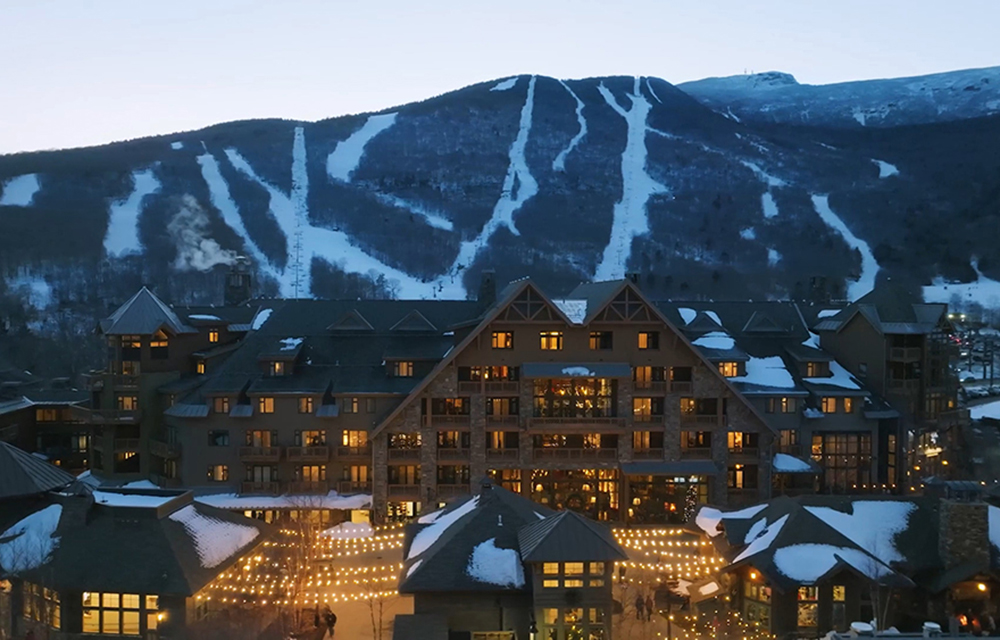
The Lodge at Spruce Peak recognized with Condé Nast Traveler’s 2026 Readers’ Choice Award - #3 in New England
Stowe, VT Condé Nast Traveler revealed the results of its annual Readers’ Choice Awards, with The Lodge at Spruce Peak recognized as the #3 U.S. Resort in New England.




Quick Hits
 (1).png)

Columns and Thought Leadership

IREM president’s message: Our new reality - Staying ahead of supply chain delays - by Yoany Vargas
Supply chain delays are slowing construction, ratcheting up operating costs, and extending turnover timelines across Greater Boston, directly reducing revenue and increasing the workload for multifamily and

Revitalized Town Centers: Retail??? - by Carol Todreas
It is now widely accepted that customers want to shop in person at physical stores. Brands know that they do better business in a physical store than just on line so they want to open stores. Demand for retail space by digital merchants, local entrepreneurs, and newly developed national chains

The legislature has spoken: New Hampshire doubles down on housing in commercial zones - by John Sokul
Last year, the New Hampshire Legislature enacted HB 631, a landmark housing measure requiring municipalities to permit multifamily housing in commercially zoned districts. The law generated

Retail infill strategy to activate Pawtucket’s Conant Thread District - by Gaetan Kashala
Until recently, the Conant Thread District consisted of approximately 150 acres of underutilized industrial land spanning Pawtucket and Central Falls. Today, the area is one of the most significant