


 (1).gif)
News:
Finance
Posted: March 7, 2013
Mortgage satisfaction conundrum: What's at stake for closing attorney? What does the future hold? Part 1
Almost every settlement agent or closing attorney has faced the consequences of open mortgages that have been (presumably) paid or satisfied. Sometimes the open mortgage lien was one of the attorney's own prior transactions, sometimes not. Upon verification that a mortgage payoff was accepted and sufficient, a final title insurance policy is typically issued without verification that the payoff lender issued and properly recorded a cancellation or satisfaction of the paid mortgage lien. Pressures from lenders to immediately issue title policies drive this practice. Variations of statutory requirements and customary business practices compound the risk associated with this practice. The practice results in undischarged mortgage lien, which must be corrected at the next closing when the undischarged mortgage lien appears on the title report for a pending closing.
The title insurance policy provides some coverage to the insured lender and the landowner, where applicable, for risks associated with undischarged mortgages. This coverage, however, fails to provide any assistance to the attorney seeking to process a new transaction on the property. To proceed with the new transaction, the attorney must perform title curative "clean-up" work to make the new closing a reality. Sometimes, a simple call to the "offending agency" that failed to assure the lien was appropriately recorded will facilitate the recording of the discharge. Many times, however, the level and complexity of the necessary curative work escalates because of difficult roadblocks such as defunct lenders and title companies, missing documentation, and even incarcerated principals of lenders.
As attorneys, when we receive calls on closings we previously handled:
Why do we jump to attention and run around with our hair on fire to locate that file, dig up the cancelled check or wire confirmation and divert our staff and resources to track down the proper lender and obtain and record the discharge of the mortgage lien?
Why are we driven to cut a recording check from our operating account to record the discharge if it finally shows up?
Why are the insurance underwriters reluctant or unwilling to indemnify, after all, they issued the policy right?
Throughout my 19+ years of practice in mortgage discharge, I have not heard a clear and definitive answer to the question: "What mandates the settlement agent or closing attorney's duty to perform this title curative clean-up on their prior closings when title policies are issued and there are clear statutory and contractual duties that place discharge of mortgage obligations squarely on the paid lender?"
The answer is not simple. It is comprised of a swirling mass of industry custom, ambiguous statutes and regulations, interpreted and misinterpreted escrow common law, contractual obligations, preservation of market reputation, and consumer impression.
In almost every State, a holder of a mortgage lien has a duty (whether statutory, contractual or both) to the landowner to cause the mortgage to be discharged or discharged in the land records. Although this might seem to be a simple process, the wide variety of mortgage satisfaction laws and land record recording procedures provide numerous potential pitfalls that could prevent the mortgage lien discharge instrument from ultimately appearing in the land record indexes.
The bottom line is nationalization of the servicing of loans has presented many challenges to lenders seeking to discharge satisfied mortgage liens. Depending on the State, there are often between 4 and 5 parties associated with the processing and recording of the discharge: (1) The Payoff Lender; (2) The County Land Records; (3) The Borrower; (4) The Closing Attorney, and, (5)) in some States, the Public/Private Trustee. With so many hands in the mix it is no wonder that mortgage satisfaction problems exist. Below are a couple of interesting statistics I have accumulated with over 10 years of data and more than 1 million mortgage discharges at reQuire that illustrate the significance of this problem:
36% of fully paid or satisfied mortgages remain undischarged after State-mandated timelines.
37% of all payoffs are home equity lines of credit (HELOCs). In many cases, lenders treat HELOCs differently than first mortgages and mail the mortgage discharge documents to the landowner instead of recording them in the county land records.
5.8% of all fully paid HELOCs that were intended to be closed, remain open with significant balances long after closing. In most cases, the lender holding this account has a priority claim on the landowner's property. Many times the borrower obligated on these loans are no longer owners of the property securing the loan.
$2,800.00 is the average amount of balance on HELOCs that remain undischarged.
Part two will appear in the April 12th edition of NEREJ in the Finance section.
Daniel Morris is the founder and CEO of reQuire Release Tracking, Virginia Beach, Va.
Tags:
Finance
MORE FROM Finance
Northwest Bank finances Luzern Associates’ $47.75m acquisition
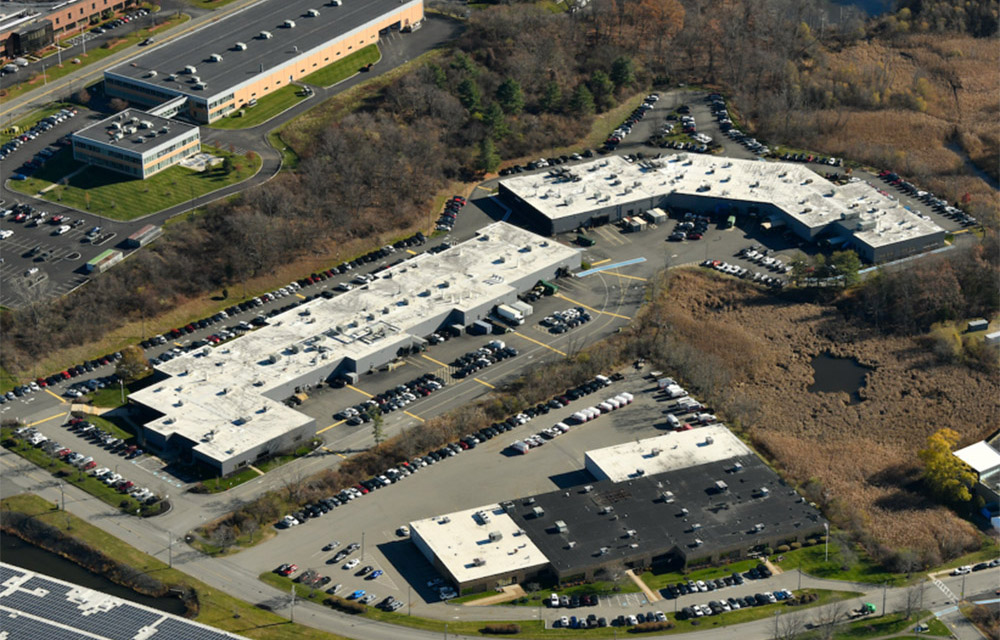
Danvers, MA Northwest Bank provided $34.5 million in financing to support Luzern Associates LLC’s $47.75 million acquisition of the Cherry Hill industrial portfolio, a three-building campus totaling 200,000 s/f.




 (1).gif)


Quick Hits

.png)
Columns and Thought Leadership

Reverse exchanges and the challenges of a competitive real estate market - by Michele Fitzpatrick
Our current, highly competitive real estate market poses specific challenges for investors who are considering taking advantage of a tax-deferred 1031 exchange. In this market, investors will have no problem selling their current property if priced properly, but they may find it difficult to find a suitable replacement property

Are appraisers on the same page as the assessor? - by Richard Seman
The purpose of this article is to address problematic or confusing issues which may help assessors and appraisers to better understand how to value real estate for tax assessment purposes.

The focus on price per s/f compared to the comparable sales used in the appraisal report - by Dennis Chanski
Over the past several weeks, I have completed appraisal assignments for private clients. Interestingly, after submitting these appraisals, I received several phone calls – not to question the value, content, or any incorrect information, but rather to discuss the price per s/f compared to the comparable sales used in the report.

Massachusetts real estate transfers over $1 million face new tax rules as of November 1st - by Daniel Meyer
Attention to owners of real estate in the Commonwealth (and the title companies and other professionals who advise them), the Massachusetts Department of Revenue (the “DOR”) recently adopted a new “millionaire’s tax” via 830 CMR 62B.2.4
