


 (1).gif)
News:
Finance
Posted: August 10, 2018
Much agreement on: Top ten issues in real estate - by Daniel Calano

Prospectus, LLC
What are the top ten issues affecting real estate? Last month, the Counselors of Real Estate (CRE) provided its annual list of their issues along with their nationally collected thoughts. They nicely divided the issues between five that are current and five that are longer term. Additionally, there was a U. Penn Wharton Business School article focused on the same thing.
As I read through them, I realized I had written articles on some and decided to comment. My thoughts are a compendium of past article research and some recent CRE and Wharton analyses. We have little space to cover the territory, so (thankfully) the summary’s brief, just to get you thinking.
1. Interest Rates and The Economy: We all have worried that increasing interest rates will negatively impact real estate. However, it has not significantly happened. The CREs ask relevant questions about whether rates will kill real estate appetite, slow retail purchases, raise cap rates in tandem. As I have researched, the reasons these issues have not dramatically occurred is essentially a very strong global economy. As evidenced in the stock market, there is incredible business resilience despite serious issues in the world. Market strength fosters confidence, thus feeding global wealth. In addition, while short term Fed rates have increased, spreads between that and longer rates have decreased, netting little change. Increasing wealth has absorbed what little increase in rate cost has happened, thus maintaining demand for real estate.
2. Political Uncertainty: Treacherous ground here, but the world seems to be enduring our tweeting government. Problem after problem seems to be “resolved” overnight, or at least acknowledged with a blind eye. One solid example that could change it all would be more protectionist policies. Other examples could come out of nowhere, which might overwhelm.
3. Housing Affordability: As the Counselors point out, the U.S. has had general under-production of housing for almost two decades. Additionally, income stagnation for all but the highest income households has hampered financial access to housing. Finally, it is simply difficult to build affordable housing, as land and material costs continue to inflate. More supply will help some, driving rents down modestly. That said, too much supply could simply put projects into insolvency, if they can’t endure revenues lower than their pro-forma.
4. Demographic Change: There is agreement from all that real estate impact from the two largest populations, boomers and millennials, is a work in process. Combined, these two groups potentially create demand heretofore never seen. The combination will favorably impact student housing, single family and multi-family housing, office and retail to modest extents. It’s hard to see any downside.
5. E-Commerce: There has been a lot of discussion, including by me, of the downfall of malls. Most recently, however, retail statistics and the stock market belie this “inevitability”. Some retail is seeing significant growth. The ones that have growth combine some bricks and mortar location with a strong e-commerce platform. They have focused on a strategy which says that people still want to see and think about products, and may go online to order, but it will all be within the same “store.” That said, Wharton research shows increasing purchasing divergence between the middle class and upper middle class. With stagnant wages, the middle class is still on a budget, while upper middle class is spending on luxury goods. In order to understand e-commerce, we have to dig deep into market segmentation which is occurring in the United States as well as other countries. In other words, retail for the wealthier is keeping things afloat.
The last five impacting trends are long term. The CREs site infrastructure, disruptive technology, natural disaster and climate change, immigration, and energy and water. Not only are these longer term, but they are so broad and complicated they cannot be summarized. Essentially, they are all significant issues that need to be solved or dealt with, if possible.
Climate change and immigration are fully in motion and need to be considered, but we have little control. Infrastructure, energy and water are issues we can grapple with but will take enormous funding. Disruptive technology may well help with solutions, but also has some downside. These are all issues for further discussion and much, much more research, and more monitoring. Keep them in mind as they impact our industry.
Daniel Calano, CRE, is the managing partner and principal of Prospectus, LLC, Cambridge, Mass.
Tags:
Finance
MORE FROM Finance
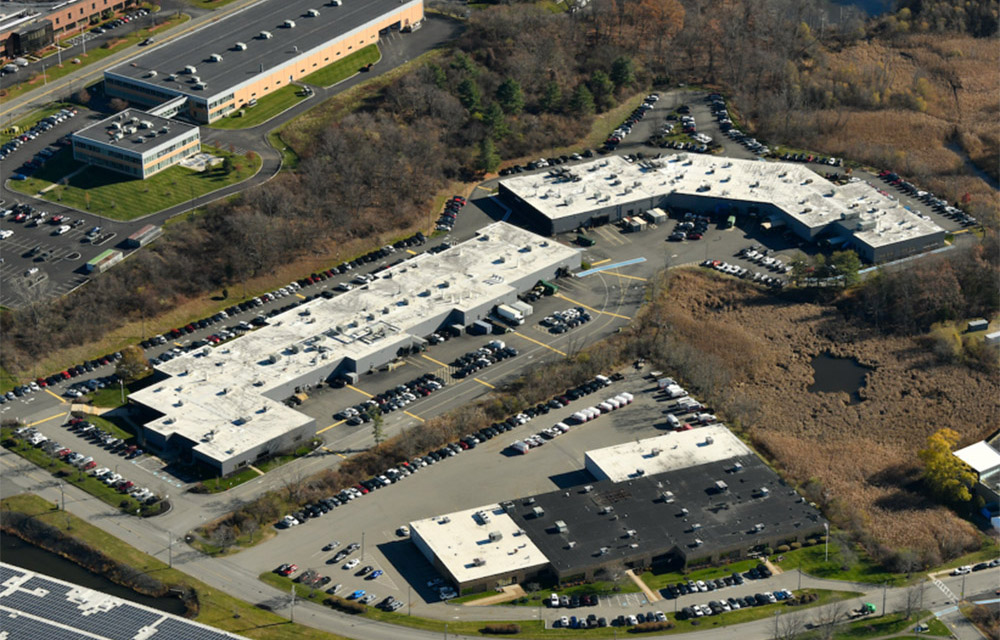
Northwest Bank finances Luzern Associates’ $47.75m acquisition
Danvers, MA Northwest Bank provided $34.5 million in financing to support Luzern Associates LLC’s $47.75 million acquisition of the Cherry Hill industrial portfolio, a three-building campus totaling 200,000 s/f.


 (1).gif)



.png)
Columns and Thought Leadership

Reverse exchanges and the challenges of a competitive real estate market - by Michele Fitzpatrick
Our current, highly competitive real estate market poses specific challenges for investors who are considering taking advantage of a tax-deferred 1031 exchange. In this market, investors will have no problem selling their current property if priced properly, but they may find it difficult to find a suitable replacement property

Massachusetts real estate transfers over $1 million face new tax rules as of November 1st - by Daniel Meyer
Attention to owners of real estate in the Commonwealth (and the title companies and other professionals who advise them), the Massachusetts Department of Revenue (the “DOR”) recently adopted a new “millionaire’s tax” via 830 CMR 62B.2.4

The focus on price per s/f compared to the comparable sales used in the appraisal report - by Dennis Chanski
Over the past several weeks, I have completed appraisal assignments for private clients. Interestingly, after submitting these appraisals, I received several phone calls – not to question the value, content, or any incorrect information, but rather to discuss the price per s/f compared to the comparable sales used in the report.

Are appraisers on the same page as the assessor? - by Richard Seman
The purpose of this article is to address problematic or confusing issues which may help assessors and appraisers to better understand how to value real estate for tax assessment purposes.
