


 (1).gif)
News:
Finance
Posted: June 10, 2016
Municipality needs appraisers; more specifically, they need you - by Sean Sargeant
 Sean Sargeant, Sargeant Appraisal Service
I have lived all over New England and I know one thing for certain, your municipality needs appraisers; more specifically, they need you. New England practices the purest form of American democracy, the “strong town” system of government where decisions as made by our friends and neighbors who serve on local select boards, zoning boards, animal control boards, dock committees and historical review boards. We pride ourselves on local control, open access to elected and appointed officials as well as the right and the ability to be heard both as individuals and as communities. I will tell you first hand; this process is inefficient and exhausting, it takes time and it takes patience; but by far it is the “least worst” form of government we could ever hope for. This system takes an army of talented and dedicated individuals willing to serve, donate their time and skills, objectively listen and eventually form supported opinions based on fact. What could possibly be more central to the skill set of an appraiser, or more rewarding to our professional ego where we work daily under a code of ethics that requires fair and impartial opinions supported by evidence?
My educational and professional background is in engineering, through 15 years working with a successive chain of larger and larger Fortune 500 companies I discovered that public service was, at best, actively frowned upon by the organization and, at worst, prohibited; all based on an assumption the municipal actions of a corporate employee could place the business at risk. I always struggled to understand how a company that trusted these same employees with billions in revenue, their brand name and good will would be concerned these same individuals did not have the temper or integrity to assist their municipality in developing a parking ordinance. As a result, my sense of public service as a duty to my community went unfulfilled.
Now in my second career; of three I have planned; as an appraiser I work for me, or more accurately I work for my clients, one assignment at a time. As such, I sell my time. I have control over who I sell it to and how much I sell. This has given me the freedom to become an operating part of my local municipality; first as a member of the select board and now as the chair of our local police commission, a five-member public board responsible to oversee the actions and policies of our city’s police department. The return on my investment of time into municipal service has paid both professional and personal dividends well beyond any reasonable expectation. Professionally, I now have connections within local governments and regional commissions that greatly improve my ability to obtain detailed responses on assignment questions such as zoning or property tax policy that not only improve the quality of my work but also improve my turn times. Personally, I have grown, developed a thick skin (a critical appraiser attribute), learned there are two sides to every story, become a better public speaker and discovered that you have to tell your own story and not let others tell it for you.
I believe that in American-style democracy people get the government they deserve. I also believe we deserve more appraisers working within the boards and commissions of a strong-town system. If you are concerned about the direction your town has taken you can be a ‘letter writer’, or you can spend the same amount serving to change the system from within. There are openings on boards and commissions in your town today. These are a great fit for your professional skill set; many require less than an hour of your time each month and will deliver personal and professional returns well beyond the initial investment. Your town needs appraisers; specifically, they need you.
Sean Sargeant, MAI, SRA is a certified general real estate appraiser at Sargeant Appraisal Service, Rutland, VT.
MORE FROM Finance
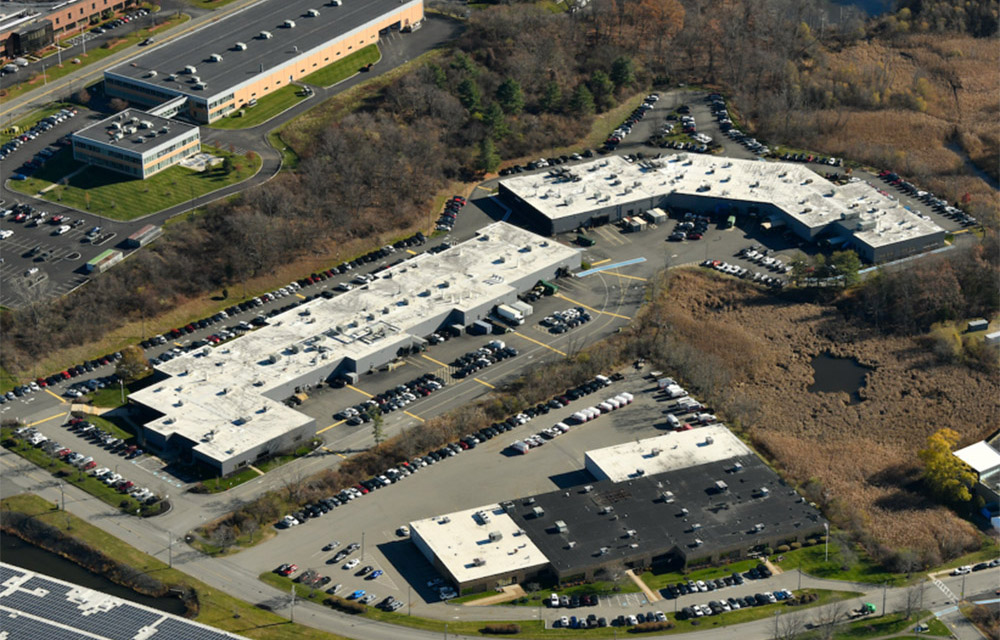
Northwest Bank finances Luzern Associates’ $47.75m acquisition
Danvers, MA Northwest Bank provided $34.5 million in financing to support Luzern Associates LLC’s $47.75 million acquisition of the Cherry Hill industrial portfolio, a three-building campus totaling 200,000 s/f.




 (1).gif)



Columns and Thought Leadership

Are appraisers on the same page as the assessor? - by Richard Seman
The purpose of this article is to address problematic or confusing issues which may help assessors and appraisers to better understand how to value real estate for tax assessment purposes.

Massachusetts real estate transfers over $1 million face new tax rules as of November 1st - by Daniel Meyer
Attention to owners of real estate in the Commonwealth (and the title companies and other professionals who advise them), the Massachusetts Department of Revenue (the “DOR”) recently adopted a new “millionaire’s tax” via 830 CMR 62B.2.4

The focus on price per s/f compared to the comparable sales used in the appraisal report - by Dennis Chanski
Over the past several weeks, I have completed appraisal assignments for private clients. Interestingly, after submitting these appraisals, I received several phone calls – not to question the value, content, or any incorrect information, but rather to discuss the price per s/f compared to the comparable sales used in the report.

Reverse exchanges and the challenges of a competitive real estate market - by Michele Fitzpatrick
Our current, highly competitive real estate market poses specific challenges for investors who are considering taking advantage of a tax-deferred 1031 exchange. In this market, investors will have no problem selling their current property if priced properly, but they may find it difficult to find a suitable replacement property
