


 (1).gif)
News:
Finance
Posted: March 8, 2019
Navigating real estate cycles: Are we in a 7th inning stretch? - by David Levy

As baseball spring training unfolds and the Red Sox prepare for another World Championship, it seems appropriate to reinvigorate the metaphor, what inning are we in? The current U.S. economic cycle is now the longest in its history and speculation as to when and how it might end has become one of the largest pre-occupations among real estate participants. Consensus has indicated for several years that the economy and real estate cycle have been suspended in the “7th inning” of a 9-inning game. Other creative types have offered that this journey to cycle-end might be entrenched in a number of rain delays or perhaps we are destined for extended extra innings. Whatever camp you prefer, let’s take a look at some current market indicators and compare these conditions against previous cycles to better understand potential timing and magnitude of change to both the underlying economy and commercial real estate fundamentals. Lastly, how does the Boston commercial real estate market fare on the U.S. and global stage?
The end to the past five economic cycles have been triggered by a variety of shocks involving for instance, geopolitical tensions, hyper-inflation often related to escalating oil prices, unethical business practices, and/or Fed actions leading to volatile changes in interest rates. While inflation and oil prices seem contained and businesses remain disciplined in their behavior for now, trade tensions and Fed actions represent the two most influential and potentially disruptive forces facing the current cycle.
The FOMC indicated following their December and January meetings that the U.S. labor market had continued to strengthen and that economic activity has been rising at a solid rate. Monthly job gains have averaged approximately 200,000 per month consistently over the last five years with the January BLS figure of 304,000 far-outpacing expectations. The unemployment rate of 4.0% remains near a 50-year low. While future indicators remain in expansionary territory, most are off of their peaks suggesting a slowing of the U.S. (and global) economy. Job openings exceed the number of unemployed which has currently begun to lead to wage growth. However, core inflation pressures remain muted close to the Fed’s “symmetric” target of 2 percent. Indicators of longer-term inflation expectations are little changed, although evidence has been pointing to rising inflation pressures. The Fed raised their target range for the Federal Funds rate 25 bps for the fourth time in 2018 to between 2.25% and 2.50% during their December meeting and indicated during their January meeting that the timing and size of future rate increases would be data-dependent. A Fed misstep in raising rates too aggressively could lead to a further flattening and eventual inversion of the yield curve with the potential for acceleration toward a recession. That said, while the economy remains supportive of continued healthy property fundamentals, the trajectory of interest rates should be monitored for their impact to property fundamentals, pricing, cap rates, and investor return expectations.
Risks to these expectations regarding the timing of future rate increases vary. Enacted expansionary fiscal policy would likely cause the Fed to continue raising rates and forego their current pause. Slower economic growth, as well as heightened global and domestic political uncertainty due to trade and geopolitical tensions however could delay movement on rates. As of late, there is little implied probability of another FOMC interest rate hike in March and/or June while any potential rate moves during the second half of 2019 will be data-dependent.
Boston’s innovation-based economy has propelled the region to be one of the leaders in the country. These conditions, further upheld by its disciplined market participants and planning regime, contribute to today’s generally healthy property fundamentals, which in turn have translated into significant rent growth across property sectors since 2010. This confluence of factors continues to draw substantial institutional and cross-border investor interest to Boston, especially within its office and, to a lesser degree, apartment sectors. According to Real Capital Analytics, office transactions in Boston throughout 2018 were the second highest among all U.S. cities while total transaction activity ranked among the top 10, nationally. From a cross-border standpoint, members of AFIRE view Boston as one of the top 10 cities in the U.S. for foreign investors. While property appreciation in Boston slows and returns mean-revert, much like the rest of the country, the metro area’s combination of rent growth and investor weight of capital should contribute to its continued relative benchmark outperformance. Since this mature real estate cycle still feels like it has a few innings remaining, we will need to watch trade policies and Fed actions to best anticipate when this prolonged game might end and prepare accordingly.
David Levy, CRE, CFA, MAI, MRICS, is senior vice president at Bentall Kennedy (U.S.) Limited Partnership, Wellesley Hills, Mass.
MORE FROM Finance
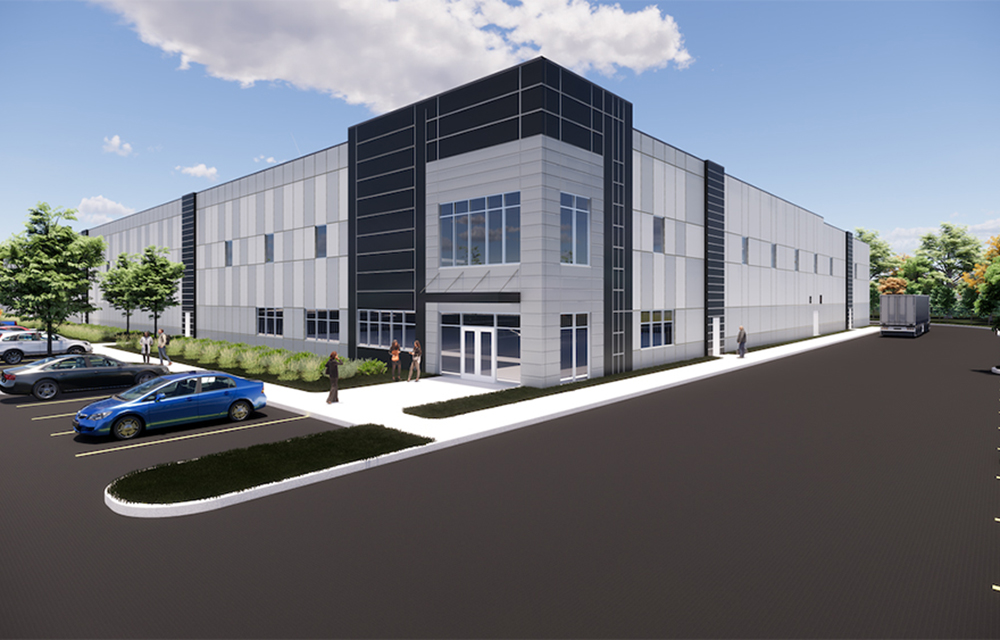
Berkeley Garbe secures $35.4 million debt financing with MetLife Investment Management
Billerica, MA Berkeley Garbe has secured a $35.4 million financing package for 161 Concord Rd., a new advanced manufacturing and innovation hub that is 30% complete following the start of construction in June. The project is on track to be completed in April 2027.



 (1).gif)


Quick Hits

.png)
Columns and Thought Leadership

Massachusetts real estate transfers over $1 million face new tax rules as of November 1st - by Daniel Meyer
Attention to owners of real estate in the Commonwealth (and the title companies and other professionals who advise them), the Massachusetts Department of Revenue (the “DOR”) recently adopted a new “millionaire’s tax” via 830 CMR 62B.2.4

The focus on price per s/f compared to the comparable sales used in the appraisal report - by Dennis Chanski
Over the past several weeks, I have completed appraisal assignments for private clients. Interestingly, after submitting these appraisals, I received several phone calls – not to question the value, content, or any incorrect information, but rather to discuss the price per s/f compared to the comparable sales used in the report.

Reverse exchanges and the challenges of a competitive real estate market - by Michele Fitzpatrick
Our current, highly competitive real estate market poses specific challenges for investors who are considering taking advantage of a tax-deferred 1031 exchange. In this market, investors will have no problem selling their current property if priced properly, but they may find it difficult to find a suitable replacement property

Are appraisers on the same page as the assessor? - by Richard Seman
The purpose of this article is to address problematic or confusing issues which may help assessors and appraisers to better understand how to value real estate for tax assessment purposes.
