


 (1).png)
News:
Owners Developers & Managers
Posted: August 14, 2026
New Hampshire CIBOR president’s message - August, 2026 - by Brian Dano

NECPE:
Feedback on the rollout has been generally positive. Thank you all for your patience and faith that we would get this right. I personally have reached out to RCAMA (the Massachusetts commercial board) to assist them with their membership. Maine and Rhode Island have been vocal regarding comps data and website listing widgets.
To address these concerns, we have created a product improvement committee to incorporate everyone’s feedback and make continuing product improvements moving forward. To submit product improvements, go to the website, click the question icon on the top right of the website, then click “Give Feedback”.
We are actively working on integrations with Buildout, Real Property Resource (RPR) and more. There has been some confusion regarding the fields “Property Type” and “Space Use” that we are actively working to clarify so the search experience is as intuitive and accurate as possible.
Kurt’s daily webinars ended in July, please reach out to him (Kurt@leaseup.com) or myself for assistance (Brian.Dano@SVN.com).
Dano’s Data Center Diatribe:
A Gallup Poll in May of this year found that 70% of Americans are opposed to data centers being constructed in their local area, with only 7% strongly in favor of construction in their backyard. Kevin O’Leary and others claim that a lot of the horror stories floating around on the internet are foreign government misinformation.
This gives me flashbacks to fracking in the 2010s where we all saw water on fire in the news. The widespread concern seemed to be blown out of proportion initially but then dissipated over time. Here we have the same factors again, economic vs environmental forces coming to a head in an already divisive political climate.
In talking to large data center REITs/ developers, they feel that the developers who are not using closed loop systems are creating all the negative PR, creating a stigma that more environmentally responsible developers must overcome.
“A closed loop cooling system uses sealed pipes to continuously circulate liquid coolant or water, absorbing heat directly from high-density servers and rejecting it outside through radiators or dry coolers without continuous water evaporation. This design eliminates daily municipal water consumption during routine operation, though it trades lower water usage for higher electricity demands and upfront mechanical costs”.
The big players I’ve spoken with don’t want to destroy the communities they operate in; they want to create jobs and tax revenue. Yes, they want to make money but are not putting that above humanity. Conversely, Erin Brockovich said on a recent podcast with Sean Ryan (Episode #322) that even closed loop cooling systems when cleaned can release PFAS and other harmful chemicals into our water.
The truth is likely somewhere in the middle. If we, as a society, want to continue leveraging AI in larger more sophisticated applications, then we will need to scale data center infrastructure. These facilities will need to go somewhere. If cooling is a problem, my first thought would be to put them in Antarctica or colder environments. However, I would be concerned about the significant potential to harm those fragile ecosystems. Recently, China started putting data centers in the ocean using them as a base under wind turbines. My thoughts again lean towards long term environmental impact; how much and how fast would this increase water temps? This could all be for show, or they may have solved the obvious corrosion and physical security risks.
Data centers have been around since the dawn of the internet; I think the amorphous hyperscale data centers (40+ megawatts, often over 100,000 s/f) are the concern. Per WMUR there are roughly 11 data centers in the state so far. I don’t believe any are hyperscale, just because NH ranks the 7th most expensive electricity cost in the U.S. at roughly 24 cents per kWh.
Ultimately, data center developers have a PR education battle, and I do think that the municipalities have the right to protect their communities. The large data center REITS/developers I spoke to welcome questions and design these facilities with sustainability and the environment factored in.
In New Hampshire we have seen a growing schism between what the politicians in Concord are wanting and municipal control (for example HB-631 Multi-family Residential and Mixed-use Development on Commercially Zoned Land, and RSA 674:71–73 & HB 577 Mandatory Accessory Dwelling Units by Right, etc.). The state seems to be pro-development while the local towns have tended not to be. As a CRE broker, I understand both sides of the argument and do think we have zoning laws for a reason. Personally, I don’t want to live abutting a large factory, yet understand a factory needs to exist to create jobs and drive the economy.
It is inevitable that data center polarization will exacerbate this power struggle between municipal control and state regulators, by adding pressure on an already stressed working relationship. My advice to concerned citizens is to articulate their specific concerns so developers can be held accountable to working within the law and address the concerns of the townspeople. I am in favor of mandatory training for all planning and zoning board members, so that they understand the scope of with their authority starts and ends, as a former member of Merrimack’s planning and zoning boards.
NH Conservation & Current Use: A Thought Experiment
When I was getting started in the commercial real estate business, I found deed restrictions odd, seemly discriminatory on the residential side, but useful for preventing competition to protect your investment on the commercial side. At the time I thought, how strange that a current owner can impact the future uses of the land. It seems un-American!
Recently, I drew the same conclusions when thinking about conservation land. Obviously, we need to protect our environment, but at the same time, once land is in conservation, it can’t be used without a big fight (NH RSA 477:45-47). Who are we to tell the future generations what can and cannot be done with land?
In addition, approximately 52% of New Hampshire’s land is in “Current Use” tax status, including land in conservation ( RSA 79-A) which means that the minority of landowners in New Hampshire are paying the lion’s share of property taxes. New Hampshire is ranked 5th among the highest property taxes in the country at roughly 1.5-1.66% (New Jersey was the highest at 2.11-2.21%). The State needs revenue from somewhere, as we have little to no other taxes. The goal of this tax advantageous status is to promote the preservation of open space and conserving the land, water, forest, agricultural, and wildlife resources. It certainly works. However, if this went away, would property taxes decrease, or would we destroy the state? Let me know your thoughts!
Brian Dano is the 2026 president of the N.H. Commercial Investment Board of Realtors, Bedford and is a managing director of SVN/The Masiello Group, Bedford, N.H.
MORE FROM Owners Developers & Managers
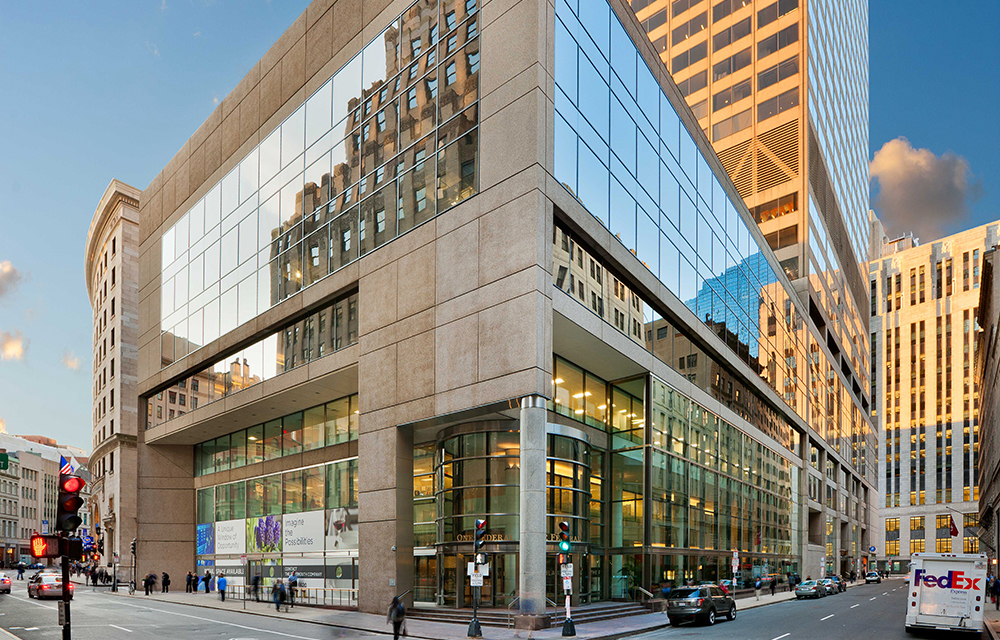
Rubin Rudman to establish headquarters at Tishman Speyer’s One Federal St.
Boston, MA Tishman Speyer has secured a new headquarters lease with Rubin Rudman at One Federal St., its 38-story, 1.1 million s/f tower in the Financial District. Under a 15-year lease, Rubin Rudman’s new headquarters will span 57,844 s/f across One Federal’s entire 23rd and 24th floors and a portion of the 25th floor.







Columns and Thought Leadership

IREM president’s message: Our new reality - Staying ahead of supply chain delays - by Yoany Vargas
Supply chain delays are slowing construction, ratcheting up operating costs, and extending turnover timelines across Greater Boston, directly reducing revenue and increasing the workload for multifamily and

The legislature has spoken: New Hampshire doubles down on housing in commercial zones - by John Sokul
Last year, the New Hampshire Legislature enacted HB 631, a landmark housing measure requiring municipalities to permit multifamily housing in commercially zoned districts. The law generated

Retail infill strategy to activate Pawtucket’s Conant Thread District - by Gaetan Kashala
Until recently, the Conant Thread District consisted of approximately 150 acres of underutilized industrial land spanning Pawtucket and Central Falls. Today, the area is one of the most significant

Revitalized Town Centers: Retail??? - by Carol Todreas
It is now widely accepted that customers want to shop in person at physical stores. Brands know that they do better business in a physical store than just on line so they want to open stores. Demand for retail space by digital merchants, local entrepreneurs, and newly developed national chains