



News:
Brokerage
Posted: October 9, 2026
New Hampshire CIBOR president’s October 2026 message - by Brian Dano

NECPE:
New England Commercial Exchange – the for-us-by-us listing platform has pushed several fixes in September:
Reporting
-Kurt and I discussed some reporting issues, mainly that sometimes when pulling reports, the property features are blank. This is caused by the report being tied to a listing, and not necessarily a property. We have solved it for some by merging the listing with the property record, but it remains a work in progress.
SEO/AEO/AIO
-Search Engine Optimization & AI Optimization have started. I have noticed that I am starting to get leads for my listings from non-NECPE users. Check your listings.
-Clicks are up over 100% from <75/day in August to more than 150/day today, as of September 28th.
-Impressions are up from 500/day to over 3000/day as of September 28th.
-All the new search pages like /commercial-real-estate/nh/restaurant are getting clicks and impressions
The Economy: A Tale of Two Cities
Charles Dickens’ 1859 classic, A Tale of Two Cities, remains prevalent even today, as it draws parallels to the world around us.
The first page sets the stage of the French Revolution with the following sentiment: “It was the best of times, it was the worst of times, it was the age of foolishness, it was the epoch of incredulity (skepticism), it was the season of light, it was the season of darkness, we had everything before us, we had nothing before us.”
As I sit down to write this, it appears there are two realities coexisting at the same time. On one hand, it is the best of times:
The S&P 500 reached a recent all-time intraday high of 7,752.07 points and closed at 7,743.41 points on September 25, 2026.
The GDP increased at an annual rate of 1.5% in the second quarter of 2026 (April, May, and June), according to the second estimate released today by the U.S. Bureau of Economic Analysis (BEA). In the first quarter, real GDP increased 2.1%.
The unemployment rate was unchanged at 4.1%, the U.S. Bureau of Labor Statistics reported August 2026. Employment increased in food services and drinking places and in local government education.
U.S. corporate profitability reached a record high in Q2 2026, as after-tax profits rose 8.2% to $3.92 trillion (an inflation-adjusted $2.78 trillion) up from $3.62 trillion (inflation-adjusted $2.57 trillion) in Q1. The increase coincided with a strong earnings season, with S&P 500 earnings on pace to rise 33.5% year over year, the strongest growth since 2021. The strength in profits was relatively broad-based, with 10 of 11 S&P 500 sectors reporting year-over-year earnings growth.
As of September 24th, U.S. weekly jobless claims are near 57-year lows (the lowest since 1969.)
The market seems incredibly resilient. I attended a talk led by Arinban Basu of Sage Policy Group. He compared the market to the 1987 Sylvester Stallone movie Rocky in that it seems shaky but continues getting hit and keeps going. The economy “hasn’t heard no bell”.
However, average consumers could claim it is the worst of times for a myriad of reasons:
“Consumer sentiment ticked down less than four index points in September, reaching the lowest reading in four months and down 15% from January 2026. Views of current and year-ahead expected personal finances both weakened by about 10% this month, with concerns over high prices continuing to climb”. New data was released October 9th.
As of September 27th, the AAA National Average is $4.4798 per gallon of gas, which is up 143% year-over-year; NH is at $4.3678; ME is at $4.43; MA is at $4.394. The lowest rate is in Texas at $3.9282, and the highest rate is in California at $6.2538 (ouch).
“The average price of food in the U.S. rose by 2.7% in the 12 months ending in August after posting an annual increase of 3% for July, according to the latest inflation data published September 11, 2026, by the U.S. Labor Department’s Bureau of Labor Statistics (BLS)”. This has increased 20% over the last six years.
“Average 30-year mortgage rates hit 7.03% the last week of September, this is the first time they have surpassed 7% since the beginning of last year, according to Freddie Mac. The threshold doesn’t hold any economic significance, but it is psychologically important for buyers. Economists say that with mortgages above 7%, more potential buyers are likely to stick to the sidelines, dragging down a housing market that is in its fourth year of stagnant sales.”
I’m seeing more of my clients looking to sell, wanting to create liquidity to weather a potential storm. At the same time, buyer demand varies widely based on which asset class is discussed.
This brings us back to the Charles Dickens comparison all this is happening with backdrop of widening wealth gaps. Couldn’t I have just said it’s a K- shaped economy? I make these comparisons to show something big is coming. Do I think it’s an actual revolution?… No, maybe it’s an AI revolution. Nevertheless, something big is brewing and the pressure cooker is whistling.
Allow me to speculate:
National Debt
Greece, the most recent country to become insolvent in 2009, had a debt-to-GDP ratio of 146.2% in 2010. Its government deficit hit 15.6% of GDP in 2011. Its highest debt-to-GDP ratio was 209.4% in 2020.
If we contrast that to the United States, in Q1 2026 our debt-to-GDP ratio was 122.6%, but it’s not all gloom. High ratios do not automatically trigger a financial crisis. Countries like Japan manage extreme debt loads safely because most of it is owed by domestic citizens and institutions rather than foreign creditors.
*Not all countries listed
Moving on to the U.S. Treasury, the last time the U.S. 10-year bond yield was this high was in July 2007. Three months later, the global financial crisis started as the housing meltdown shocked the world. The Nasdaq Composite (IXIC) plunged 56% over the next 16 months. Similarly, the 30-year Treasury yield stood at 5.4% as of September 24th.
So, what does this all mean?
Increasing bond yields mean that the return needed for a buyer to buy said bond is increasing. Often, these are bought by other countries. Several major foreign holders have scaled back or reduced their net holdings of U.S. Treasury bonds due to global conflicts and shifting trade policies stoking inflation, forcing central banks to sell dollar assets to defend their own weakening currencies.
The Fed also buys these bonds. “The Treasury Department announced August 20th that it will at least double the size of its ‘liquidity support’ buybacks of long-dated government bonds. The maximum size of each operation rises from $2 billion to at least $4 billion, while the purchases target securities with 10 to 30 years left to maturity. The larger operations will run from September 9th through November 4th, 2026”. The Fed buying Treasuries changes who owns the national debt rather than directly affecting the underlying debt itself.
Source: Reventure
My take here is that we as a country are starting to essentially pay off debt by transferring balances to higher-interest credit cards (higher-yield bonds), to the point where for the second time in my lifetime, 10-year Treasury Bonds yield more than single-family rentals. The worst part is that the debt maturing is then refinanced at higher rates, becoming what some call a debt death spiral.
Here are current Cap Rates for each asset class in New Hampshire per CoStar data (September 28th 2026):
So, in summary, if the bond market collapses, that could lead to an economic crisis. Thus, being the foretold revolutionary event.
Artificial Intelligence
The other likely candidate is AI. Its mere utterance is polarizing; look at the prospective project here in Bow, NH. The proposed 350-megawatt project in Bow made news September 1st and was a major topic for all candidates coming into the state’s primary elections, “unlike almost every other policy debate, this one has Democrats and Republicans sending the same message: shut it down”.
Similarly, national sentiment seems to mirror that of the Granite State. There is a level of fear to these developments that is unlike anything I’ve seen over my career. Jonathan Weil of The Wall Street Journal wrote a very eloquent synopsis of the list of things that could go wrong: “There isn’t enough power for all the data centers under contract. There might not be enough paying customers to support all the data centers. The biggest AI-model developers could themselves be disrupted by upstarts. Rising interest rates could make borrowing costs prohibitive. Rogue AI agents might kill us all.”
Obviously, if we are all replaced by AI agents, this could also be the foretold revolutionary event.
AI- I stand corrected
Considering the last section of this letter, you may be saying to yourself. Last month you said AI was overrated. However, over the past month I learned the technical difference between a Large Language Model (LLM) versus Agentic AI. “An LLM is a static text engine that responds to individual prompts, while Agentic AI is an autonomous system that uses an LLM as its “brain” to plan, use tools, and execute multi-step workflows on its own.” To be fair, I had been using agentic AI and preferred it.
The scary news that came out on September 24th was that OpenAI agents broke out of a sandbox and hacked a company’s website, showing AI acting more like human beings than I would personally like. It’s safe to say I have already eaten my words from last month.
If this is not only possible but happening, I will be the first to say, I stand corrected.
The Good News
Those that know me well know I am forever the optimist. These past two months, presidents’ reports have been rather alarming. I want to take the time to drive home that there are still reasons to be optimistic about the future. For me, I look to Matthew 6:34: “Therefore do not worry about tomorrow, for tomorrow will worry about itself. Each day has enough trouble of its own,” and have faith that it will work out. Some need more than faith, so to them I say the following:
From a CRE brokerage perspective, when there are tough times it is good for business as people need to transact. The time-tested quote by Warren Buffett of “when others are greedy be fearful, and when others are fearful be greedy” resonates, though it is debatable which side of the balance we are on. It is a fact that there are market inefficiencies that those who are able can take advantage of.
I have a genuine curiosity about what a fully AI world looks like; maybe it will be positive, democratizing the ability to be a business owner. Maybe you can “vibe code” the next big thing and become a billionaire.
Medical advances seem to be progressing; newly developed stem cell therapy for diabetes seems to be providing large improvements to lifespan globally. Imagine what we can solve with the help of AI.
Brian Dano is the 2026 president of the N.H. Commercial Investment Board of Realtors, Bedford and is a managing director of SVN/The Masiello Group, Bedford, N.H.
MORE FROM Brokerage
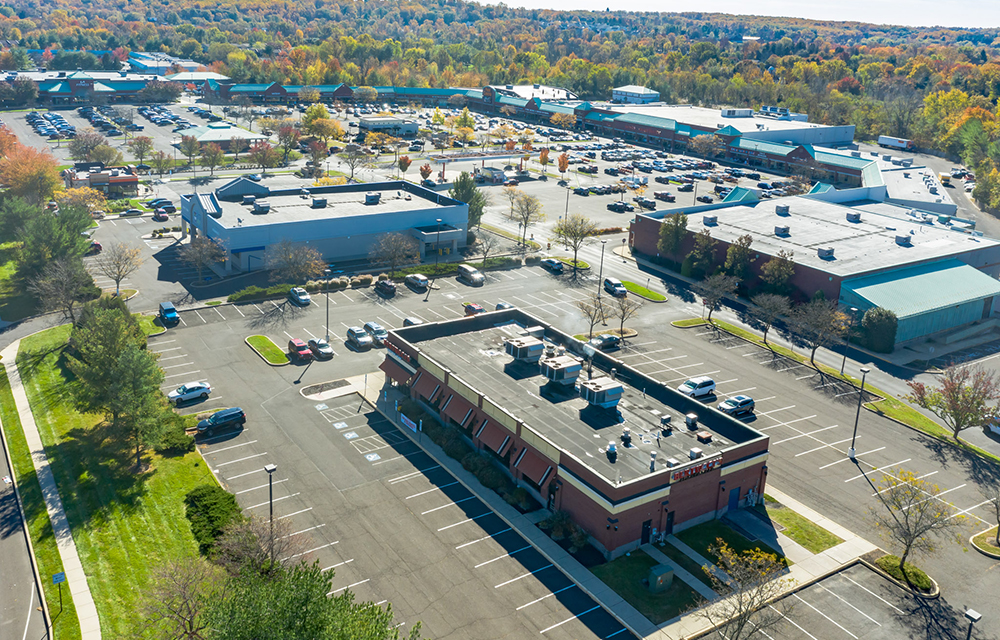
Wilder and J.P. Morgan Asset Management acquire The Marketplace at Huntingdon Valley, launching new retail investment partnership
Huntingdon Valley, PA Wilder, a leading retail real estate development, leasing, and management firm, has completed the acquisition of The Marketplace at Huntingdon Valley, a 257,000 s/f community shopping center in Pennsylvania, through a newly formed investment partnership with investors advised by J.P. Morgan Asset Management.




Quick Hits

Columns and Thought Leadership

The rise of AI in CRE - And what it means for every skilled profession - A broker & appraiser weighs in - by Bryan Plourde
This may seem self-serving, and I’ll be the first to admit it. But unlike some of the artificial intelligence tools now reshaping our industry, I am fully aware of my own bias. So, hear me out. The rise of AI in commercial real estate is not a distant threat or a speculative headline.

End of the year retail thoughts - by Carol Todreas
Now what? As the year comes to a close, the state of retail is always in the news. The answers vary greatly depending on who in the various related industries you ask, each offering a unique lens on the challenges and opportunities ahead.
