



News:
Spotlight Content
Posted: July 31, 2020
Out of the ashes, opportunity arises! - by Dennis Serpone
The number of restaurant transactions is up by more than 70% going into the fourth quarter of 2020 over the same comparable time in 2019.The confluence of economic and market conditions as a result of the governor’s mandates to control COVID-19 spells ‘opportunity’ for the seasoned buyer. No matter if we’re looking at vacant space, or operating restaurants that have become available in good locations, or conversely a losing business that the inexperienced operator bought in a less-than-desirable location, there is a buyer out there ready to make a deal. Buyers have cash.
Deals are made from a position of strength when you’re selling without any financial or emotional pressure. Other deals are made from a position of weakness where the operator is still closed or losing money due to competition, poor management skills, or as a result of opening with a ‘virus’ limit of 25% or 50% capacity. In either case, if you or your partner(s) has the money and experience, now’s a great time to make a deal. Generally speaking, it’s only the liquor stores and fast food take-out segments that have seen positive growth. Those businesses that have adapted to the new ‘normal’ will probably survive and grow; the weak will sell out or simply close their doors. Nightclubs, large music venues, and function facilities still closed are a giant question mark.
A perfect example is what’s happening in Boston and the suburbs.
The playground of the affluent in general and the young professionals as a subset, was Newbury St. Old money, new money, the people watchers, and the wannabes could all be found wandering in and out of stores and restaurants, walking tirelessly up and down Newbury St. or sitting by a window when it was too cool to be perched at a sidewalk table. There was a time when there was little or no business turnover in those coveted locations.
Then the Seaport area materialized. Like Poseidon rising from the ocean’s depths, slowly at first and then amazingly fast, a multitude of restaurants, Irish bars, and expensive fast food emporiums appeared. The migration from Newbury St. of its patrons to the Seaport area was apparent whether you drive through there any time of the day or any day of the week. Throwing common sense to the curb, well-heeled restaurateurs, threw caution to the wind and entered into mind-boggling leases. Now, COVID-19 has decimated most of the city (and state). Optimism has been replaced by restrained panic. “Can I sell and get my investment back?” Better said, “Is there a buyer out there ready, willing, and able to take over my business?” The simple answer is ‘yes’.
After the holidays, on a clear Wednesday night, I had trouble getting a parking space at 7 p.m.. at Market St. in Lynnfield; I literally had to follow a couple leaving to get a space. Whole Foods was typically busy, Legal C Bar had a 45 minute wait, the Yard House restaurant/pub had a 90 minute wait, and Davio’s had almost a two hour wait. Today it’s a ghost town.
What a new world we now live in. With everyone wearing masks, you have to focus to try to understand what the server is saying as well as her asking you to repeat what you’re ordering. Going out to your favorite restaurant, if it has survived, is a challenge. That said, now is a great time for the seasoned, successful operator to position his operation in the suburbs of Boston, in areas where, pre-COVID, there was little turnover. Those restaurants weakened by the effects of this pandemic will be acquired by operators financially sophisticated and with a ‘competitive advantage’.
Competition will always be there, but to survive, to thrive, a restaurant, or for that matter, any business has to have something different or better to draw people away from their competitors…better atmosphere, better service, better food quality, better pricing, better marketing, different food, different presentation, etc.
Even with 20 active associates at the National Restaurant Exchange, we’re overwhelmed with businesses wanting to list with us and buyers looking to buy. In all the many years of being in the restaurant brokerage business, I’ve never seen it busier. Whether it’s a $5 million restaurant or a $200,000 breakfast place, motivated sellers and opportunistic buyers are making deals. With banks typically not interested is financing food and beverage businesses, a successful sale is directly a result of negotiating creatively. Your restaurant specialist is your best arbiter. There’s only one person who knows what your business is worth. Not your accountant, not your lawyer...it’s your restaurant specialist. The best person to address your needs and the needs of a buyer is your restaurant specialist.
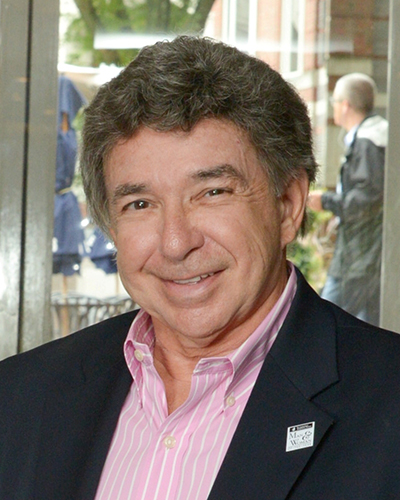
Dennis Serpone is president of the National Restaurant Exchange of Wakefield, Mass.
Tags:
Spotlight Content
MORE FROM Spotlight Content

New England Real Estate Journal's 2026 Women in Commercial Real Estate Spotlight
NEREJ's Women in CRE Spotlight celebrates the women making an impact across commercial real estate and the companies that recognize, support and champion them.







 (1).gif)
.png)
Columns and Thought Leadership

How do we manage our businesses in a climate of uncertainty? - by David O'Sullivan
These are uncertain times for the home building industry. We have the threat of tariffs mixed with high interest rates and lenders nervous about the market. Every professional, whether builder, broker, or architect, asks themselves, how do we manage our business in today’s climate? We all strive not just to succeed, but

As legacy names recalibrate, new entrants are moving in with fresh capital, new technologies, and business models tailored to today’s supply-chain needs - by Michael Harrington
Southern New Hampshire’s industrial market has always punched above its weight. For decades, the region has attracted a mix of advanced manufacturing, beverage and food producers, logistics operators, and specialty

Limited supply fuels landlord‑friendly conditions in Rhode Island’s industrial market - by Julie Freshman and George Paskalis
As we enter the spring of 2026, the Rhode Island industrial real estate market stands on stable footing, following several years of resilience fueled by constrained supply, steady demand, and dynamic economic conditions.

Shallow-bay wins on 495/128: A renewal-driven market with a thin pipeline - by Nate Nickerson
The Boston industrial market entered mid-2025 in a bifurcated state. Large-block vacancy remains elevated, while shallow-bay along the 495/128 corridor continues to prove resilient. Fieldstone’s focus on this geography positions us squarely in the middle of a renewal-driven, supply-constrained
