


 (1).gif)
News:
Finance
Posted: November 13, 2020
Pandemic and vaccine - by David Kirk

Kirk&Company
Surveillance and diligence have prevailed in commercial real estate during rent ups, adaptive reuse and new construction. Contagion in schools and small and large gatherings have spiked virus data broadly as predicted. Prevention of local trends in behavior and contagion from spreading to built environment is the challenge for commercial real estate. Both schools and gatherings are behavior issues which are dependent on self-discipline and generally beyond the industry stewardship of the built environment. The lagging disarray from pandemic and vaccine uncertainty have disabled the forecasters.
We are getting closer, and the pauses are becoming more deliberate. Community measures and messages can move the needle. And as members of the community, commercial real estate operators can certainly support the effort aggressively to prevent a spiking contagion. Before the availability of vaccine, these efforts must ramp and cascade, and must create protocols to continue and expand the rebounding economies. Markets have improved gradually as safety and care have enhanced accessibility to commercial real estate. and preventive measures and protocols have been designed and implemented on site.
New patterns of commutation have evolved. Public transit has been slow to recover ridership and only sluggishly adapted to pandemic conditions and behaviors. Manufacturing and transportation facilities and construction sites have implemented elaborate protocols and testing that have generally been effective and facilitated robust resumption of work.
The functioning of virtual alternatives has mitigated the rush to return to the office and service employment facilities. Because of vulnerable populations and contagion most employment locations are otherwise still only marginally occupied and will probably continue accordingly until vaccine is available. Reduced density occupancy and effective virtual connectivity will continue to modify patterns of occupancy and probably persist post pandemic.
Healthcare, education, entertainment, hospitality, and public service are charting new terrain in utilization and occupancy which are yet dramatically changing.
Rollercoaster, upside down, keep an open window, benchmark, meet the market, beat the market.
Make the connection. Curiosity. Take the pause, the slack, maintain occupancy, cash flow, stability, and keep it clean, endorse the protocols, be firm, friendly and focused. Improve services. Type, quality, and frequency. Services versus rents. Talk to tenants. Tell me your plan. What do you need. What do you want. How do you do. Welcome to tomorrow. Get the elevator pitch. The word we use are changing, no more normal. Zoom. Teams. Meet. Think about stability, a better solution. Go forward. Not back. Reach out. Target goals. Reduce the turn. When is uncertain. What is next. Why is now.
The conversation is different. Getting beyond is not universal, every day. Can be refreshing. We do not have a vaccine yet and until we do, the uncertainty will persist pulling cash, depressing cash flow, and impacting behaviors. More to come. More is needed. Let’s understand the behavior. Let’s behave.
David Kirk is founder and chief executive officer of Kirk&Company, Real Estate Counselors, Boston.
MORE FROM Finance
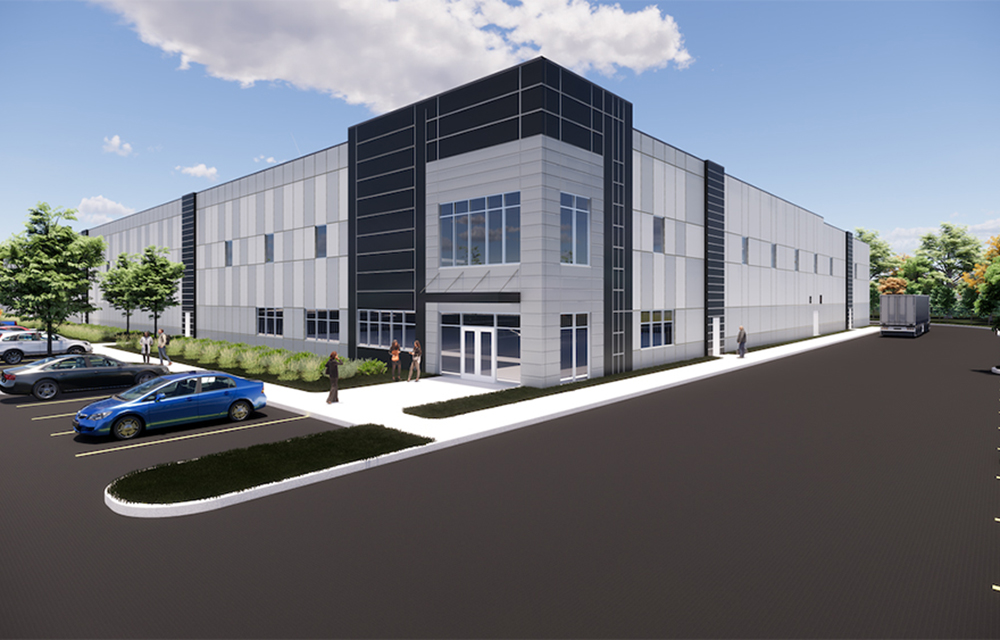
Berkeley Garbe secures $35.4 million debt financing with MetLife Investment Management
Billerica, MA Berkeley Garbe has secured a $35.4 million financing package for 161 Concord Rd., a new advanced manufacturing and innovation hub that is 30% complete following the start of construction in June. The project is on track to be completed in April 2027.


 (1).gif)



Columns and Thought Leadership

Reverse exchanges and the challenges of a competitive real estate market - by Michele Fitzpatrick
Our current, highly competitive real estate market poses specific challenges for investors who are considering taking advantage of a tax-deferred 1031 exchange. In this market, investors will have no problem selling their current property if priced properly, but they may find it difficult to find a suitable replacement property

Massachusetts real estate transfers over $1 million face new tax rules as of November 1st - by Daniel Meyer
Attention to owners of real estate in the Commonwealth (and the title companies and other professionals who advise them), the Massachusetts Department of Revenue (the “DOR”) recently adopted a new “millionaire’s tax” via 830 CMR 62B.2.4

Are appraisers on the same page as the assessor? - by Richard Seman
The purpose of this article is to address problematic or confusing issues which may help assessors and appraisers to better understand how to value real estate for tax assessment purposes.

The focus on price per s/f compared to the comparable sales used in the appraisal report - by Dennis Chanski
Over the past several weeks, I have completed appraisal assignments for private clients. Interestingly, after submitting these appraisals, I received several phone calls – not to question the value, content, or any incorrect information, but rather to discuss the price per s/f compared to the comparable sales used in the report.
