


 (1).png)
News:
Owners Developers & Managers
Posted: June 12, 2026
Pawtucket: The next frontier for life sciences companies - by Gaetan Kashala

Rhode Island’s life science industry is growing. Significant public and private investment is accelerating the development of a statewide ecosystem. At the center of this effort is the Rhode Island Life Science Hub (RILSH), a quasi-public agency statutorily mandated to spearhead the growth and competitiveness of the state’s life sciences industry. The momentum is unquestionable. RILSH’s 2025 Economic Impact Report notes $5.9 billion in economic impact, ~50,500 jobs supported, and ~$3.9 billion labor income statewide.
Building a thriving life sciences ecosystem, however, requires more than investment alone. Workforce development remains one of the industry’s most pressing challenges. Through initiatives such as The Pawtucket Foundation’s Life Sciences Career Awareness Program, local stakeholders are helping to cultivate the next generation of life science talent. Yet workforce availability is a necessary but insufficient condition to the realization of a successful ecosystem. Companies also require sites that can accommodate growth, infrastructure that supports specialized operations, and a business environment conducive to investment.
This is where Pawtucket enters the conversation. Life sciences companies evaluating locations for new facilities or expansion must navigate a complex decision-making process. Site selection considerations include talent availability, proximity to innovation ecosystems, real estate and infrastructure readiness, operating costs, supply chain connectivity, regulatory efficiency, incentives, and quality of life. In many mature life sciences markets, companies face escalating occupancy costs, lengthy permitting timelines, infrastructure constraints, and intense competition for talent and public resources.
Pawtucket offers a compelling alternative. As one of New England’s historic industrial centers, Pawtucket possesses a built environment uniquely suited for modern life sciences growth. The city’s legacy of manufacturing and innovation has left behind a portfolio of large-scale industrial properties and historic mill buildings that are well positioned for adaptive reuse, advanced manufacturing, laboratory conversion, and bioprocessing operations. Unlike more constrained urban markets, Pawtucket provides room for expansion and redevelopment at a scale that is increasingly difficult to find elsewhere in Southern New England.
Location is another strategic advantage. Situated just ten minutes from downtown Providence and approximately forty-five minutes from Boston, Pawtucket provides access to two of the region’s most important innovation economies while maintaining substantially lower occupancy and operating costs.
Companies can tap into the talent, research institutions, hospitals, and venture networks of Greater Boston and Providence without assuming the premium costs associated with those markets.
Connectivity further strengthens Pawtucket’s value proposition. The city benefits from direct access to I-95, regional rail service, nearby ports, and a top ranked airport, creating efficient connections for employees, suppliers, and customers. This transportation network supports both regional workforce recruitment and the movement of materials and products essential to life sciences operations.
The city’s collaborative approach to economic development is also an advantage. Pawtucket’s leadership recognizes the importance of reducing friction in the site selection and development process. Whether through creative financing tools, assistance navigating permitting and entitlement processes, or strategic partnerships, the city is committed to helping employers bring projects from concept to completion.
Finally, quality of life remains a critical consideration in attracting and retaining employees. Pawtucket is investing in housing production across a range of income levels while cultivating a vibrant urban environment defined by arts and culture, a growing food scene, professional sports and entertainment venues, and a thriving creative economy. The city is also recognized as Rhode Island’s craft beverage capital, boasting the state’s highest concentration of breweries and distilleries.
As Rhode Island’s life sciences ecosystem continues to mature, companies seeking a strategic, cost-effective, and scalable location would be wise to take a serious look at Pawtucket. The city offers a rare combination of strategic location, available development opportunities, competitive operating costs, regional connectivity, and public-sector partnership at a time when many larger markets are constrained by cost and complexity.
Further, its industrial legacy, entrepreneurial spirit, and commitment to economic growth have created a foundation upon which life sciences companies can build and scale. Early movers will have the opportunity to shape the ecosystem, secure premier sites, establish strategic partnerships, and contribute to the next chapter of Rhode Island’s life sciences story. Rhode Island is investing in life sciences. Pawtucket is ready!
Gaetan Kashala is the executive director of the Pawtucket Foundation, Pawtucket, R.I.
MORE FROM Owners Developers & Managers
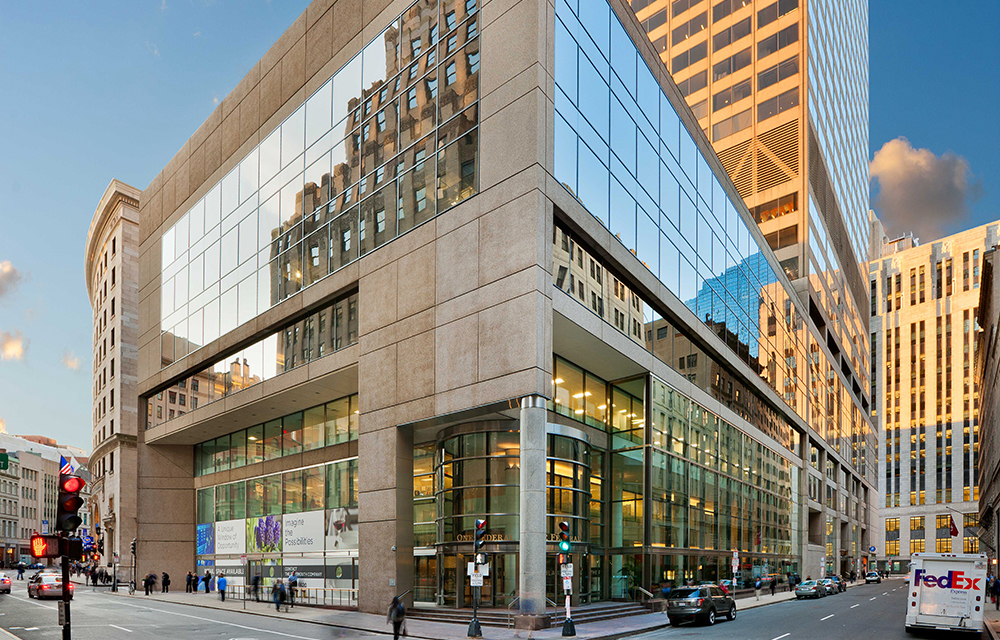
Rubin Rudman to establish headquarters at Tishman Speyer’s One Federal St.
Boston, MA Tishman Speyer has secured a new headquarters lease with Rubin Rudman at One Federal St., its 38-story, 1.1 million s/f tower in the Financial District. Under a 15-year lease, Rubin Rudman’s new headquarters will span 57,844 s/f across One Federal’s entire 23rd and 24th floors and a portion of the 25th floor.





 (1).png)

Columns and Thought Leadership

The legislature has spoken: New Hampshire doubles down on housing in commercial zones - by John Sokul
Last year, the New Hampshire Legislature enacted HB 631, a landmark housing measure requiring municipalities to permit multifamily housing in commercially zoned districts. The law generated
Retail infill strategy to activate Pawtucket’s Conant Thread District - by Gaetan Kashala
Until recently, the Conant Thread District consisted of approximately 150 acres of underutilized industrial land spanning Pawtucket and Central Falls. Today, the area is one of the most significant

IREM president’s message: Our new reality - Staying ahead of supply chain delays - by Yoany Vargas
Supply chain delays are slowing construction, ratcheting up operating costs, and extending turnover timelines across Greater Boston, directly reducing revenue and increasing the workload for multifamily and

Revitalized Town Centers: Retail??? - by Carol Todreas
It is now widely accepted that customers want to shop in person at physical stores. Brands know that they do better business in a physical store than just on line so they want to open stores. Demand for retail space by digital merchants, local entrepreneurs, and newly developed national chains