


 (1).png)
News:
Owners Developers & Managers
Posted: January 1, 2016
Pepdjonovic of Marcus & Millichap completes $2.075 million sale of Safford Street Apartments
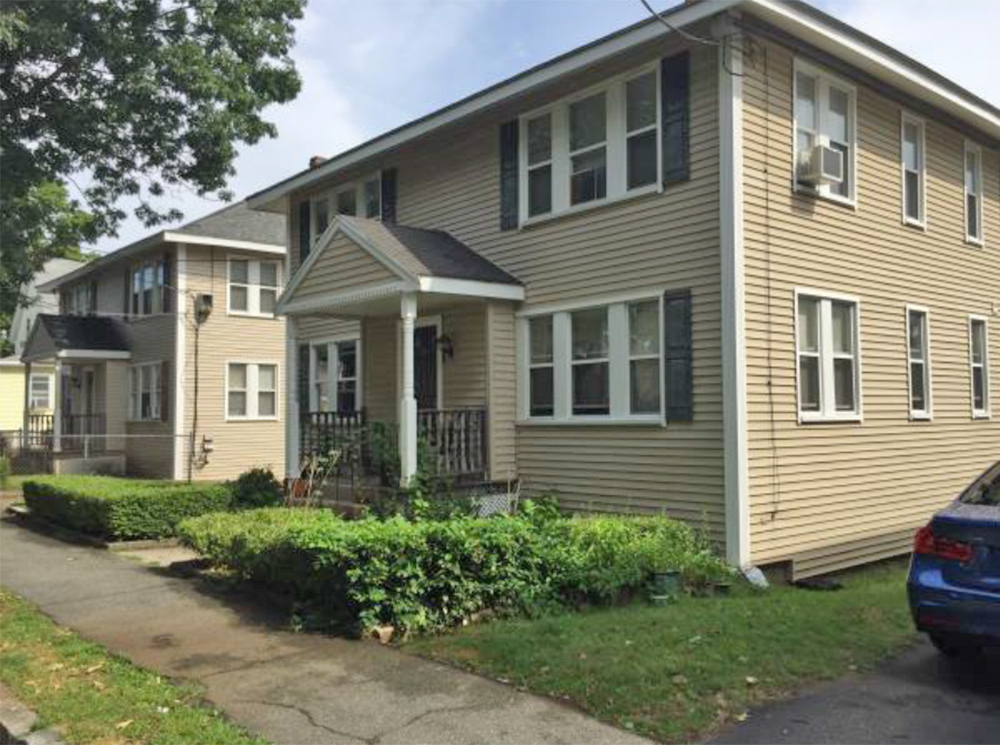 Safford Street Apartments, 66 and 70 Safford Street - Quincy, MA
Quincy, MA Marcus & Millichap completed the sale of Safford Street Apartments, a 16-unit apartment property, according to Tim Thompson, sales manager of the firm’s Boston office. The asset sold for $2.075 million.
 Marcus & Millichap" width="150" height="150" /> Tony Pepdjonovic, Marcus & Millichap
Tony Pepdjonovic, an investment specialist in Marcus & Millichap’s Boston office, had the exclusive listing to market the property on behalf of the seller, an individual/personal trust. The buyer, a limited liability company, was procured by Pepdjonovic.
The Safford Street Apartments are located at 66 and 70 Safford St. The offering is comprised of two identical eight-unit buildings located in one of the most desirable rental neighborhoods in the city. Each building consists of eight one-bedroom apartments.
Newer upgrades to the building include vinyl-siding, replacement windows, and roof work. The Safford Street Apartments provide the buyer tremendous upside as the property is 30% below market level rents.
The offering provides even further upside in separately metering heating costs to be borne by tenants. 66 and 70 Safford St. is in an excellent commuter location within walking distance (0.4 miles) to North Quincy Station - MBTA - Red Line. The properties are also convenient to Heritage and Enterprise Dr. office parks which are home to major employers such as State Street Bank, Granite Telecommunications, Blue Cross Blue Shield of Mass., and Propel Marketing.
With the $2 billion redevelopment of Quincy Center back on track, investors are increasingly bullish on the long-term outlook of the Quincy rental market.
With over 1,500 investment professionals located throughout the United States and Canada, Marcus & Millichap is a leading specialist in commercial real estate investment sales, financing, research and advisory services. Founded in 1971, the firm closed over 7,600 transactions in 2014 with a value of approximately $33.1 billion. The company has perfected a powerful system for marketing properties that combines investment specialization, local market expertise, the industry’s most comprehensive research, state-of-the-art technology, and relationships with the largest pool of qualified investors.
MORE FROM Owners Developers & Managers

Question 3 would build on Rhode Island's economic strengths
At the Quonset Business Park, we’ve seen firsthand what is possible when Rhode Island makes strategic investments in the infrastructure and programs businesses need to grow. This election season, Question 3 on the ballot asks voters






Quick Hits
 (1).png)

Columns and Thought Leadership

IREM president’s message: Our new reality - Staying ahead of supply chain delays - by Yoany Vargas
Supply chain delays are slowing construction, ratcheting up operating costs, and extending turnover timelines across Greater Boston, directly reducing revenue and increasing the workload for multifamily and

The legislature has spoken: New Hampshire doubles down on housing in commercial zones - by John Sokul
Last year, the New Hampshire Legislature enacted HB 631, a landmark housing measure requiring municipalities to permit multifamily housing in commercially zoned districts. The law generated

Retail infill strategy to activate Pawtucket’s Conant Thread District - by Gaetan Kashala
Until recently, the Conant Thread District consisted of approximately 150 acres of underutilized industrial land spanning Pawtucket and Central Falls. Today, the area is one of the most significant

Revitalized Town Centers: Retail??? - by Carol Todreas
It is now widely accepted that customers want to shop in person at physical stores. Brands know that they do better business in a physical store than just on line so they want to open stores. Demand for retail space by digital merchants, local entrepreneurs, and newly developed national chains