


 (1).png)
News:
Owners Developers & Managers
Posted: January 31, 2025
Renting artwork to corporations: A creative solution with unique benefits - by Joyce Creiger

In today’s corporate world, office spaces are more than just functional areas for work – they are reflections of a company’s brand, culture, and values. One innovative way businesses are enhancing their office aesthetics is by renting artwork. This trend has gained traction across industries, offering companies a cost-effective and flexible way to elevate their spaces without committing to permanent investments. However, like any business decision, renting artwork comes with its own set of pros and cons.
The Pros of Renting Artwork:
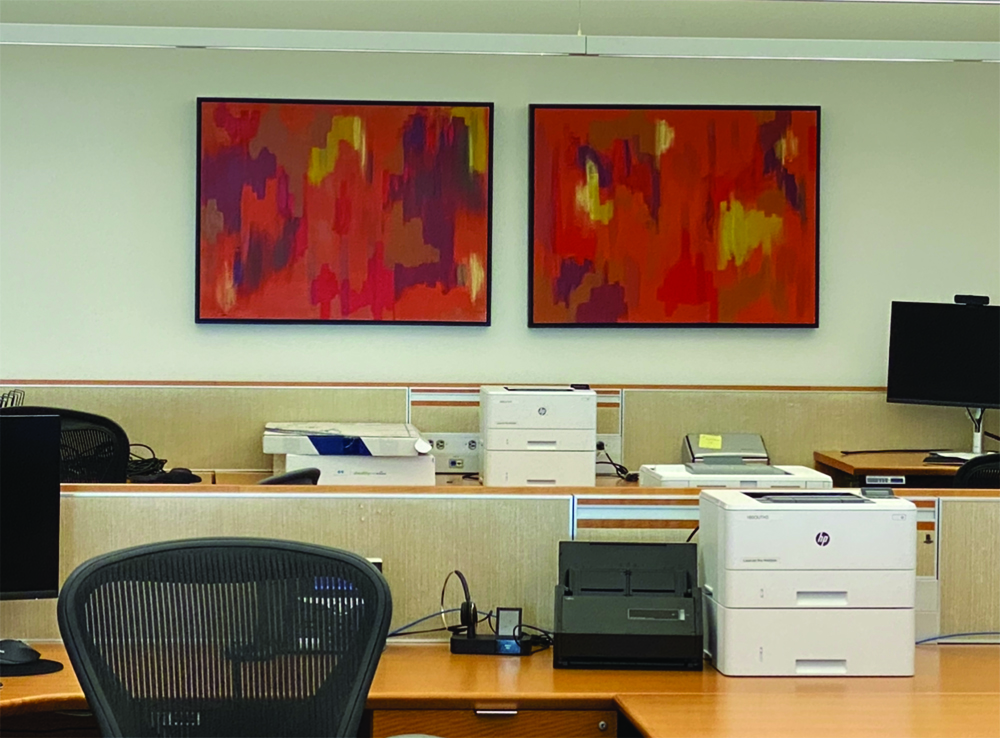
1. Flexibility and Variety: One of the greatest advantages of renting artwork is the ability to refresh the office environment regularly. Businesses can rotate pieces to keep the space dynamic and inspiring, aligning the art with seasonal themes, branding changes, or corporate events.
2. Cost-Effectiveness: Purchasing original artwork can be prohibitively expensive, especially for high-quality or large-scale pieces. Renting allows companies to access impressive collections without the upfront investment, often for a fraction of the cost.
3. Tax Benefits: In many cases, rental costs can be written off as operational expenses, providing businesses with financial incentives that aren’t available when purchasing art outright.
4. Minimal Commitment: Renting eliminates the pressure of committing to a piece of art permanently. This is particularly appealing for startups or rapidly evolving companies that may need to change their aesthetics as they grow.
5. Professional Curation: Many art rental services offer consultations with professional curators who can help select pieces that complement a company’s space and brand identity. This ensures the art not only enhances the environment but also resonates with employees and clients.

The Cons of Renting Artwork
1. Ongoing Costs: While renting is more affordable upfront, the ongoing costs can add up over time. Businesses need to weigh whether the long-term rental fees exceed the value of purchasing art outright.
2. Limited Ownership: Renting means the artwork is never truly “yours.” For companies that value ownership or see art as an investment, this can be a drawback.
3. Potential for Damage: While rental agreements typically include insurance, businesses may still face liabilities for damage or loss, adding a layer of responsibility.
4. Selection Limitations: Depending on the provider, the selection of artwork may be limited. Companies with specific tastes or branding requirements might find it challenging to locate suitable pieces.
Cost Options and Practical Considerations
Art rental costs vary widely based on factors like the size, medium, and prestige of the artwork. On average, businesses can expect to pay anywhere from $50 to $100 per month per piece. Many services offer tiered pricing plans, allowing companies to scale their investment according to their budget.
Some providers also include additional services in the rental fee, such as delivery, installation, and periodic rotation of the artwork. This all-inclusive approach makes the process hassle-free for businesses, particularly those without in-house design teams.
How Easy Is It to Rent Artwork?
Renting artwork is surprisingly straightforward. Most art rental services have user-friendly platforms where businesses can browse collections, filter by style or price, and select pieces that suit their needs. After choosing the artwork, the provider typically handles the logistics, including transportation and installation.
For example, companies like Boston Art Rentals offer customized solutions for corporate clients. Boston Art Rentals pairs businesses with a dedicated art advisor who manages the selection process, and streamlines delivery and installation through its platform. Several area museums also offer art rental services in exchange for a tiered donation to the museum. These services make renting art as simple as leasing office furniture or equipment.
Final Thoughts
Renting artwork offers corporations a creative, cost-effective way to enhance their office environments while maintaining flexibility. It allows businesses to showcase their commitment to culture and innovation without the financial burden of ownership. However, understanding the potential drawbacks and evaluating long-term costs is crucial for making an informed decision. With a wide range of options and providers available, companies can easily find a solution that fits their aesthetic and budget, making art rental a smart strategy for modern workspaces.
Joyce Creiger is the owner of Platinum Art Group LLC and Boston Art Rentals, Framingham, Mass.
MORE FROM Owners Developers & Managers

The Lodge at Spruce Peak recognized with Condé Nast Traveler’s 2026 Readers’ Choice Award - #3 in New England
Stowe, VT Condé Nast Traveler revealed the results of its annual Readers’ Choice Awards, with The Lodge at Spruce Peak recognized as the #3 U.S. Resort in New England.





Quick Hits


Columns and Thought Leadership

Revitalized Town Centers: Retail??? - by Carol Todreas
It is now widely accepted that customers want to shop in person at physical stores. Brands know that they do better business in a physical store than just on line so they want to open stores. Demand for retail space by digital merchants, local entrepreneurs, and newly developed national chains

Retail infill strategy to activate Pawtucket’s Conant Thread District - by Gaetan Kashala
Until recently, the Conant Thread District consisted of approximately 150 acres of underutilized industrial land spanning Pawtucket and Central Falls. Today, the area is one of the most significant

The legislature has spoken: New Hampshire doubles down on housing in commercial zones - by John Sokul
Last year, the New Hampshire Legislature enacted HB 631, a landmark housing measure requiring municipalities to permit multifamily housing in commercially zoned districts. The law generated

IREM president’s message: Our new reality - Staying ahead of supply chain delays - by Yoany Vargas
Supply chain delays are slowing construction, ratcheting up operating costs, and extending turnover timelines across Greater Boston, directly reducing revenue and increasing the workload for multifamily and