Search
Story results for: david kirk
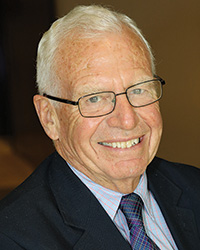
Bathrooms, benches and other public spaces in Boston - by David Kirk
July 13, 2018
Public space – open, accessible, attractive and integrated – has been on the urban agenda and permitting plate for decades. The details have been inconsistently transparent and enforced. Of course, some results have been essential and elegant.
Building resilience and sustainability - by David Krik
June 8, 2018
The built environment is vulnerable. Commercial real estate is particularly well measured for resilience and sustainability because for-profit holding entities do not normally have access to rainy day funds or endowments like public and non-profit property owners respectively.

Real estate continues to benefit from moderate economic fundamentals and well-priced risk - by David...
March 30, 2018
The new Fed chair Jerome Powell announced the first rate hike for 2018 on March 21. Along with continuing members of the Federal Open Market Committee (FOMC), Powell represents continuity and consistency, accessibility and transparency.

Ramping up the economy and commercial real estate in 2018 - by David Kirk
January 12, 2018
Cycling up after such an extended expansion is unprecedented. Like all cyclical patterns, this one will be a puzzler while unfolding. Tax reform has been boasted as a big booster, boosting GDP from 2-3% to 4.5 and 6%.
FED action and tax reform might be considered tailwinds - by David Kirk
November 10, 2017
Commercial real estate continues to benefit from moderate economic fundamentals and well -priced risk. Nevertheless, the favorable conditions and outlook are unevenly spread over related capital and property markets.

Market conditions: Room to run and time to deal! - by David Kirk
October 13, 2017
The Las Vegas tragedy and the destruction and disruption from the unprecedented series of natural disasters have given everyone reasons to pause. What lessons can be learned and how can we best recover and respond?
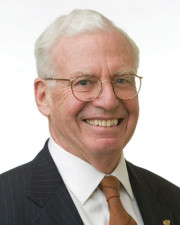
What’s good for the property is good for the users - by David Kirk
September 8, 2017
Infrastructure and readiness are on the minds of everyone lately, especially in the wake of recent disasters and crises around the country and around the globe. Mobility, nimbleness, and the ability to pivot are universal themes and relate to commercial real estate as we think harder about discrete implications.

Reconciliation can similarly be complex for appraisals - by David Kirk
August 11, 2017
Appraisals of commercial real estate and other special purpose properties consider three approaches to value and conclude with a reconciliation of the approaches to estimate a final value.
Cyclical patterns and impact on policies in global trade - by David Kirk
July 14, 2017
Current economic commentary includes the forecast of impending cyclical patterns and the impact on the domestic economy of protectionist policies in global trade.
Current market conditions: Capitalization nausea - by David Kirk
June 9, 2017
Stable and sustainable. Most of the nation is experiencing moderate economic growth according to the Federal Reserve’s latest Beige Book, released May 31