


 (1).gif)
News:
Finance
Posted: January 12, 2018
Ramping up the economy and commercial real estate in 2018 - by David Kirk

Kirk & Company
Cycling up after such an extended expansion is unprecedented. Like all cyclical patterns, this one will be a puzzler while unfolding. Tax reform has been boasted as a big booster, boosting GDP from 2-3% to 4.5 and 6%. And with infrastructure spending, disposable income gains and consumer spending, GDP might just bump upwards to once unbelievable territory. Commercial real estate has separate cycles that are dependent on local inventory balances in supply and demand. Often lagging, commercial real estate also has been a leading component to the overall picture. Patterns in commercial real estate can stump the algorithm as randomly as the economic cycle. Accordingly, now is still game time!
Infrastructure spending is important and logical if not politically a slam dunk. For safety and security, our highways and railways and energy grids require repair, refurbishment and replacement. Fresh water, waste and communication systems are similarly dangerously neglected, especially in postindustrial midwestern cities. Improving preparedness and resilience for disasters, catastrophes and terror is a critical component to the U.S. equation. All are essential to maintaining sustainable built environments and investments. Commercial real estate is dependent upon offloading the financial burden of infrastructure spending.
Moving from poured in place ramps and girders, tunnels and bridges, transmission towers, signage and shelters, let’s make infrastructure and public spaces work for the property and the community. Urban properties are notorious for windswept plazas with waist-high planters, possible public art and well protected water features. Shopping centers are only notorious for parking lots and islands. Shelters from the weather and even something as simple as benches are missing almost everywhere. And public bathrooms are nowhere to be found. Pedestrians are likely to move through and over the open space without lasting experience, entertainment, excitement or relaxation. Opportunities are abound for enhancing these spaces and making them work for the property while also working for the community. Scale and scope are necessarily dependent on the resources of the site and the improvements. However, employees, clients, customers and their friends and families are going where the public spaces are accessible, inviting and fun. Follow them.
Redefining infrastructure is a first step. Strategic linkages are increasingly compelling, efficient and technologically achievable. Mediating the priorities of the stakeholders is the pause that refreshes the landscape and built environment. For Boston, the Big Dig did it, making infrastructure an integral part of a much needed, long delayed, increasingly complicated traffic dilemma. All enhancing the built environment, accessibility and mobility and the natural opportunities of the urban community.
Now these challenges and opportunities are different. And so are the methodologies for integration and coordination. Better planning, better execution. Not just rhetoric. Precedents and best practices exist. We can do it. Let’s do it.
Happy new year and best for 2018!
David Kirk, CRE, MAI, FRICS, is principal and founder of Kirk & Company, Real Estate Counselors, Boston.
MORE FROM Finance
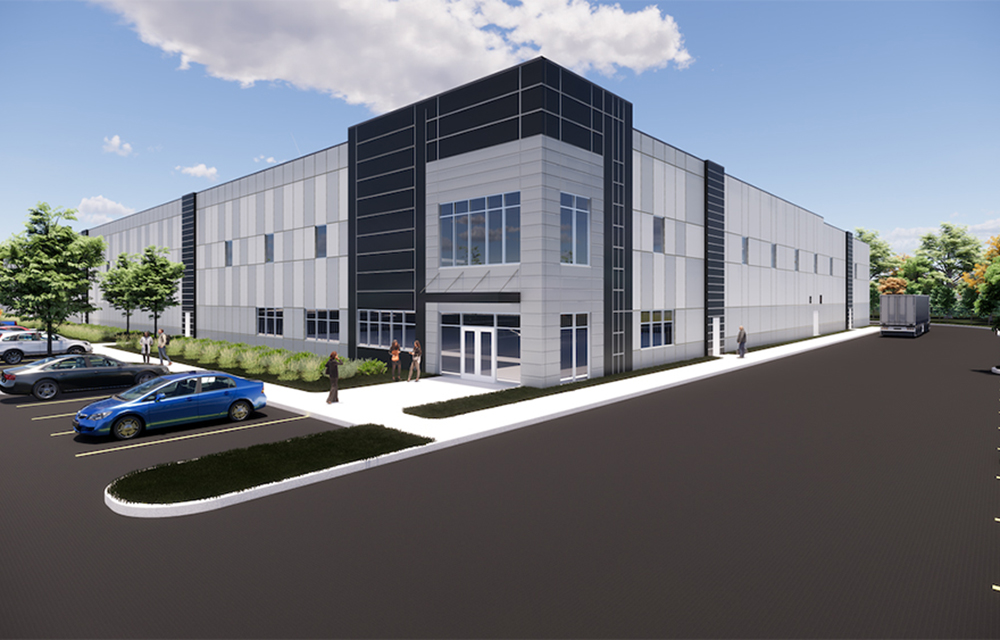
Berkeley Garbe secures $35.4 million debt financing with MetLife Investment Management
Billerica, MA Berkeley Garbe has secured a $35.4 million financing package for 161 Concord Rd., a new advanced manufacturing and innovation hub that is 30% complete following the start of construction in June. The project is on track to be completed in April 2027.


 (1).gif)



Columns and Thought Leadership

Are appraisers on the same page as the assessor? - by Richard Seman
The purpose of this article is to address problematic or confusing issues which may help assessors and appraisers to better understand how to value real estate for tax assessment purposes.

Massachusetts real estate transfers over $1 million face new tax rules as of November 1st - by Daniel Meyer
Attention to owners of real estate in the Commonwealth (and the title companies and other professionals who advise them), the Massachusetts Department of Revenue (the “DOR”) recently adopted a new “millionaire’s tax” via 830 CMR 62B.2.4

The focus on price per s/f compared to the comparable sales used in the appraisal report - by Dennis Chanski
Over the past several weeks, I have completed appraisal assignments for private clients. Interestingly, after submitting these appraisals, I received several phone calls – not to question the value, content, or any incorrect information, but rather to discuss the price per s/f compared to the comparable sales used in the report.

Reverse exchanges and the challenges of a competitive real estate market - by Michele Fitzpatrick
Our current, highly competitive real estate market poses specific challenges for investors who are considering taking advantage of a tax-deferred 1031 exchange. In this market, investors will have no problem selling their current property if priced properly, but they may find it difficult to find a suitable replacement property
