



News:
Brokerage
Posted: January 16, 2026
SIOR NE chapter holds end of year market review
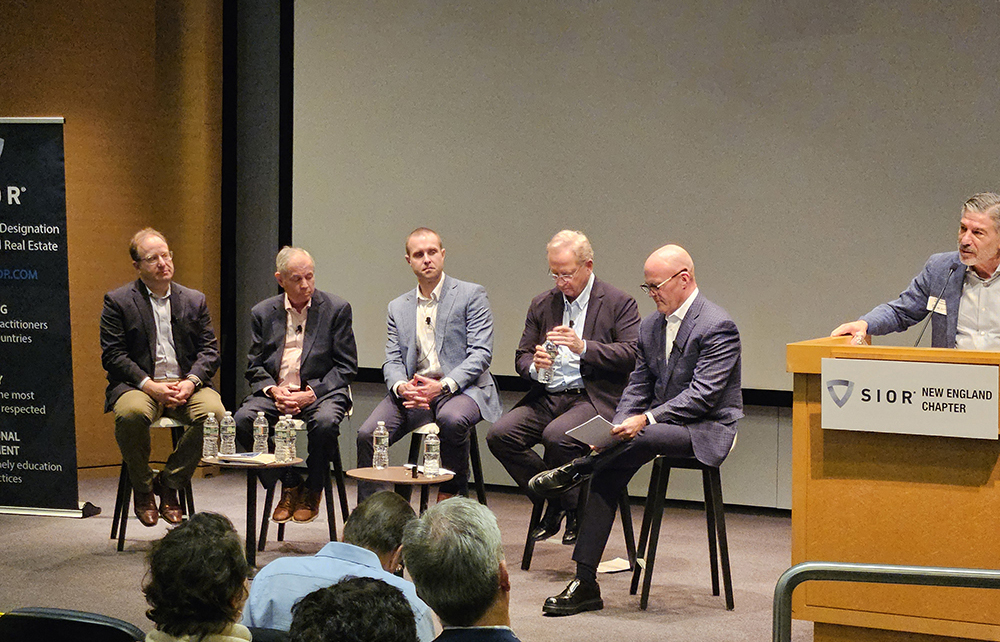
Boston, MA The SIOR New England Chapter held its End of Year Market Review on December 3, 2025 at 100 Federal St. Auditorium. Over 60 people were in attendance for this panel discussion that included Bryan Koop, EVP of Boston Properties; Ethan Colaiace, VP of corporate real estate and facilities at Hasbro; Chuck Reilly, VP at Dacon Construction; Alex Mancuso, senior director, coast leasing at BioMed Realty; and Michael Dalton, SIOR and principal at Avison Young as the moderator. The program started with opening remarks from the SIOR Chapter president George Paskalis who introduced the chapter’s newest members, Bill Kingdon, SIOR and Chris Reilly as a member associate. Paskalis also thanked Dacon Construction for sponsoring this event in addition to other sponsors throughout the year that included: ARCO, Vantage Builders, Boulos Co., CPM Currie, McLane Middleton, RJKelly, 128CRE, Colliers, Conn Kavanaugh, Dyer Brown, Eastern Bank, Erland, Legal 1031, Marcus Partners, MG Commercial, Partridge Snow & Hahn and Sage Environmental.
Coming Back to the Office
Colaiace discussed Hasbro’s decision to relocate to Boston and moving its core operations from toys and games to digital assets. They found that having access to the talent in Boston was critical. Habro has a three-day back to office from Tuesday to Thursday as a mandate. However, they have to offer amenities to attract personnel back. The objective is to earn the respect of employees to want to come back, fight the commute travel and make it worthwhile. It’s a completely different model than in the past decades. Workers are hard to find and now companies have to offer benefits to the employees to woo them through a long commute.
Koop stated that the return to office was more active in Boston than NYC or San Francisco. He anticipated this back-to-office disruption in the industry prior to COVID. He views this as a disruption in the industry, but every industry has a different impact with back to office. It may not affect lab workers because they work in a lab which may be different for tech or accounting in which they could work from home. Therefore, you experience different trends which makes it more confusing as a developer to figure out the overall pattern. In Boston, his firm for instance is 100% leased and he has no vacancies, which is hard to believe. BackBay is the same, 100% leased. But Wall Street in NYC is different with more vacancies but mid-Manhattan is tight with space. NYC is #1 with back to office, followed by Boston then San Francisco. San Francisco is driven by AI work. Mid-Town NYC has more financial companies and law firms that are driving the back to office use. In each case, companies have to focus on the office environment prior to asking employees to come back to work. He is tracking his office tenants to understand the office usage, and he knows what industries are stronger coming back to the office.
Mancuso at BioMed stated that they aren’t returning anymore. It’s about utilization and there is a generational shift. We are moving forward with a new evolution. Science doesn’t leave the bench. He has two, 600,000 s/f lab buildings in Cambridge to be leased. He is still experiencing more people coming back to the office and he expects more. But as an employer, he has to earn the right to ask employees to fight the commute to the office and make it worthwhile. He has to understand that he can’t make it an obligation to come back to the office.
Converting Lab into Something Else?
The question posed to the panel was: is it feasible?
Mancuso stated that it is difficult to convert lab to another use. The difficulty is more about the change of approach versus the plans itself. He will take advantage to improve his approach and his tenant’s core business. He needs to find a way to be easy to deliver space. Koop said he needs to be a tool for tenants and their core business. As a landlord, you have to be an operator rather than acting as an investor, in order to be successful. You have to knock out floors to design lab and this is not easy. Reilly discussed “tough tech” converting buildings for industrial or flex. What is the sector trend?
Mancuso mentioned that they bought an engineering building in Maine and he is seeing a larger bucket of requirements for the building. It’s all different requirements. Should the building be 30’ clear or 10’ clear? Tough Tech is all over the place with requirements. He has to look at his portfolio differently and his mechanical requirements. It’s a challenge to meet new requirements by each tenant and after you design a lab building, converting it to another use with so many different tenant requirements and needs of today, is difficult. For instance, quantum users may seem the same to the outside world but the power requirements are very different.
Colaiace talked about Hasbro’s move to the Seaport was a different requirement than where they are located in Pawtucket, RI. Seaport has vertical buildings versus horizontal in Pawtucket. Meeting employees and communications is very different in a vertical building. There is a need for a lot of communications, and they are not as power intensive.
Amenities
With all these demands to come back to the office, amenities become critical to show the employee that fighting traffic to come to work is worth it. So now there is a war for amenities as a landlord. You need to decide what your tower needs and what your client-tenant needs. They have the 200 Club in their office building in Boston with fitness centers and cafes that they thought would never get usage. Now they see these facilities fully used on weekends and nights.
Mancuso said that he needs to elevate his amenities in his buildings. He needs a scoop of vanilla ice-cream. A landlord can’t put himself at a disadvantage with competitors, but the industry is all raising the ceiling on quality and amenities and now it’s how do you raise the ceiling even more? What’s the next thing that he needs to provide tenants to get employees to drive 1.5 hours to work? Time is the new amenity. Having an in-house hair salon for a haircut or an in-house nurse practitioner for a flu-shot saves time to leave a building for the same services. Assembly Row gives you time as an amenity. You need to offer time to tenants as the true amenity and offer convenience. It’s not concierge service but giving back minutes in the employee’s day.
Colaiace observed that when Hasbro toured the Seaport, they realized the new issue of being vertical and being on different floors in a tower.
They wanted to offer employees in-house complimentary Starbucks and have employees mingle and talk. A vertical building can stifle that objective. You need to be in a neighborhood setting that creates employee services.
Required Electrical Power
Bryan said that “power” is the key to the MA economy. We need leadership on the power servicing buildings. We have an abundance of natural gas in the U.S. and that might be the alternative. Mancuso stated that there is a significant challenge on power availability. We need pragmatism. He needs to look at his renewals and focus now that AI needs more power. Bryan went on to say that 80% of investments in AI is in the San Francisco market and that the impact to Boston hasn’t occurred yet.
What Keeps You Up at Night?
Ethan has a lot of responsibilities, and he wants to do it well and keep his employees happy. Chuck said that construction pricing is keeping him up at night. The costs are better than a couple of years ago but its still high. Mancuso said that business is always changing but that there is a generational shift in how his buildings are being used now and how will they be used in the next 10 years. There is a stress on valuation. The fear is an issue to “get” decisions right with the portfolio and not just being “right” with one building. But he felt that there are also a lot of new opportunities. Bryan said that young people are far less flexible and have a gravity to stay with the way things are done. We need new homes for what we do in the industry. When things are bad, he sees opportunities, but it will be chaotic with changes and now it’s the age of being an operator of buildings and not financial engineers. The day of comedizing real estate is over.
Amenities Again
Bryan said that we will experience mistakes as landlords add amenities in buildings that don’t deserve amenities. Landlords have to be smart about how and when to add amenities. Not all buildings deserve amenity packages.
Mancuso said that adding amenities to certain buildings wouldn’t make a difference. The basis on certain buildings is too high to add more amenities. You can charge tenants for some usage of amenities with fees but it’s a slim line to cross. The amenity better be real good to charge for it or other landlords will start offering the same amenity for free. Bryan discussed space planners giving advice to tenants to transfer to hoteling and not having assigned seating. But Ethan interjected that Hasbro is going with assigned seating. Food is also a big driver amenity and creates a weapon in his space with employees, having a good coffee program, good food, etc. makes employees feel valued. Mancuso stated that the impact of AI is still unknown until the power problem is solved. He doesn’t believe that AI will change employee head count.
After the panel discussion, there was a Q&A and then a well-attended reception on the second level.
Tags:
Brokerage
Massachusetts
MORE FROM Brokerage
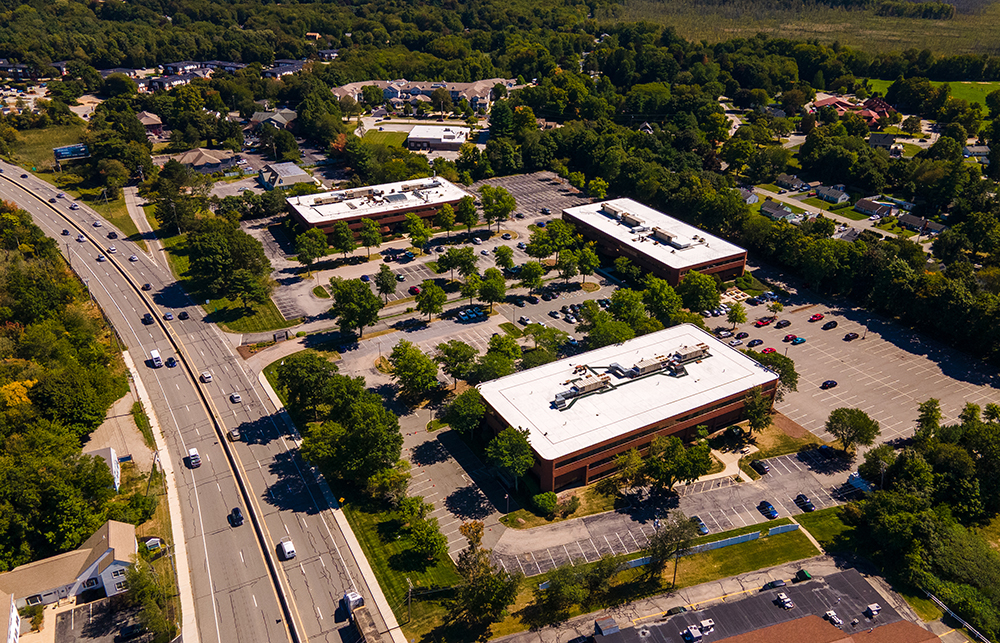
Sullivan & Sullivan Auctioneers bringing Westborough Office Park to foreclosure auction October 23, 2026 at 12PM
Westborough, MA According to Marianne Sullivan, president of Sullivan & Sullivan Auctioneers, her firm will be bringing Westboro Executive Park to foreclosure auction on Friday, October 23, 2026 at 12PM. The offering consists of three buildings on three separate parcels totaling 244,335 s/f of mixed use space on 14.9 acres in the MetroWest Business Corridor.





Columns and Thought Leadership

End of the year retail thoughts - by Carol Todreas
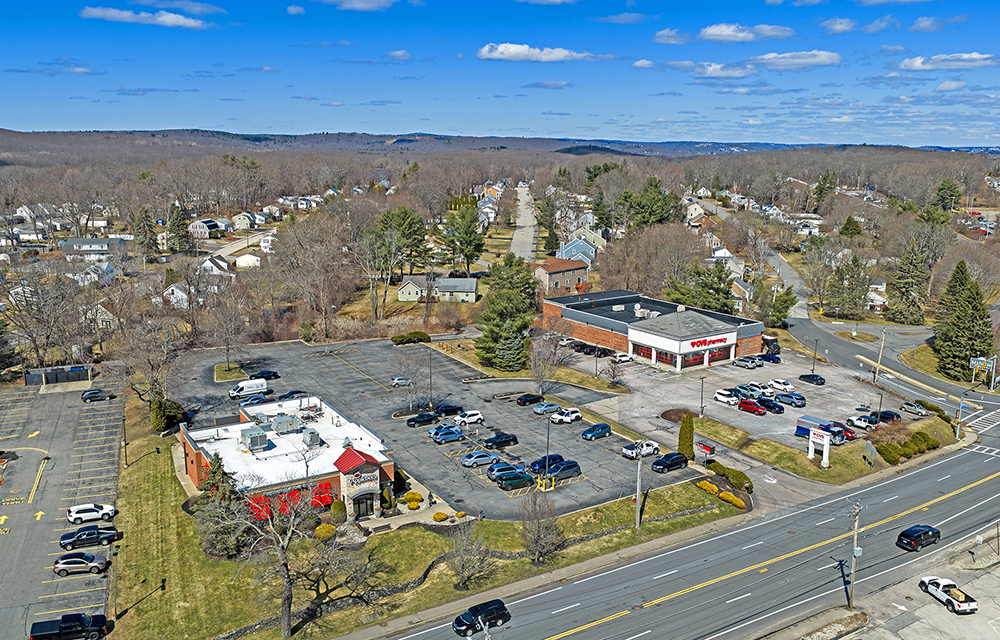
Now what? As the year comes to a close, the state of retail is always in the news. The answers vary greatly depending on who in the various related industries you ask, each offering a unique lens on the challenges and opportunities ahead.
The rise of AI in CRE - And what it means for every skilled profession - A broker & appraiser weighs in - by Bryan Plourde
This may seem self-serving, and I’ll be the first to admit it. But unlike some of the artificial intelligence tools now reshaping our industry, I am fully aware of my own bias. So, hear me out. The rise of AI in commercial real estate is not a distant threat or a speculative headline.
