


 (1).png)
News:
Owners Developers & Managers
Posted: August 23, 2019
Six opportunities & trends to watch in private equity - by John Pariseault
Hinckley Allen
In a low interest rate environment and with plenty of undeployed capital, private equity firms continue aggressive investments in commercial real estate assets.
The real estate market in which these firms invest is facing a variety of challenges and opportunities given the ever-changing domestic and international political realities, rapid technological advances, as well as changes in consumer behavior and preferences. In this context, here are six opportunities and industry trends that real estate professionals should watch carefully:
1. Multi-family Residential: Many investors agree this is the hottest sector by far. There is concern that the sector may be overheating, but developers and investors alike continue to plan and execute multi-family residential projects (especially in strong markets with economic drivers) with cautious optimism.
2. Qualified Opportunity Zones: Industry experts tend to view Qualified Opportunity Zones (QOZ) as a tool, but not a strategy in and of itself. Most developers will only take advantage of the QOZ program if the development project would have worked on its own without the QOZ benefits. To many, QOZ is a “cherry on top.”
3. Retail: Developers and investors (especially institutional investors) are hesitant to build and invest in this sector due to e-commerce pressures. However, there are firms who view this hesitancy as an opportunity to acquire quality assets at higher cap rates, especially in light of very favorable financing terms. Most believe that mixed use and experiential retail is the future and that car-sharing presents an opportunity for retail owners to utilize more space at their properties for healthcare and residential uses.
4. Office: Continues to be very strong in Class A markets, but perhaps more challenging than retail when it comes to Class B and lower office space.
5. Disruption: Co-working and co-living space will continue to expand, especially as traditional developers of residential, office, and hotel properties incorporate design, amenities, and other best practices from the co-working/co-living/sharing economy frontrunners.
6. Where Are We in the Cycle? Sentiment is that we are getting close to the top of the market, but that there is “still some runway left.” There is a general concern that lower and lower cap rates may be pushing prices too high (especially in residential). However, many developers and investors believe that there are still good deals out there to be made. The mantra is “keep calm, but de-risk.” Many also believe that while a slow-down in the cycle is likely it won’t be a “synchronized fall” of the entire system as was the case in 2008.
John Pariseault is a real estate attorney and chair of the retail group at Hinckley Allen, Boston, Mass.
MORE FROM Owners Developers & Managers
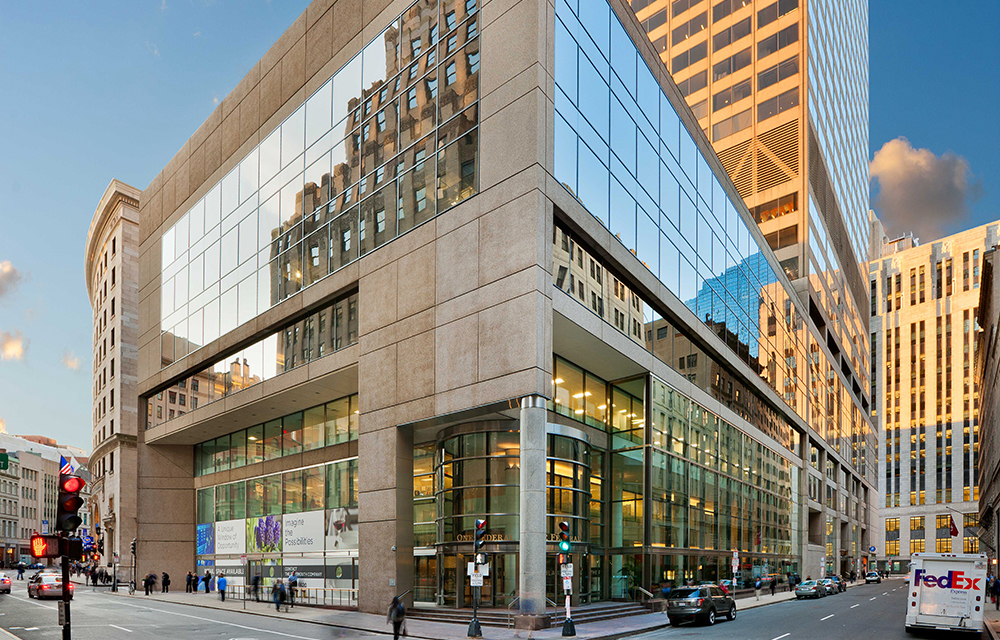
Rubin Rudman to establish headquarters at Tishman Speyer’s One Federal St.
Boston, MA Tishman Speyer has secured a new headquarters lease with Rubin Rudman at One Federal St., its 38-story, 1.1 million s/f tower in the Financial District. Under a 15-year lease, Rubin Rudman’s new headquarters will span 57,844 s/f across One Federal’s entire 23rd and 24th floors and a portion of the 25th floor.







Columns and Thought Leadership

Revitalized Town Centers: Retail??? - by Carol Todreas
It is now widely accepted that customers want to shop in person at physical stores. Brands know that they do better business in a physical store than just on line so they want to open stores. Demand for retail space by digital merchants, local entrepreneurs, and newly developed national chains

The legislature has spoken: New Hampshire doubles down on housing in commercial zones - by John Sokul
Last year, the New Hampshire Legislature enacted HB 631, a landmark housing measure requiring municipalities to permit multifamily housing in commercially zoned districts. The law generated

Retail infill strategy to activate Pawtucket’s Conant Thread District - by Gaetan Kashala
Until recently, the Conant Thread District consisted of approximately 150 acres of underutilized industrial land spanning Pawtucket and Central Falls. Today, the area is one of the most significant

IREM president’s message: Our new reality - Staying ahead of supply chain delays - by Yoany Vargas
Supply chain delays are slowing construction, ratcheting up operating costs, and extending turnover timelines across Greater Boston, directly reducing revenue and increasing the workload for multifamily and