


 (1).gif)
News:
Finance
Posted: June 11, 2021
Small business confidence will be contagious - by Valerie Pontiff

There is nothing like a rush of confidence to fuel the spirit. Associated Industries of Massachusetts tracks monthly business confidence, with both March and April clocking in just over 60, a reading consistent with an expansion and positive business conditions. Growth is strong and government coffers are full. Though conditions are improving, Massachusetts remains behind the United States on key measures of job openings, workforce recovery, and unemployment.
Small business is always the engine of growth. What do we know right now about the mood of small business? One place to look is Class B office space. A May 2021 presentation by Newmark Research to the New England chapter of the Counselors of Real Estate showed the gap between Class A and Class B office space vacancy being the largest on record, at 550 basis points. Class A office vacancy was around 10% while Class B was around 15.5%. This tells us that Class A occupants were able to weather the COVID-19 storm better than Class B occupants, and also indicates where recovery efforts should be focused. Despite high vacancy, face asking rents for both Class A and B office remain strikingly similar to pre-COVID levels, though incentives are not included in these headline rates. Rates and/or overall pricing packages will likely need to be generous in the near-term to bring the small business community back to Boston’s core CBD.
What about the important CBD retail and restaurant sector? The fear was that many restaurants would permanently close, and that may in fact be what happened. As of May, 2021, 60% of restaurants had reopened. The remaining 40%? Restaurant fit-ups are so expensive that it might be correct to consider these vacant eateries “future restaurants” rather than spaces that will soon be repurposed as other retail. And speaking of ground level retail, 85% of CBD retailers are again open indicating that the retail sector was broadly able to hold on or quickly recalibrate with new occupants.
The last data point worth mentioning is key card usage at Boston CBD office buildings. We are not back in the office as much as some may believe. In fact, the Newmark Research presentation noted that anecdotal evidence indicated office key card usage could be as low as 10% of pre-COVID rates. This reflects a combination of some companies continuing the work from home model through the summer, and others bringing people back slowly, initially in a hybrid format. Yes, key card usage rates will grow, likely quickly, but where will they stabilize? Our retail and restaurant brethren would like to know.
Valerie Pontiff, CRE, CCIM, MAI is the managing partner of the Boston office of real estate brokerage and advisory firm Mohr Partners, Inc. and the 2021-2022 chair of the New England Chapter of the Counselors of Real Estate.
MORE FROM Finance
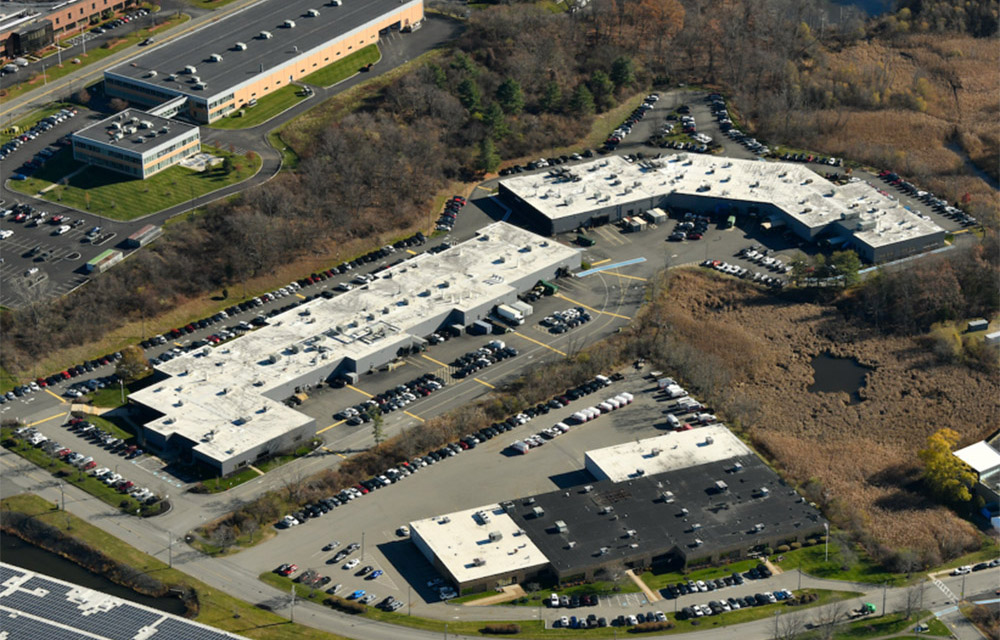
Northwest Bank finances Luzern Associates’ $47.75m acquisition
Danvers, MA Northwest Bank provided $34.5 million in financing to support Luzern Associates LLC’s $47.75 million acquisition of the Cherry Hill industrial portfolio, a three-building campus totaling 200,000 s/f.



 (1).gif)


Quick Hits
Columns and Thought Leadership

Reverse exchanges and the challenges of a competitive real estate market - by Michele Fitzpatrick
Our current, highly competitive real estate market poses specific challenges for investors who are considering taking advantage of a tax-deferred 1031 exchange. In this market, investors will have no problem selling their current property if priced properly, but they may find it difficult to find a suitable replacement property

The focus on price per s/f compared to the comparable sales used in the appraisal report - by Dennis Chanski
Over the past several weeks, I have completed appraisal assignments for private clients. Interestingly, after submitting these appraisals, I received several phone calls – not to question the value, content, or any incorrect information, but rather to discuss the price per s/f compared to the comparable sales used in the report.

Are appraisers on the same page as the assessor? - by Richard Seman
The purpose of this article is to address problematic or confusing issues which may help assessors and appraisers to better understand how to value real estate for tax assessment purposes.

Massachusetts real estate transfers over $1 million face new tax rules as of November 1st - by Daniel Meyer
Attention to owners of real estate in the Commonwealth (and the title companies and other professionals who advise them), the Massachusetts Department of Revenue (the “DOR”) recently adopted a new “millionaire’s tax” via 830 CMR 62B.2.4
