


 (1).gif)
News:
Finance
Posted: July 10, 2020
Some COVID trends becoming clearer - by Bill Pastuszek

Shepherd Associates
As this COVID situation drags on and even escalates, we enter this summer with great discontent and uncertainty.We thought if we hunkered down for a few months, paid our dues by staying in our bunkers and acting virtually (and virtuously), we would emerge herocially and a bit self-satisfied that we conquered and triumphed. So far, real estate markets (for the most part) and stock markets (ditto) reacted mostly positively, or, at least neutrally.
Not so fast. Some of us that did exactly what we were supposed to do; a lot of others did not. We are not quite sure if government did what it was supposed to do in a time of crisis. And this pandemic isn’t going away that quickly, despite our collective that it does and we can return to our accustomed patterns of consumption.
Our collective mental health rises and falls daily, it seems, based on the state of infections, the stock market, and travel restrictions. We are saddened by sickness and death near and far.
As analysts of market behavior, we have a somewhat different timeline. The short term is of less concern to us. Buyers are viewers of value in the long term and opportunity in the short term. We know that value is the present value of future benefits, a concept that holds true whether we are looking at housing or investment markets.
Some trends are becoming clearer. Housing demand is strong, but is changing in response to buyer preferences in the pandemic that may become longer term trends. Trends include multiple office/work spaces in new residential construction; a move to less densely populated areas (for those who can afford it); and more private access to units in multifamily housing among others.
For offices, a “return” to more enclosed spaces and less “collaborative” open plans; more sophisticated air handling systems and “healthier” buildings; and a rethinking of transporting humans in elevatored buildings are all trends being considered
In general, the green trends of the past 20 years will be adapted, refined, and expanded to meet pandemic challenges and climate adaptation mechanisms. Many, including me, are amazed by how quickly change takes place when the need to adapt is thrust upon us. Think barriers and the rise of Plexiglass– is it green, or, is it necessary?
The pandemic has also forwarded some social issues. Environmental justice, Black Lives Matter, and healthcare and housing access are among them.
There are many questions that need asking, so I will ask them. Asking questions has a habit of provoking answers, or, at the very least, discussion. Discussion could always lead to productive results.
As real estate professionals, we proudly point to the accomplishments of the last 50 years in terms of fair housing, the development high performance standards for our various disciplines, and the fact that we believe we act objectively, impartially, and without bias. We have to ask, do we?
As appraisers, USPAP tells us not to be biased. Does acknowledging that high-minded exhortation mean that we are therefore without bias?
We observe and interpret market behavior, and base our opinions on the results of observations and analyses. Our decisions and opinions influence the markets we work in and thus make us part of the market. The notion that there is a huge amount of built-in, systematic bias in all systems, not only real estate, is one that bears close examination. As real estate professionals, we need to examine–very closely–how we interpret the data we find in the marketplace. We need to examine–very deeply–the assumptions and habits we are bringing to that data. Do we need to examine the data in different and expanded ways? Do we need to re-contextualize, to think differently, about the data we find? Do we need to expand the data we consider?
Uncomfortable with these lines of inquiry? Just a bit? Me too. This spring and summer have given us the much needed urgency to dig more deeply into these issues.
More on this will be coming in a future article, and I hope in our discussions throughout the profession.
Bill Pastuszek, MAI, ASA, MRA, heads Shepherd Associates, Newton, Mass.
MORE FROM Finance
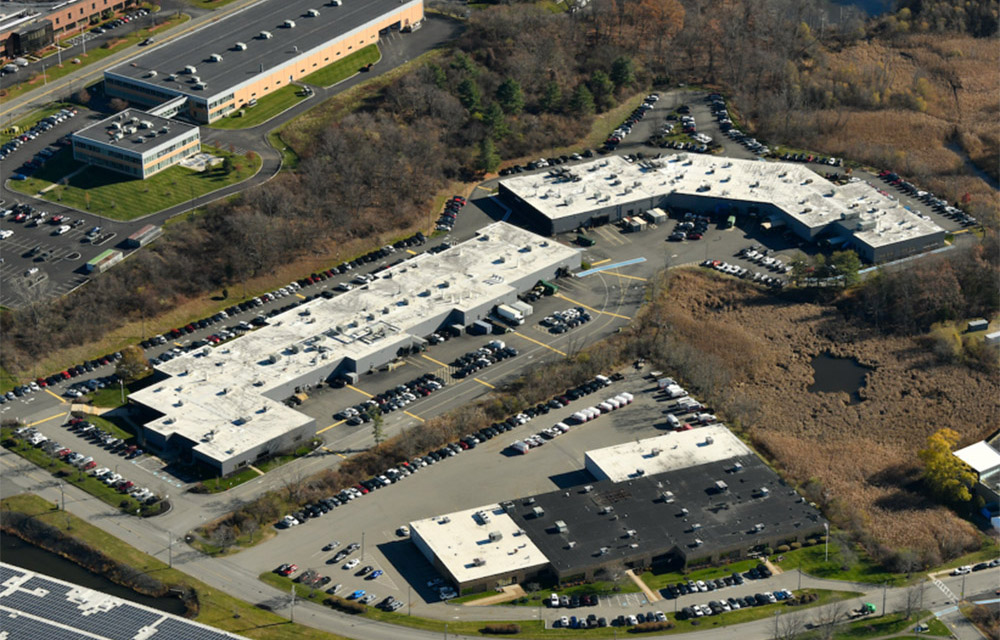
Northwest Bank finances Luzern Associates’ $47.75m acquisition
Danvers, MA Northwest Bank provided $34.5 million in financing to support Luzern Associates LLC’s $47.75 million acquisition of the Cherry Hill industrial portfolio, a three-building campus totaling 200,000 s/f.

 (1).gif)



.png)
Columns and Thought Leadership

Are appraisers on the same page as the assessor? - by Richard Seman
The purpose of this article is to address problematic or confusing issues which may help assessors and appraisers to better understand how to value real estate for tax assessment purposes.

The focus on price per s/f compared to the comparable sales used in the appraisal report - by Dennis Chanski
Over the past several weeks, I have completed appraisal assignments for private clients. Interestingly, after submitting these appraisals, I received several phone calls – not to question the value, content, or any incorrect information, but rather to discuss the price per s/f compared to the comparable sales used in the report.

Massachusetts real estate transfers over $1 million face new tax rules as of November 1st - by Daniel Meyer
Attention to owners of real estate in the Commonwealth (and the title companies and other professionals who advise them), the Massachusetts Department of Revenue (the “DOR”) recently adopted a new “millionaire’s tax” via 830 CMR 62B.2.4

Reverse exchanges and the challenges of a competitive real estate market - by Michele Fitzpatrick
Our current, highly competitive real estate market poses specific challenges for investors who are considering taking advantage of a tax-deferred 1031 exchange. In this market, investors will have no problem selling their current property if priced properly, but they may find it difficult to find a suitable replacement property
