


 (1).png)
News:
Owners Developers & Managers
Posted: October 23, 2020
The Stubblebine Company sells the 4.4 acre parcel at 67 Smith Place to Cabot Cabot & Forbes for $49.6 million
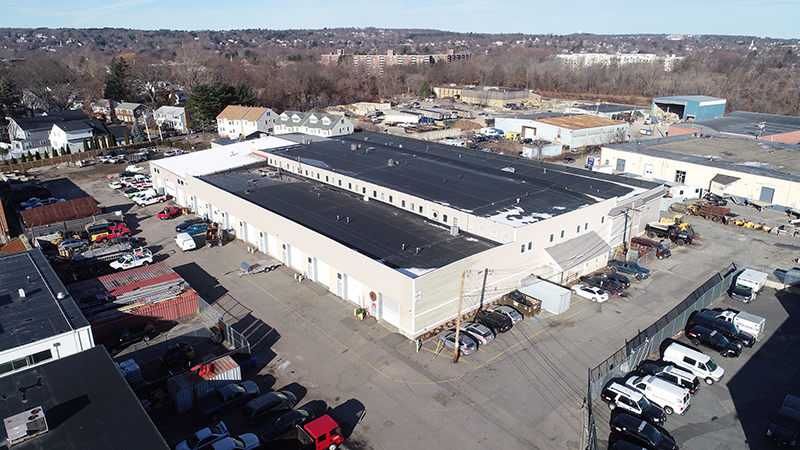
Cambridge, MA David and James Stubblebine, principals of The Stubblebine Company/CORFAC International, sold 67 Smith Place in the Alewife neighborhood, to Cabot Cabot & Forbes (CC&F) for $49.6 million.
The 4.4 acre parcel consists of three industrial buildings with a combined 67,000 s/f of industrial space. 67 Smith Place is located adjacent to CC&F’s master-planned mixed-use project “The Quad,” a 1.1 million s/f lab and residential development project situated on 11.9 acres, which is presently before the city for approvals. The combined acreage of the Quad and 67 Smith Place raises CC&F holdings in Alewife to 16.3 acres.
In a recent separate transaction, Stubblebine also sold the contiguous 11.9 acre parcel to CC&F for $79 million.
The Quad project will include a pedestrian bridge over the adjacent MBTA Fitchburg Commuter rail tracks, connecting Smith Place to Cambridge Park Dr., enabling an easy walk to the MBTA Red Line Terminal. The Quad project will consist of 575,000 s/f of lab space, 490 multifamily units, and 60,000 s/f of ground-floor retail amenities including a craft brewery, a rock-climbing club and maker space. CC&F pioneered the development of Alewife following the recession, beginning with the Atmark in 2013. The 428-unit Atmark project was completed in 2015.
67 Smith Place was a complex and challenging acquisition, requiring the coordination of 20 industrial condominium sellers and multiple subtenants. Jacob Vance, senior project manager for CC&F, said, “It was a purchase that required extraordinary patience and collaboration between the many sellers and CC&F.”
David Stubblebine said, “CC&F has aggregated a total of approximately 16.3 contiguous acres in Cambridge: an astounding feat. CC&F’s long-term vision and perseverance is phenomenal.” The main building, a 58,000 SF warehouse offers ceiling heights ranging from 20’ to 26’ clear, 24 drive-in doors and extensive paved areas for parking, and/or outside storage. “Alewife transit-oriented development (TOD) remains the most attractive arena for real estate investment in the region, with both life sciences and residential development flourishing,” said Jay Doherty, CEO of CC&F.
“Our goals include the creation of new public transportation infrastructure and new amenities that will create the most attractive ‘walk to work’ location in Greater Boston.”
In the last few years, Alewife has added 3,000 new residential units and seen the leasing of 3 million s/f of lab space.
MORE FROM Owners Developers & Managers
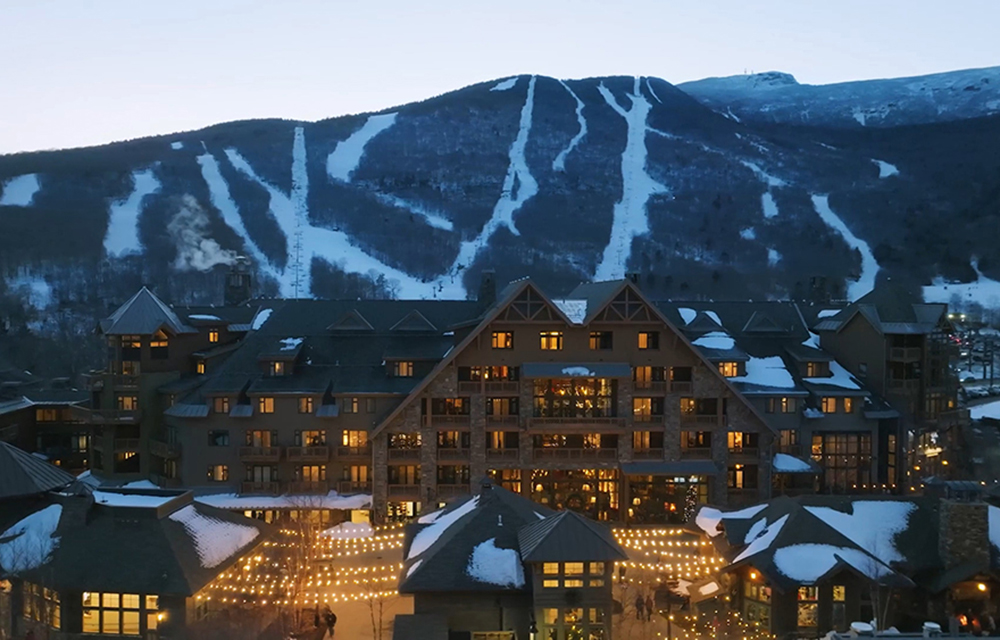
The Lodge at Spruce Peak recognized with Condé Nast Traveler’s 2026 Readers’ Choice Award - #3 in New England
Stowe, VT Condé Nast Traveler revealed the results of its annual Readers’ Choice Awards, with The Lodge at Spruce Peak recognized as the #3 U.S. Resort in New England.







Columns and Thought Leadership

Revitalized Town Centers: Retail??? - by Carol Todreas
It is now widely accepted that customers want to shop in person at physical stores. Brands know that they do better business in a physical store than just on line so they want to open stores. Demand for retail space by digital merchants, local entrepreneurs, and newly developed national chains

IREM president’s message: Our new reality - Staying ahead of supply chain delays - by Yoany Vargas
Supply chain delays are slowing construction, ratcheting up operating costs, and extending turnover timelines across Greater Boston, directly reducing revenue and increasing the workload for multifamily and

Retail infill strategy to activate Pawtucket’s Conant Thread District - by Gaetan Kashala
Until recently, the Conant Thread District consisted of approximately 150 acres of underutilized industrial land spanning Pawtucket and Central Falls. Today, the area is one of the most significant

The legislature has spoken: New Hampshire doubles down on housing in commercial zones - by John Sokul
Last year, the New Hampshire Legislature enacted HB 631, a landmark housing measure requiring municipalities to permit multifamily housing in commercially zoned districts. The law generated