


 (1).png)
News:
Owners Developers & Managers
Posted: February 4, 2022
Studies by Magid and AAADM found patrons prefer automatic doors
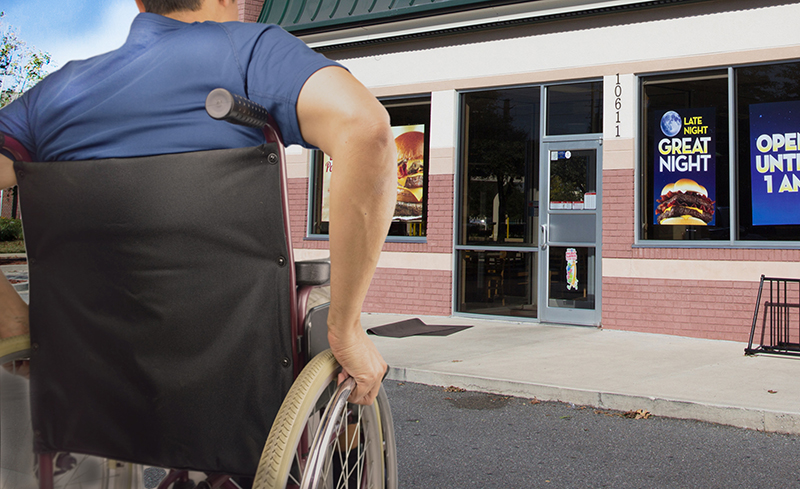
Boston, MA The foodservice business often leads the way in automation innovations and touchless technology, but it’s lagging behind in one key area: The use of automatic doors. Despite the growing trend toward making in-person dining experiences as touchless as possible, many restaurants have been slow to embrace the benefits of automatic doors.
Clearly it’s a technology customers want to see more of. A study in Restaurant Business Online conducted by Magid research consultancy found that 64% of respondents would be influenced to visit a restaurant based on whether it had automatic doors.1
A separate survey from the National Restaurant Association found that 6 in 10 adults changed their restaurant use due to the rise in the Delta variant, 19% of adults said they completely stopped going out to restaurants, and 37% of adults said they ordered delivery or takeout instead of dining in a restaurant.2
Clearly, the need to project an image of taking patron health seriously has never been stronger. Automatic doors signal to the public that restaurant operators understand their concerns. It puts them at ease from the start and prepares them for a positive experience.
Many restaurants responded to virus threats by having all employees wear masks, limiting store occupancy, and by offering carryout or contactless pickup/delivery. But what is probably the most-touched surface in any business? The door handle.
Next consider how the public viewed automatic doors even before a pandemic. A comprehensive survey conducted by the American Association of Automatic Door Manufacturers (AAADM) revealed that respondents viewed the presence of automatic doors as a gauge of how much building owners and businesses cared about them. Plus, a staggering 98.9% of consumers who expressed a preference between automatic and manual doors prefer automatic doors.
Taken together, it becomes clear that automatic doors are an effective way to not only address concerns about surface germs, but to clearly signal that an establishment is taking health and safety concerns seriously. There are also a variety of design options to fit virtually any architectural style or restaurant concept.
Automatic doors create clear, no-touch pathways to businesses and other public buildings. In addition to their obvious germ-free characteristics, they bring a host of other benefits including convenience for people carrying packages, luggage, or children, and provide equal access to individuals with mobility challenges or other physical differences. They are durable, reliable, easily installed, and more affordable than many owners and specifiers realize. Plus, with public opinion galvanizing, the true question becomes whether a restaurant can afford to be without them.
1 https://magid.com/mentions/do-consumers-trust-their-restaurants-to-protect-their-health/
2 https://restaurant.org/research-and-media/media/press-releases/national-restaurant-association-releases-2021-mid-year-state-of-the-restaurant-industry-update/
MORE FROM Owners Developers & Managers

The Lodge at Spruce Peak recognized with Condé Nast Traveler’s 2026 Readers’ Choice Award - #3 in New England
Stowe, VT Condé Nast Traveler revealed the results of its annual Readers’ Choice Awards, with The Lodge at Spruce Peak recognized as the #3 U.S. Resort in New England.




Quick Hits


Columns and Thought Leadership

Revitalized Town Centers: Retail??? - by Carol Todreas
It is now widely accepted that customers want to shop in person at physical stores. Brands know that they do better business in a physical store than just on line so they want to open stores. Demand for retail space by digital merchants, local entrepreneurs, and newly developed national chains

Retail infill strategy to activate Pawtucket’s Conant Thread District - by Gaetan Kashala
Until recently, the Conant Thread District consisted of approximately 150 acres of underutilized industrial land spanning Pawtucket and Central Falls. Today, the area is one of the most significant

IREM president’s message: Our new reality - Staying ahead of supply chain delays - by Yoany Vargas
Supply chain delays are slowing construction, ratcheting up operating costs, and extending turnover timelines across Greater Boston, directly reducing revenue and increasing the workload for multifamily and

The legislature has spoken: New Hampshire doubles down on housing in commercial zones - by John Sokul
Last year, the New Hampshire Legislature enacted HB 631, a landmark housing measure requiring municipalities to permit multifamily housing in commercially zoned districts. The law generated