(1).png)
News:
Owners Developers & Managers
Posted: September 30, 2016
Success of the tenant ensures a peaceful, uneventful stream of income for the landlord
 Dennis Serpone, New
England Restaurant Brokers
Every business, once a location is secured, has to prepare for dealing with a landlord, a build-out, personnel, and then the customers. At the top of this pyramid is the ‘landlord’…be it an individual or, in many cases, the landlord’s representative.
Ideally there should be a symbiotic relationship between the landlord and the tenant with each party having an undivided interest in the success of the new business.
If you’re a retail landlord, the tenant’s investment is fairly limited…new décor, shelving, bathrooms, and office area.
In the case of leasing to a restaurateur, the investment is significantly higher with extensive high-capacity plumbing and electrical requirements, handicap bathrooms, kitchen equipment and refrigeration, special walls and flooring in the kitchen, ventilation, and constant scrutiny by local health and bldg. inspectors.
Typically, the landlord wants a ‘triple net’ lease…essentially he wants to own the property with the tenant carrying all his operating expenses. This is not an unreasonable business model…in good times.
However, when the economy stumbles as we’ve seen in the last few years, it’s easy for the retail tenant to close his doors and walk away. In the case of the restaurateur, his investment is so significant that, when his operating numbers fall into the red, he typically seeks the cooperation of the landlord when he’s having trouble paying his rent. The landlord at this point is holding all the cards. Subject to the terms of the lease, the landlord could force the tenant to go out of business, take over the location, and re-lease the, now fully equipped restaurant, to another operator. The problem here is that the operator may have invested his life’s savings in this venture and fights to keep his business going, many times to the point of filing a Chapter 11 bankruptcy. The question that arises is, “isn’t there a better, less confrontational way of avoiding all this animosity?”
Simply put, both tenant and lessor would benefit from being represented by a restaurant real estate broker. Because restaurant leases are so complicated, it takes years of practical experience and an ongoing education to properly negotiate them. A restaurant real estate specialist is well aware of these complexities and is uniquely qualified to address and manage the contingencies contained therein.
There are two very distinct actions that the landlord can do to avoid losing the tenant and that the operator can do to avoid going out of business. Both solutions are a function of the steps taken at the very beginning of this journey that the landlord and tenant are taking.
First and foremost, the tenant should engage the advice of a restaurant real estate specialist who can provide an unbiased opinion of the appropriateness of the location for his concept. All too often serious conditions exist which the optimistic lessee can’t see through his rose-colored glasses…many times risking his life’s savings. Conversely, a restaurant specialist can justify to a landlord a tenant’s background and experience and help negotiate the language of a lease that helps ensure that both parties understand the mutual interest each party has in each other. Success of the tenant ensures a peaceful, uneventful stream of income for the landlord.
Dennis Serpone is president of New England Restaurant Brokers of Wakefield, Mass.
MORE FROM Owners Developers & Managers
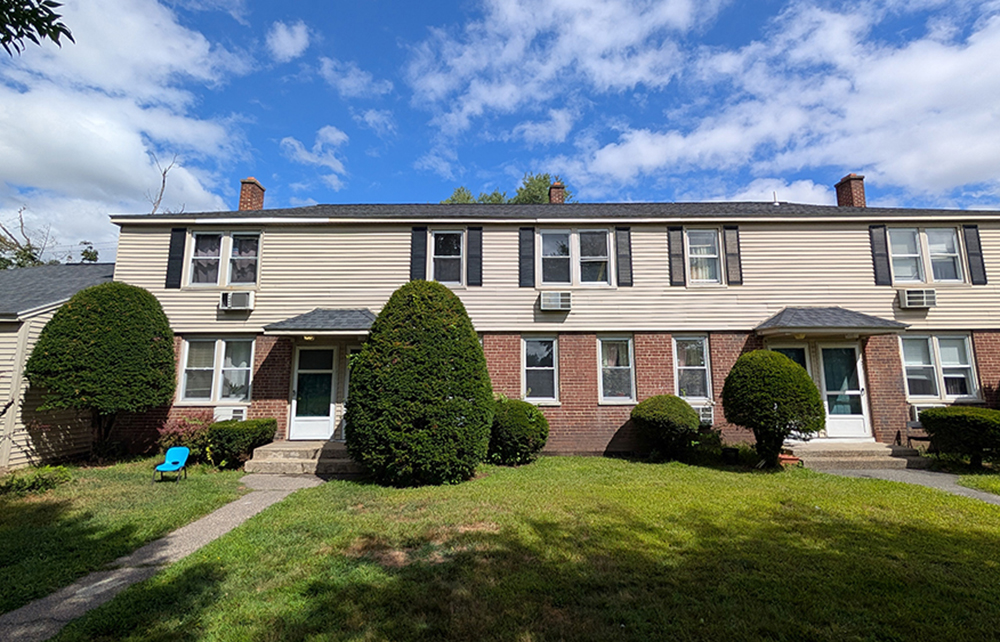
WinnCompanies acquires 290-unit housing property - begins $41.5 million rehabilitation
Chicopee, MA WinnCompanies has acquired a 290-unit affordable housing property in western Massachusetts in a deal that renews the community’s expiring affordability protections and kicks off a $41.5 million rehabilitation to address significant deferred maintenance.




 (1).png)

Columns and Thought Leadership

The legislature has spoken: New Hampshire doubles down on housing in commercial zones - by John Sokul
Last year, the New Hampshire Legislature enacted HB 631, a landmark housing measure requiring municipalities to permit multifamily housing in commercially zoned districts. The law generated

IREM president’s message: Our new reality - Staying ahead of supply chain delays - by Yoany Vargas
Supply chain delays are slowing construction, ratcheting up operating costs, and extending turnover timelines across Greater Boston, directly reducing revenue and increasing the workload for multifamily and

Retail infill strategy to activate Pawtucket’s Conant Thread District - by Gaetan Kashala
Until recently, the Conant Thread District consisted of approximately 150 acres of underutilized industrial land spanning Pawtucket and Central Falls. Today, the area is one of the most significant

Revitalized Town Centers: Retail??? - by Carol Todreas
It is now widely accepted that customers want to shop in person at physical stores. Brands know that they do better business in a physical store than just on line so they want to open stores. Demand for retail space by digital merchants, local entrepreneurs, and newly developed national chains
September Promotion