


 (1).png)
News:
Owners Developers & Managers
Posted: December 14, 2018
Suffolk breaks ground on $134 million complex at UMass Dartmouth - designed by DiMella Shaffer; project financed by UMass Building Authority
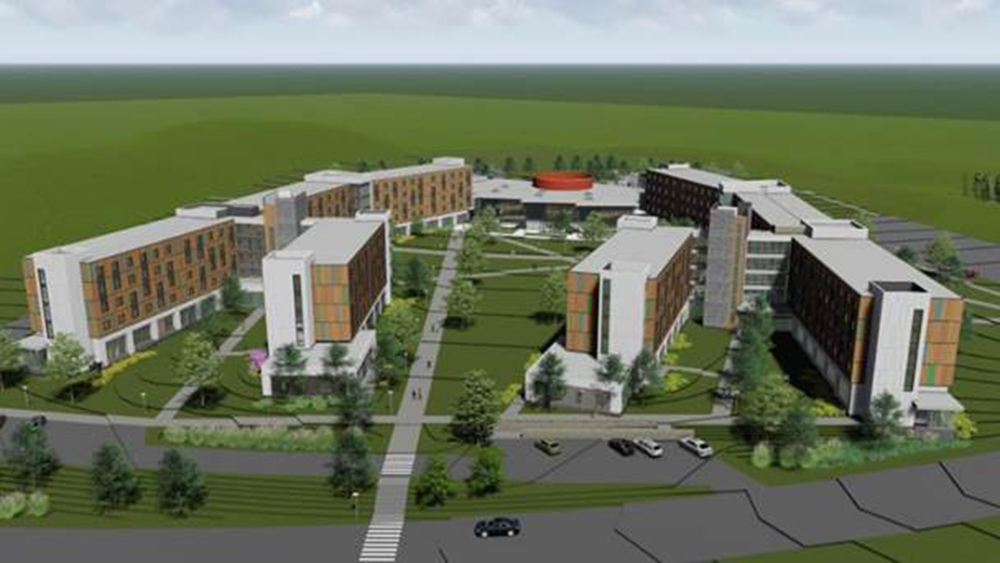
Dartmouth, MA UMass Dartmouth broke ground on a $134 million housing and dining complex designed to transform the student living and learning experience on campus. The project will create 150 construction jobs. The facilities will open when students arrive for classes in fall 2020.
The residence halls will be built through a public-private partnership between the university and Greystar, one of the largest and most experienced collegiate housing developers and managers in the country. The partnership will allow the building of the new housing without any state taxpayer funds and will not add to the debt burden for the university.
The project construction will be led by Suffolk, which has built nine residential facilities on campus, including the 800-bed Pine Dale and Oak Glen halls, which opened in 2003, and the 1,200-bed Woodland apartment complex, which opened in 2005.
The project is being financed via the UMass Building Authority and designed by DiMella Shaffer, which has been recognized by ARCHITECT magazine as one of the “Top 50 Firms in Sustainability.”
The complex, which is being built in Parking Lot 7 near the university’s Campus Center and College of Visual and Performing Arts, will include:
• A $108 million, 1,210-bed, 267,500 s/f, housing complex in two buildings. Besides the actual living areas, the facilities will include general academic classrooms, multimedia and study lounges, demonstration kitchens, and recreation spaces. The buildings will also offer technology-equipped maker spaces where students will be able to work on group projects, soundproof music practice spaces, and two computer learning commons. Two faculty-in-residence apartments will foster mentoring and advising. The new housing will replace four residence halls that opened in 1976.
• A $26 million, 38,000 s/f, student dining commons with a capacity of 800. The facility will be designed with a marketplace concept that will expand food options in response to students’ needs and expectations. The design will include a large flat top grill where students will be able to see their meals being prepared. The university’s current main dining hall was built in 1977 for a residential student population of 1,600 but now serves more than 3,000 students daily.
While the housing/dining complex is being built, work will also begin on a $54 million renovation of the Science and Engineering Building, supported by $25 million in state funds. Together, these projects represent the first phase of chancellor Robert Johnson’s plan to focus capital investment on the 710-acre UMass Dartmouth main campus, which has seen just one major state-funded building project – the Claire T. Carney Library renovation – since 1980. Future initiatives include renovation and modernization of academic buildings, the campus center, road infrastructure, and athletic facilities.
“Our students and our region will benefit from these investments in quality living and learning facilities that will prepare them to succeed in a rapidly changing, highly competitive global economy,” UMass Dartmouth chancellor Robert Johnson said. “I am thankful for the support that we are receiving from the Baker-Polito Administration, President Meehan and our Board of Trustees, and our SouthCoast Legislative delegation, as we pursue our aspirations in through this innovative and collaborative strategy. When combined with our first-rate faculty, these facilities will guarantee our students the private college educational experience and public university value they so deserve.”
“We know from studies and our own extensive experience that providing high-quality living-learning environments for students increases graduation rates, retention rates and academic performance,” said UMass president Marty Meehan. “This project represents an investment in student success and student opportunity at UMass Dartmouth, which by extension will benefit the SouthCoast and the entire Commonwealth.”
“For students like me – who will graduate before these buildings open – this project means learning that takes place outside the classroom matters,” said Shari Flanders, a student resident assistant who earned her undergraduate business degree in May and is now pursuing an MBA. “It means student success matters. It means the whole student matters. It means getting first-year students off to a good start matters.”
“The UMass Building Authority is proud to collaborate on this innovative public-private partnership to bring needed living-learning facilities to UMass Dartmouth and its students,” said chair of the UMass Building Authority Victor Woolridge. “These upgrades and modernizations to the campus will significantly enhance the learning environment and overall student experience at UMass Dartmouth.”
“We are very excited to partner with UMBA and UMass Dartmouth and break ground on this new first-year residence hall and dining commons,” said Julie Skolnicki, senior vice president of University Partnerships, Greystar. “We know firsthand the positive impacts a campus transformation like this can have on student success and retention, the university’s strategic plan and the entire community. We look forward to delivering this stellar project in 2020.”
“The University of Massachusetts Dartmouth has a visionary plan to meet the needs of students in the 21st century,” said Suffolk chairman and CEO John Fish. “We are thrilled to be partnering with this prestigious institution to help build student housing and science and engineering facilities that will strengthen its brand and bolster its campus infrastructure while benefiting the future leaders of tomorrow.”
“Through this public-private partnership, and our partners at Greystar and Suffolk, we’re transforming spaces where UMass Dartmouth students will live, learn, eat, and play,” said Randy Kreie, principal and president of DiMella Shaffer. “Our team has worked in collaboration with the University from the beginning and we are excited to deliver a facility that will meet the unique needs of their students and faculty for decades to come.”
MORE FROM Owners Developers & Managers
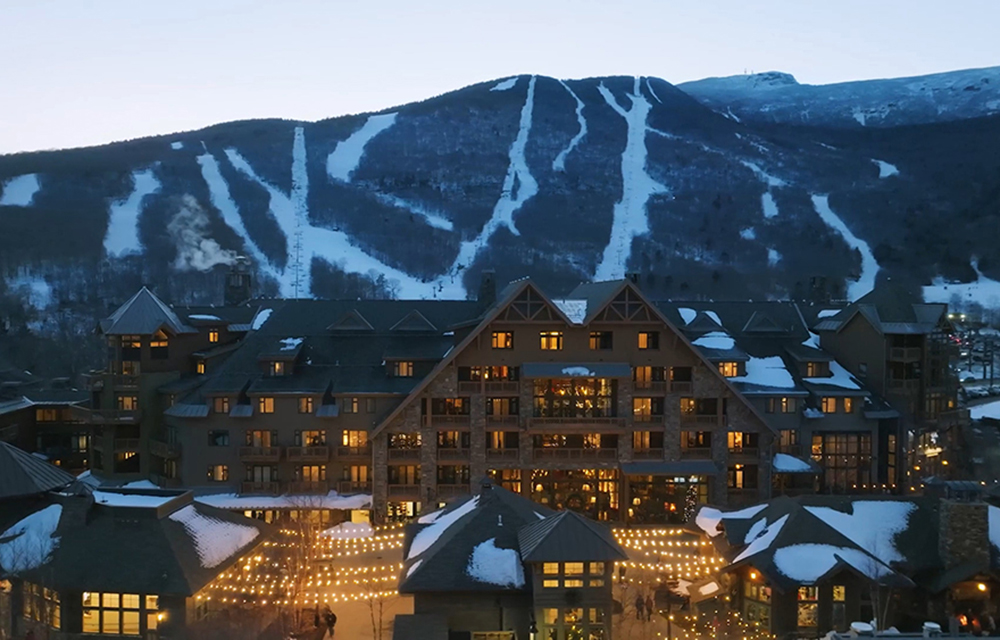
The Lodge at Spruce Peak recognized with Condé Nast Traveler’s 2026 Readers’ Choice Award - #3 in New England
Stowe, VT Condé Nast Traveler revealed the results of its annual Readers’ Choice Awards, with The Lodge at Spruce Peak recognized as the #3 U.S. Resort in New England.




 (1).png)

Columns and Thought Leadership

The legislature has spoken: New Hampshire doubles down on housing in commercial zones - by John Sokul
Last year, the New Hampshire Legislature enacted HB 631, a landmark housing measure requiring municipalities to permit multifamily housing in commercially zoned districts. The law generated

Revitalized Town Centers: Retail??? - by Carol Todreas
It is now widely accepted that customers want to shop in person at physical stores. Brands know that they do better business in a physical store than just on line so they want to open stores. Demand for retail space by digital merchants, local entrepreneurs, and newly developed national chains

Retail infill strategy to activate Pawtucket’s Conant Thread District - by Gaetan Kashala
Until recently, the Conant Thread District consisted of approximately 150 acres of underutilized industrial land spanning Pawtucket and Central Falls. Today, the area is one of the most significant

IREM president’s message: Our new reality - Staying ahead of supply chain delays - by Yoany Vargas
Supply chain delays are slowing construction, ratcheting up operating costs, and extending turnover timelines across Greater Boston, directly reducing revenue and increasing the workload for multifamily and