



News:
Construction Design & Engineering
Posted: February 16, 2012
Tax implications for property owners of routine maintenance versus capital improvement
Many property owners are unsure how to properly treat expenditures for the maintenance, upkeep and repair of their property. Are these costs for routine maintenance, in which case they are deductible against the current year's income? Are they capital expenditures, which must be capitalized and depreciated, resulting in a deduction that is spread out over many years? Or are they in a gray area somewhere in between?
The IRS has recently released proposed regulations to clarify how taxpayers should treat these types of expenditures for income tax purposes. Although the regulations are not yet finalized, they are useful because they are based on previous IRS guidance as well as rulings issued by the IRS and the courts.
In most cases, taxpayers are better off if an expenditure can be treated as a current period repair, since it is immediately deductible and may generally offset income at ordinary income tax rates. Expenditures that are capitalized add to the owner's basis in the asset, which will result in a lower capital gains tax in case of a sale. Under certain circumstances it may also be possible for a capital expenditure to be expensed immediately, or over a shorter time period, so all is not lost if a project is determined to be capital.
The proposed regulations require the taxpayer to capitalize all expenditures that result in a "betterment", a "restoration", or a new or different use of a unit of property.
A betterment has been defined as a cost that:
* Remediates (ie. repairs) a material defect that existed before the property's acquisition or that arose during the property's production,
* Causes a material addition to the property, or
* Causes a material increase in the property's capacity, productivity, efficiency, strength, quality or output.
To illustrate the difference between a betterment and a repair, suppose you own a strip mall and the wooden front is weathered and worn out. The cost of replacing a few broken boards and repainting the storefront would likely be allowed as an immediate deduction by the IRS. If, however, you took the opportunity to replace the entire facing of the storefront with a more durable material, the cost would probably qualify as a betterment, resulting in a capital expenditure that would have to be written off over time.
A restoration is defined as cost which:
* Replaces a property component and the taxpayer either has properly deducted a loss for it or has taken into account its adjusted basis in realizing a gain or loss from the component's sale or exchange,
* Is for the repair of property damage for which the taxpayer has taken a basis adjustment as a result of or relating to a casualty loss,
* Returns the property to its ordinarily efficient operating condition if the property had deteriorated to a state of disrepair and was no longer functional for its intended use,
* Results in rebuilding the property to a like-new condition after the end of its economic useful life, or
* Replaces a major component or a substantial part of the property.
For purposes of the proposed regulations, a new or different use arises if the modifications to the property result in a use that is not consistent with the taxpayer's original ordinary use of the property when the taxpayer first acquired the property. For example, if the taxpayer acquired a shopping mall 20 years ago, and this year had it converted to a self-storage facility, the costs incurred to adapt the building to its new use must be capitalized, since the building will be used for a different purpose.
If you are considering spending significant money on your property, you should consult a tax advisor before incurring the costs so that you can get guidance about what the tax effect of your project will be. Knowledge of the proposed regulations will let your tax advisor assist you in structuring your project so that you obtain the most advantageous tax results.
If you have already spent significant money on projects it is not too late to see a tax advisor to determine if there is an opportunity to reclassify your costs as either period costs or capital assets with a shorter depreciable life, resulting in an immediate deduction to correct the effects of the prior year's errors.
Although the IRS has provided some proposed guidance, the rules for expensing versus capitalizing costs remain challenging, and your tax advisor should be consulted as early in your decision making process as possible. Remember, the wrong decision may end up costing you money.
William Jenczyk is a principal in the real estate group at DiCicco, Gulman and Co. LLP, Woburn, Mass.
MORE FROM Construction Design & Engineering
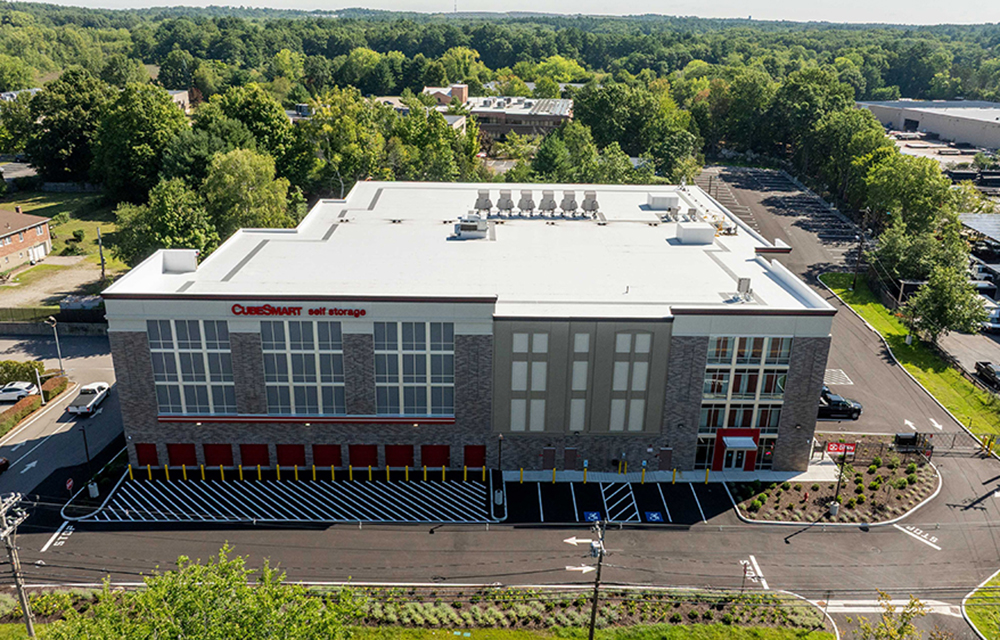
Connolly Brothers Inc. completes a new, ground-up 127,120 s/f CubeSmart self-storage facility in Canton, MA
Canton, MA Connolly Brothers Inc., a construction management firm serving private commercial, industrial and institutional clients, completed a new, ground-up 127,120 s/f self-storage facility for a development team at 362 Turnpike St.








Columns and Thought Leadership

ABC-Mass. chairman’s message: Rent control isn’t the answer to our housing crisis - by Luiza Mills
As you may know, Massachusetts voters will be weighing in on a number of ballot initiatives in November. Among them is a proposal to impose the nation’s strictest statewide rent control policy. I’d like to tell you why the ABC MA Board

Navigating tariffs and material uncertainty in today’s construction market - by Karl Ginand and Tiffany Gallo
As headlines around tariffs seem to dominate the news daily, many considering construction projects have anticipated major cost escalations and widespread supply issues. While tariffs haven’t driven pricing spikes to the extent once feared, the lasting impact has been a new layer of uncertainty, affecting more than just budgets.

Greenwood Credit Union City Hall Plaza nears completion - by Frank Picozzi
After several years of planning, construction, and anticipation, the community is eagerly awaiting the opening of the Greenwood Credit Union City Hall Plaza and outdoor skating rink later this month.

It’s time to lead: Confronting mental health in construction - by David Watts
As we close Mental Health Awareness Month, we must be clear: May isn’t just about ribbons, hashtags, or lunchtime mindfulness apps. It’s about responsibility to confront hard truths that linger in silence, and to challenge ourselves, as leaders in our industry, to do more.
