


 (1).gif)
News:
Finance
Posted: February 16, 2016
The beginning of 2016! What will happen with the economy? - by John Mello
 John Mello, Appraisal Institute
It’s the beginning of 2016! What will happen with the economy? Real estate markets? Appraisers are market analysts who look for trends. Regardless of a property type, properties are directly or indirectly affected by external influences. These may not be local influences, so it is not misplaced to consider how such “macro” influences as the price of oil, Middle East turmoil, the U.S. presidential election, or China’s economic conditions, among a seemingly endless matrix of considerations, may affect valuation conditions. In the past twelve months the price of crude oil declined by more than half. That was unexpected at the beginning of 2015. The Federal Reserve interest rate hike in December was both forecasted and unexpected, but not considered likely given monetary policy statements at the outset of 2015. What may be the effect on borrowing rates? The stock market plunged following the rate increase, yet one month later the DJIA hovers near its pre-rate hike level. Negative interest rates in Japan now are reported, also unexpected in 2015. How will national, state or local governments’ spending or lack thereof in the near term affect the GDP or CPI or real estate market price conditions? The valuation profession operates in the midst of such countervailing considerations and influences. As this new year begins, that much wished for clear “crystal ball” is nowhere to be found. One may be reminded of president Harry Truman’s oft-reported baleful lament about never finding a one-handed economist to counteract economic forecasting ambidexterity!
Included among the Appraisal Institute’s Massachusetts and Rhode Island Chapter’s education activities, the chapter offers (continuing education) programs each year that focus on economic conditions. The topics are intended to provide appraisers with context to be able to better understand aspects of just that seemingly endless matrix of considerations as they may apply to real property valuation. Recognized experts in economics, finance, various real estate sectors, business conditions and government are invited to present their views. The programs tend to be offered at the beginning and end of each year. Absent that clear “crystal ball,” they provide appraisers with insights, possible trends and purported answers to such questions as, “How did we do this past year?” or, “What’s really more likely to happen in the coming year?” or, “Why couldn’t we more clearly see that coming?”
The most recent of these programs was offered on January 28, 2016 at the Federal Reserve in Boston. Organized by Karen Friel, MAI, chapter vice president and chair of its programs committee, the four-member panel presentation had as its title, “New England Housing Market: 2016 Opportunities and Challenges.” Jeffrey Havsy, managing director and chief econmist at CBRE-Americas, presented “The Data is Good, Why Do I Feel So Bad.” Its retrospective and prospective econometrics view emphasized, among myriad indicators, that economic growth in 2016 is not expected to be a sprint. Geoffrey Homoliski, Middlesex Savings Bank vice president, discussed Metro-West residential development and why smaller developments are becoming more frequent. Laura Ahmes Gollinger, vice president at TCC, provided a detailed focus on property supply responses to changes in effective demand in the Metro Boston condominium market. John Kelly, first vice president at CBRE-New England, discussed changes and perceived trends in residential rental dynamics in the Greater Boston market.
Equipped with these experts’ insights, appraisers can better understand with lessened uncertainty how the economy’s “big picture” dynamics can affect valuations at the local level. The chapter expresses its appreciation to the panel members for making that understanding more possible. Still no “crystal ball” into economic conditions was discovered, but appraisers can see more clearly as the result of such an education program.
John Mello, SRA, is the 2016 president of the MA/RI chapter of the Appraisal Institute.
MORE FROM Finance
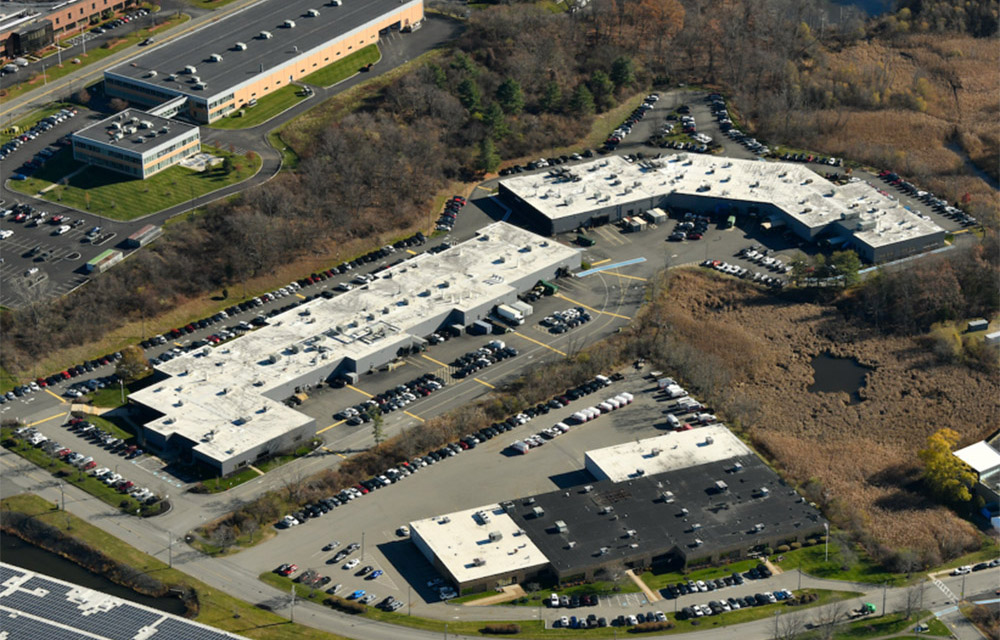
Northwest Bank finances Luzern Associates’ $47.75m acquisition
Danvers, MA Northwest Bank provided $34.5 million in financing to support Luzern Associates LLC’s $47.75 million acquisition of the Cherry Hill industrial portfolio, a three-building campus totaling 200,000 s/f.




 (1).gif)


Quick Hits
Columns and Thought Leadership

Reverse exchanges and the challenges of a competitive real estate market - by Michele Fitzpatrick
Our current, highly competitive real estate market poses specific challenges for investors who are considering taking advantage of a tax-deferred 1031 exchange. In this market, investors will have no problem selling their current property if priced properly, but they may find it difficult to find a suitable replacement property

Massachusetts real estate transfers over $1 million face new tax rules as of November 1st - by Daniel Meyer
Attention to owners of real estate in the Commonwealth (and the title companies and other professionals who advise them), the Massachusetts Department of Revenue (the “DOR”) recently adopted a new “millionaire’s tax” via 830 CMR 62B.2.4

The focus on price per s/f compared to the comparable sales used in the appraisal report - by Dennis Chanski
Over the past several weeks, I have completed appraisal assignments for private clients. Interestingly, after submitting these appraisals, I received several phone calls – not to question the value, content, or any incorrect information, but rather to discuss the price per s/f compared to the comparable sales used in the report.

Are appraisers on the same page as the assessor? - by Richard Seman
The purpose of this article is to address problematic or confusing issues which may help assessors and appraisers to better understand how to value real estate for tax assessment purposes.
