



News:
Brokerage
Posted: December 19, 2025
The changing landscape of Boston suburban office - by Harrison Klein

Five years ago a pandemic revealed that we had the technology to do much of our work in pajama pants and a collared shirt from our couch. With the knowledge we have now it turns out remote work can work and in person work is often better. Today office spaces still have an important function in society for people to collaborate and debate whether Drake Maye is the next Brady.
Today, hybrid work arrangements are winning out. I tour a lot of office buildings (100s per year) and they look very different on Monday and Friday than mid-week. The Tues-Thurs scheduling has largely become the norm, especially downtown. Back in 2022, most assumed the emerging three-days-in-person model to significantly reduce office demand. But that shift never fully materialized. The widely promoted “hoteling” model, where employees reserve shared desks also fell flat. Employees clearly value having their own cubicle, complete with that cute pic of their dog. While hybrid schedules have hurt the coffee shops and lunch spots that rely on steady foot traffic, the effect on office landlords has been less pronounced.
Since the pandemic, only three percent of office buildings have, on average, sold per year. 85% of office assets are held by pre-pandemic landlords. In Greater Boston we have over 5,200 suburban office buildings over 10,000 s/f, spread primarily along the Rte. 128 and I-495 belts, and in our cities including Worcester, Manchester, Providence, Lowell and Lawrence. A new generation of landlords is going to be taking over these buildings in the coming years. The winners will be focused on providing quality space at affordable rates. They will pick the right amenities (free coffee and beer), shared conference centers and a product tenants can be proud of. The worst buildings will come off line, pushing vacancy rates down. Many of these new owners will be high-net-worth individuals, with much lower acquisition costs than their predecessors. This will allow them to reinvest in the properties and manage with a long-term outlook. The result, a smaller, higher quality, pool of suburban office space.
The new threat to office is artificial intelligence (AI). I’ve seen investors turn away from office over concerns that AI will massively negate the need for office space over the next decade. This is going to be true for office space utilized for call centers and other uses that will be completed by computers in the next handful of years. Hiring costs in New England are so high that we have relatively little office space dedicated to these types of uses. Many businesses have already outsourced research, call centers, administrative work and design services to lower cost states and countries. AI may in fact make our businesses more productive, making us a more enticing location for larger companies looking to relocate a leaner workforce.
In the years preceding 2020 we saw a rush of companies moving into Boston from suburban campuses in order to attract a millennial generation that valued lifestyle and urban living. Five years later and millennials want to live in the suburbs (they finally had kids) and companies are following them. Faced with 90 minute commutes from I-495 into Boston, these newer parents are simply saying no. Meanwhile, C-Suites at small and midsized companies are making decisions to locate near their homes along the 128 belt. One area of office that has outperformed lately has been high-end space, in the most affluent suburbs. In some cases these buildings in towns like Wellesley are charging higher rents than are seen in downtown Boston.
Ten years ago the death of retail was declared, online shopping had won and the big box buildings where destined for permanent vacancy. Go to the Waltham Costco this Saturday if you’d like to see how alive retail is. Office is in a similar period of flex. Online shopping means we don’t NEED to go to Bloomingdales to buy clothes, instead we go for the experience. The same has happened for office workers. Landlords and HR departments are figuring out how to “earn the commute.” Those who get it right will secure the best tenants and have the most productive employees.
Harrison Klein is managing director, investments at The Klein Group of Marcus & Millichap, Boston, Mass.
Tags:
Brokerage
Thought Leadership
MORE FROM Brokerage
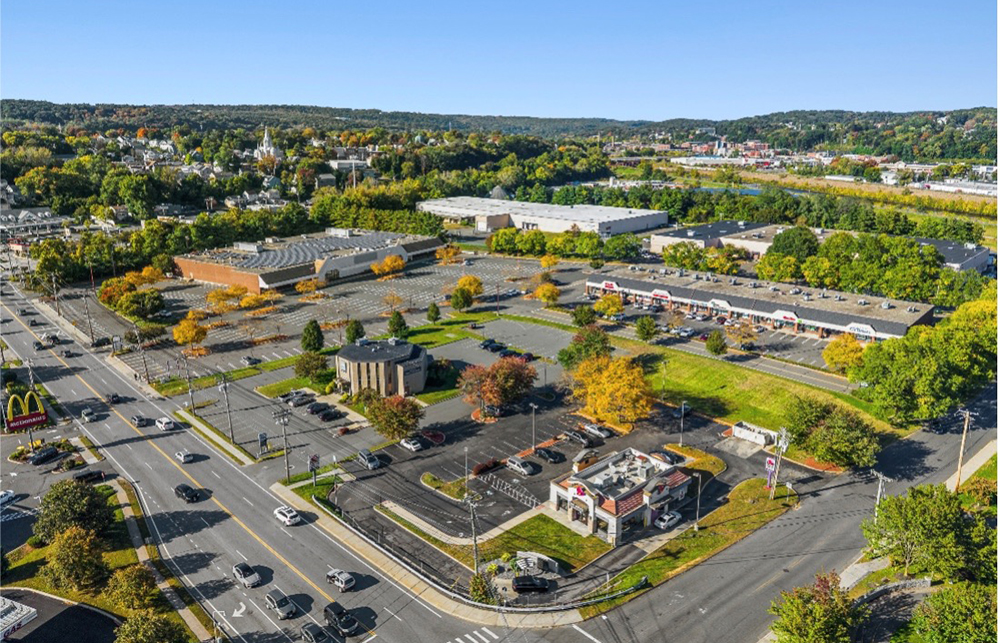
Saugatuck Commercial Real Estate brokers $8.3m sale of Ansonia Landing Shopping Center
Ansonia CT Saugatuck Commercial Real Estate (SCRE) represented Investor Michael Berkowitz in the $8.3 million purchase of Ansonia Landing Shopping Center from a KIMCO-led Partnership. The 91,447 GLA shopping center is located at 100-172 Division St.




Columns and Thought Leadership

End of the year retail thoughts - by Carol Todreas
Now what? As the year comes to a close, the state of retail is always in the news. The answers vary greatly depending on who in the various related industries you ask, each offering a unique lens on the challenges and opportunities ahead.

The rise of AI in CRE - And what it means for every skilled profession - A broker & appraiser weighs in - by Bryan Plourde
This may seem self-serving, and I’ll be the first to admit it. But unlike some of the artificial intelligence tools now reshaping our industry, I am fully aware of my own bias. So, hear me out. The rise of AI in commercial real estate is not a distant threat or a speculative headline.
