


 (1).gif)
News:
Finance
Posted: April 12, 2024
The deal and the data - by David Kirk
Not confusing. Complicated. Not a commodity. Commercial property is converting to a higher and better use. Still an economic derivative. Following the economy! Talk it out. Walk it out. Got gas. Use it!
Lots of powder left to make this market move forward on all four wheels. Traction derived from the local vibrant economies, particularly the robust employment 303,000 new jobs in March, to make decisions on the ground. The stewards of commercial property have challenges to meet financial and operating goals in this market. Most local property markets continue to adjust to changes in behaviors of constituencies, and users, in demand sectors, particularly in traditional office and derivatives in retail properties. The new capital sources in tax credit incentive programs and infrastructure spending require new skill sets. Pipelines for these public sector programs are filling. The public sectors are similarly challenged to process and direct these new programs.
Deals are getting done. Slowly, one by one, deals are coming together. The property and mortgage brokerage sector is busy and performing. Talk to your broker and stay in touch. Liquidity is improving in spite of uncertainty and complexity. The brokerage intermediaries are important in reconciling these markets, the data and the outlook, for stewards and constituents. The persistent vitality in job market and stabilization of capital markets supports alternatives. Declining employment and market volatility would be symptomatic of a dark outlook. These are not the problems.
Stewards must have a plan. A pro forma. Update the plan. Update the pro forma. Talk to your broker, your lender, your investor, your constituents. Start with initial steps to implement the plan and demonstrate the viability of the plan seriousness of purpose and mission. Climate readiness and energy efficiency and operating sensibilities are being underwritten by the capital sources, investors and assessors and insurance carriers. The brokers can be supporting sources for effective dress rehearsals. Refining pro forma’s. Clarifying the opportunity.
The scale and scope of stitching the built environment together again is more in this market than traditional economic cycles, historic recoveries. High borrowing rates and perceived risks are certainly unprecedented head winds to converting and communicating these opportunities in the commercial property markets. Also, unprecedented is the vitality of the public sector in supporting this recovery, ready and engaged and doing deals. The skin in the game is transparent and the enterprise is extraordinary. The public private partnership is prevalent. More action. Commercial property markets are not a spectator sport. Not a commodity market, either.
The built environment is changing. At an accelerated rate, or rates. In process, with progress apparent and more in place. Answers to place and time, property and market.
Springtime in more ways than seasonally speaking.
David Kirk is founder, chief executive officer of Kirk & Co., Boston, Mass.
MORE FROM Finance
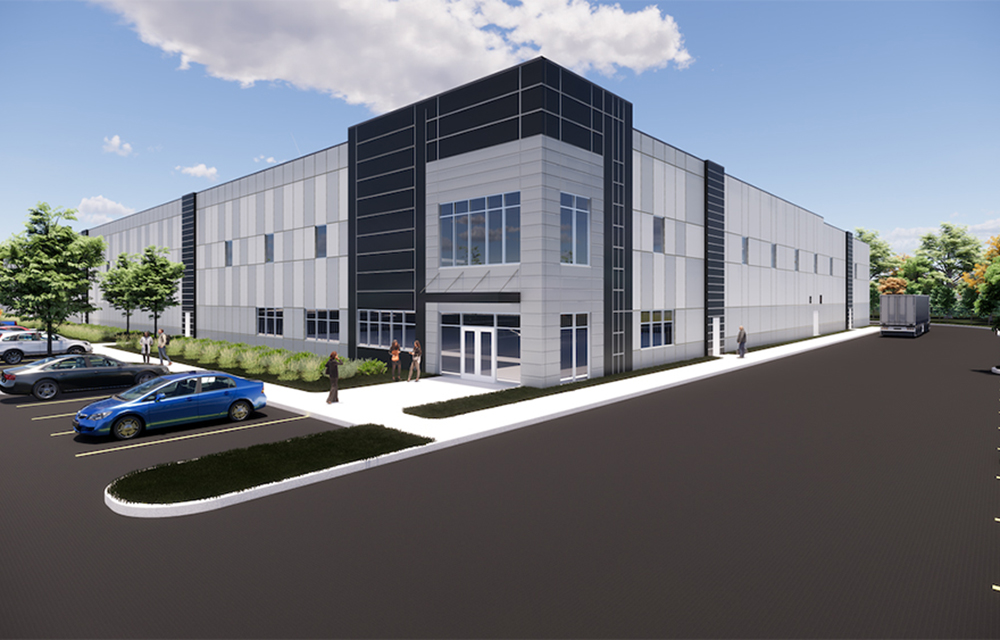
Berkeley Garbe secures $35.4 million debt financing with MetLife Investment Management
Billerica, MA Berkeley Garbe has secured a $35.4 million financing package for 161 Concord Rd., a new advanced manufacturing and innovation hub that is 30% complete following the start of construction in June. The project is on track to be completed in April 2027.



 (1).gif)


Quick Hits

.png)
Columns and Thought Leadership

Are appraisers on the same page as the assessor? - by Richard Seman
The purpose of this article is to address problematic or confusing issues which may help assessors and appraisers to better understand how to value real estate for tax assessment purposes.

Massachusetts real estate transfers over $1 million face new tax rules as of November 1st - by Daniel Meyer
Attention to owners of real estate in the Commonwealth (and the title companies and other professionals who advise them), the Massachusetts Department of Revenue (the “DOR”) recently adopted a new “millionaire’s tax” via 830 CMR 62B.2.4

The focus on price per s/f compared to the comparable sales used in the appraisal report - by Dennis Chanski
Over the past several weeks, I have completed appraisal assignments for private clients. Interestingly, after submitting these appraisals, I received several phone calls – not to question the value, content, or any incorrect information, but rather to discuss the price per s/f compared to the comparable sales used in the report.

Reverse exchanges and the challenges of a competitive real estate market - by Michele Fitzpatrick
Our current, highly competitive real estate market poses specific challenges for investors who are considering taking advantage of a tax-deferred 1031 exchange. In this market, investors will have no problem selling their current property if priced properly, but they may find it difficult to find a suitable replacement property
