


 (1).png)
News:
Owners Developers & Managers
Posted: April 2, 2015
The "devil is in the details"- Wind turbine without permit
As most attorneys and their clients know, the "devil is in the details," and those details often become the subject of litigation. Case in point is the recent Massachusetts Appeals Court ruling in Todd Drummey et al. v. Town of Falmouth et al., which considered whether the Town should have obtained a special permit from the Zoning Board of Appeals (ZBA) prior to placing one of its two wind turbines at its wastewater treatment plant (WWTP), back in 2009. The power generated by the turbines is used to operate the WWTP and the remainder is sold to the utility company serving the area.
Neighbors to the turbine site appealed an earlier Superior Court ruling that affirmed the Town's right to place the turbine (known as "Wind 1") on Town-owned land without a special permit. The neighbors have alleged significant distress from noise and disturbance to their quality of life and potential health hazards.
The Town building commissioner and the ZBA both agreed that a special permit was not required because Wind 1 was to be for a "municipal purpose" that fell within the Town's by-law definition of "community service" uses. However, the Appeals Court Judge found that interpretation to be an error, since the Town also maintains a specific Wind Turbine Siting By-Law and such use was not specifically referenced as a "community service use." Call it a failure to properly draft the by-law and connect it to other existing provisions, or as the Court called it, "a "...canon of construction inclusio unious est exclusion alterious...statutory expression of one thing is an implied exclusion of other things omitted from the statute;" the devil is in the details.
Although the case has been remanded back to the Superior Court to make a new ruling based on the Appeals Court decision, the Town has chosen to appeal the decision to the Massachusetts Supreme Judicial Court. We await the result of the next case.
Susan Bernstein is an attorney at law, Needham, Mass.
MORE FROM Owners Developers & Managers
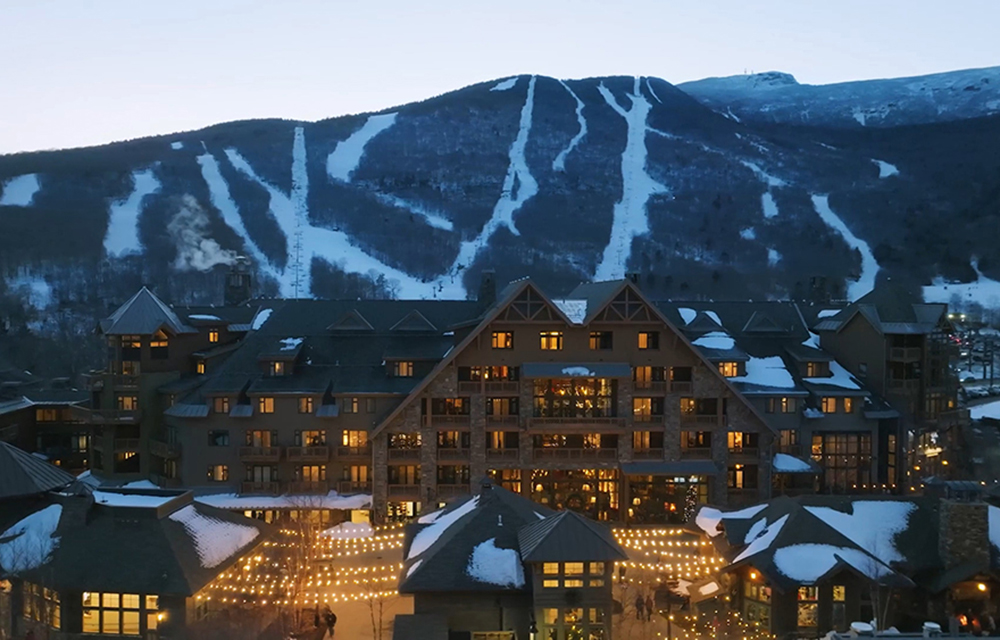
The Lodge at Spruce Peak recognized with Condé Nast Traveler’s 2026 Readers’ Choice Award - #3 in New England
Stowe, VT Condé Nast Traveler revealed the results of its annual Readers’ Choice Awards, with The Lodge at Spruce Peak recognized as the #3 U.S. Resort in New England.






Quick Hits
 (1).png)

Columns and Thought Leadership

Revitalized Town Centers: Retail??? - by Carol Todreas
It is now widely accepted that customers want to shop in person at physical stores. Brands know that they do better business in a physical store than just on line so they want to open stores. Demand for retail space by digital merchants, local entrepreneurs, and newly developed national chains

Retail infill strategy to activate Pawtucket’s Conant Thread District - by Gaetan Kashala
Until recently, the Conant Thread District consisted of approximately 150 acres of underutilized industrial land spanning Pawtucket and Central Falls. Today, the area is one of the most significant

The legislature has spoken: New Hampshire doubles down on housing in commercial zones - by John Sokul
Last year, the New Hampshire Legislature enacted HB 631, a landmark housing measure requiring municipalities to permit multifamily housing in commercially zoned districts. The law generated

IREM president’s message: Our new reality - Staying ahead of supply chain delays - by Yoany Vargas
Supply chain delays are slowing construction, ratcheting up operating costs, and extending turnover timelines across Greater Boston, directly reducing revenue and increasing the workload for multifamily and