


 (1).gif)
News:
Finance
Posted: July 12, 2024
The Federal Open Markets Committee is foot dragging - by Kirk

Being late to the cutting date has started to color commentary on data and apparent conditions. Without much impact on the markets. Go figure. Innovation, including Artificial Intelligence and automaton, personal and business services, construction, among other sectors, are continuing to add jobs while trimming, in different directions. Making space, climate ready and efficient, flexible with predictability, appropriate for contraction and expansion, all are essential strategies in commercial property, on time, online. The built environment must have malleability for right sizing and servicing. Costly and consumptive. Limits of time and, increasingly, labor. Let’s do it.
Real estate directors have been part of the strategic business plan for decades or longer. Until these new directions slow the process, the built environment must strain to stay ahead, be ready and in place. Because of lead time for planning, permitting and construction, the built environment must have more and larger malleable edges. Remember flex space and business parks with incubators and large multi-tenant distribution, in high rise configuration. Or not.
Remember FLEX space. Remember Retail - entertainment, exercise, healthcare, personal services. Life sciences dominated Boston real estate markets until cycling down. Change of use is no longer a marginal value add strategy; adaptive reuse is a dominating real estate strategy, supported by climate readiness improvements to existing inventory.
Automation, artificial intelligence, lab research, wet/dry, zooming, hybridization, indoors/outdoors, inside/outside. All to be reconciled in the built environment and related utilities and services. And mobility must be integrated effectively for commutation, supply chains, and disposal of wastes. Getarounds are important. And should be reasonably considered, approved, in a timely and orderly, expedited manner, with safety, security, wellbeing and climate readiness.
Calling for jobs, for training, for capital. The pause is over. The pivot is now well established, the patterns and protocols are still evolving and capital sources are adapting.
Nevertheless, the Federal Open Markets Committee is foot dragging. Traditional banking is jerking with the regulator and the uncertainty of related market rates. Because of the resilient and even buoyant economy, stewards of the built environment have choices and sluggish funding. Flowing sluggishly with non-banking sources.
Heather Cox Richardson in her letter June 7, 2024 offers an ordering of the data of the day:
The first is the Bureau of Labor Statistics today released another blockbuster jobs report. The country added 272,000 jobs in May, far higher than the 180,000 jobs the economists predicted. A widespread range of sectors added new jobs, including health care, leisure, government and hospitality, and professional, scientific and technical. Wages are also up. Over the past year, average hourly earnings have grown 4.1%, higher than the rate of inflation, which was 3.4% over the same period.
Deals are getting done. Finding the fit for two or more parts is gameful. The risks and rewards abound in changing real property markets.
Unintended consequences and collateral damage from the FED foot dragging is more than a speed bump. The time is now to avoid further roadkill on the way to easing inflation with a hammer that was not designed for screws. And not watching where you swing or what you are trying to do. Hit, smash recklessly, without peripheral vision. Shortsightedness. Inform the vision and manage the mission.
We still need places for the web to spin, A place to sleep, stay warm and dry, together; a place to eat, stay strong and full or enough, together; a place to read, think and learn, stay connected, together. Sing and dance and make things, together. Connecting, fabricating, doing and dreaming.
David Kirk is founder, chief executive officer of Kirk & Co., Boston, Mass.
MORE FROM Finance
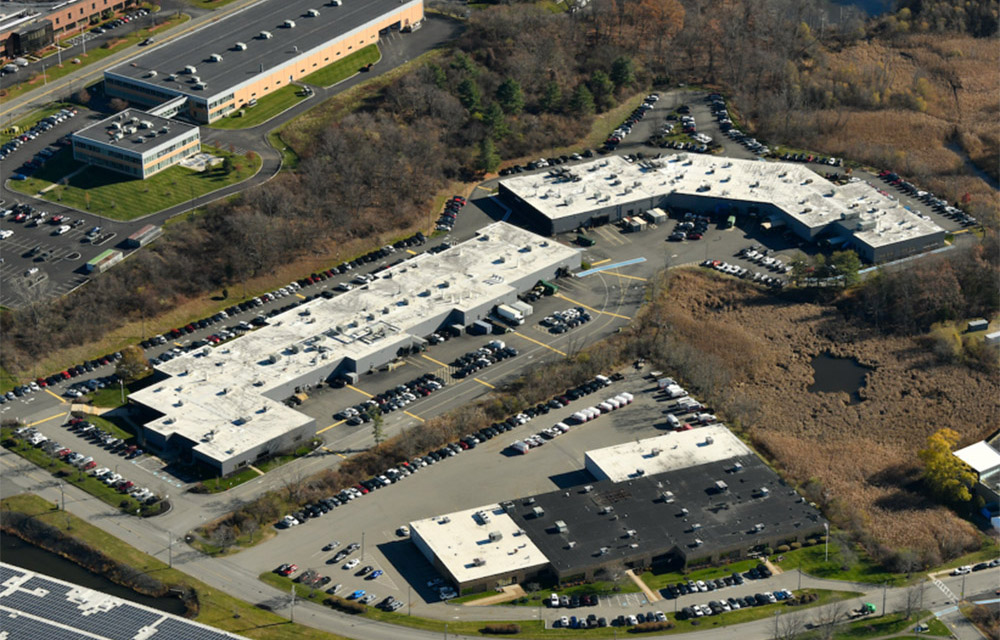
Northwest Bank finances Luzern Associates’ $47.75m acquisition
Danvers, MA Northwest Bank provided $34.5 million in financing to support Luzern Associates LLC’s $47.75 million acquisition of the Cherry Hill industrial portfolio, a three-building campus totaling 200,000 s/f.

 (1).gif)



.png)
Columns and Thought Leadership

The focus on price per s/f compared to the comparable sales used in the appraisal report - by Dennis Chanski
Over the past several weeks, I have completed appraisal assignments for private clients. Interestingly, after submitting these appraisals, I received several phone calls – not to question the value, content, or any incorrect information, but rather to discuss the price per s/f compared to the comparable sales used in the report.

Massachusetts real estate transfers over $1 million face new tax rules as of November 1st - by Daniel Meyer
Attention to owners of real estate in the Commonwealth (and the title companies and other professionals who advise them), the Massachusetts Department of Revenue (the “DOR”) recently adopted a new “millionaire’s tax” via 830 CMR 62B.2.4

Reverse exchanges and the challenges of a competitive real estate market - by Michele Fitzpatrick
Our current, highly competitive real estate market poses specific challenges for investors who are considering taking advantage of a tax-deferred 1031 exchange. In this market, investors will have no problem selling their current property if priced properly, but they may find it difficult to find a suitable replacement property

Are appraisers on the same page as the assessor? - by Richard Seman
The purpose of this article is to address problematic or confusing issues which may help assessors and appraisers to better understand how to value real estate for tax assessment purposes.
