


 (1).gif)
News:
Finance
Posted: October 10, 2007
The future will challenge appraisers and their clients
Just in case appraisers and users of appraisal services have been asleep the past two years, come January 1, 2008, the requirements to become a licensed or certified appraiser will increase significantly. The accompanying table is a summary of these changes. The Appraisal Foundation mandated these changes, and each state has responded individually. Any interested party should contact the Real Estate Appraisal Board in his or her state for more detail as some states require very specific course work.
Therefore, come the new year, anyone entering the appraisal field must meet the new requirements. The increase in requirements will increase the time and expense necessary to become an appraiser. Demographically, the average age of appraisers is more than 50 years with some estimates as high as 55. This statistic alone means that many of the existing appraisers will opt to retire or experience health issues that may render them incapable of performing their craft. In addition, I have found a strong reluctance on the part of my colleagues in the field to bring on trainees due to the expense, time and liability of this commitment. This situation indicates to me that a severe shortage of appraisers looms on the horizon.
The current economic conditions indicate that the country may be headed toward a recession. The sub-prime debacle is resulting in a credit crunch whereby even qualified borrowers are having difficulty finding a mortgage as well as an increase in foreclosure activity due to the inability of some borrowers to keep pace with increased monthly payments when their mortgage interest rate increases. Foreclosure activity may flood the market with excess inventory that could have the net result of falling housing prices.
If qualified borrowers cannot get a mortgage and homes are being foreclosed upon, the housing market will suffer which in turn will create a cascading effect resulting in job losses in the mortgage industry, construction and manufacturing and produce ideal conditions for a recession. Recessions tend to be boom times for appraisers, as all the foreclosed properties need to be appraised.
Theoretically, the looming shortage of appraisers could coincide with a recession. To say the least, this situation is not a good occurrence and has the potential of radically altering our profession. If the lack of appraisers becomes too severe, alternate methods of determining value may be generated, possibly to the detriment of not only the profession, but also of the economy.
Patricia Amidon, MAI, is a principal at Amidon Appraisal Co., Portland, ME.
Tags:
Finance
MORE FROM Finance
Northwest Bank finances Luzern Associates’ $47.75m acquisition
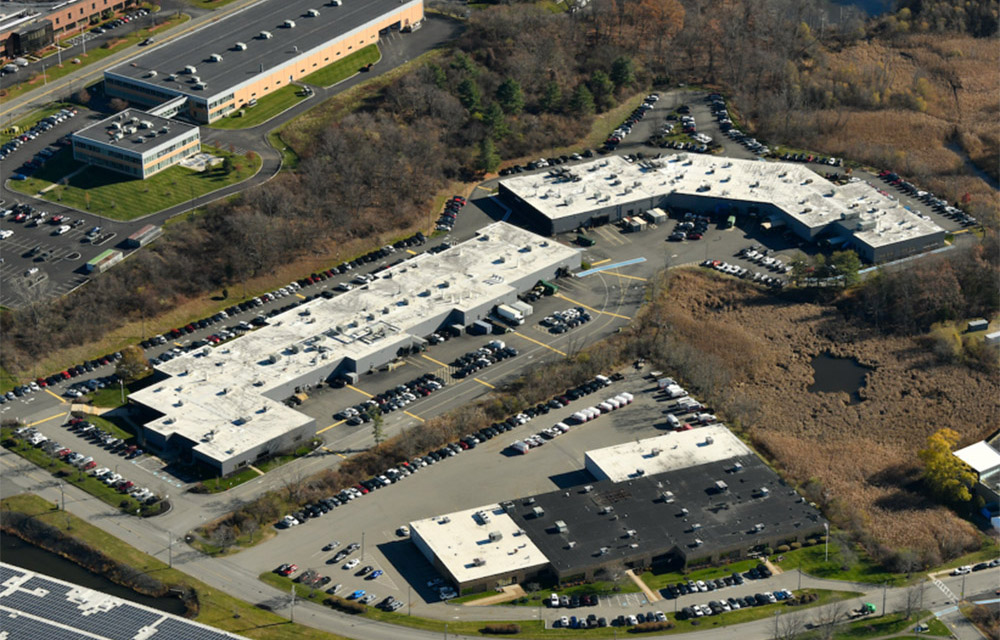
Danvers, MA Northwest Bank provided $34.5 million in financing to support Luzern Associates LLC’s $47.75 million acquisition of the Cherry Hill industrial portfolio, a three-building campus totaling 200,000 s/f.




 (1).gif)


Quick Hits

Columns and Thought Leadership

Reverse exchanges and the challenges of a competitive real estate market - by Michele Fitzpatrick
Our current, highly competitive real estate market poses specific challenges for investors who are considering taking advantage of a tax-deferred 1031 exchange. In this market, investors will have no problem selling their current property if priced properly, but they may find it difficult to find a suitable replacement property

Massachusetts real estate transfers over $1 million face new tax rules as of November 1st - by Daniel Meyer
Attention to owners of real estate in the Commonwealth (and the title companies and other professionals who advise them), the Massachusetts Department of Revenue (the “DOR”) recently adopted a new “millionaire’s tax” via 830 CMR 62B.2.4

The focus on price per s/f compared to the comparable sales used in the appraisal report - by Dennis Chanski
Over the past several weeks, I have completed appraisal assignments for private clients. Interestingly, after submitting these appraisals, I received several phone calls – not to question the value, content, or any incorrect information, but rather to discuss the price per s/f compared to the comparable sales used in the report.

Are appraisers on the same page as the assessor? - by Richard Seman
The purpose of this article is to address problematic or confusing issues which may help assessors and appraisers to better understand how to value real estate for tax assessment purposes.
