


 (1).gif)
News:
Finance
Posted: April 10, 2014
The parabolic curve of peaks and troughs: Where are we?
It seems that a while ago all real estate literature was pointing to a complete Boston Metropolitan area multifamily recovery from 2009 lows of the Great Recession. Moreover, most were citing high demand, very low supply, with rent and values thus rising dramatically. But, out of nowhere it seems, stories are emerging suggesting over supply in historical proportions, and prices potentially softening. What's a guy to believe? Maybe both conditions, depending upon where you think we are on that perfect bell curve of real estate activity.
As you know, real estate development and investment is a constant transition from trough to peak and back. It is a matter of continuous cycles, sometimes four to five years between peaks and troughs, and sometimes longer. What always happens is when there is low supply, perhaps because of a bad economy such as the great recession, and demand builds, developers and builders begin to fill the gap to meet growing demand. As they should. But, it seems there is a rush to get in the game, and a belief that each individual project will be earlier and better than the rest. However, like musical chairs, some will be comfortably seated when the music stops, and some will be awkwardly standing.
So where is the Boston area in the cycle, and what are the facts as we know them.
Back to the fundamentals of the curve. The demand side is difficult to predict, but the drivers are population growth, total employment and person income. There has been:
* Modest population growth in the Boston Metropolitan Area.
* Good job growth by national standards, particularly in technology.
* Some demographic impact with millennials and boomers alike wanting apartments and condominiums in urban areas near other transportation.
This obviously bodes well for absorption on both rental and purchase side, but is very hard to quantify. Things can change very quickly, things that are out of our control such as the economy, stock market, interest rates, family formation, the list goes on.
On the supply side, there is better quantification of what's going on. Statistics show clearly that there was very little building after the crash started in 2007. However, in the last few years, there has been an enormous amount of activity towards creating new supply. Part of the activity is based upon the understanding of the growing demand side above, and part is stimulated by low interest rates, accumulated cash, greater national and international participation in REIT type structures, and frankly itchiness on the developer/investor to start doing what they do best.
Currently, there are lots of building projects in the permitting or construction stage:
* In Boston, it has been reported that there are 3,100 new condominium/apartment slated for delivery into 2015, and 3,650 more in to 2016. On top of that, there are still more projects being considered, with the belief that the total 7,000 units will be absorbed in those time frames.
* Similarly in Cambridge, there are almost 6,000 units being permitted, planned or under construction. This compares to 5,700 in 2005 just prior to the peak, and about 4,600 to 4,800 during the low construction years of 2008 to 2010.
* Multifamily units in total, in 2010 in Cambridge were estimated at slightly over 44,000, which included a modest increase since year 2000, and an additional 3,000 unit increase between 1990 and 2000. Clearly, an increase of 6,000 in a few years is a dramatically different increase, representing almost 15% of total.
Needless to repeat, there are some warning flags on the horizon. Again, it's not quite clear where the horizon is, or where we are on the curve, but my sense is that we will be producing more supply than will be absorbed over the next two years.
Daniel Calano, CRE, is the managing partner and principal of Prospectus, LLC, Cambridge, Mass.
MORE FROM Finance
Northwest Bank finances Luzern Associates’ $47.75m acquisition
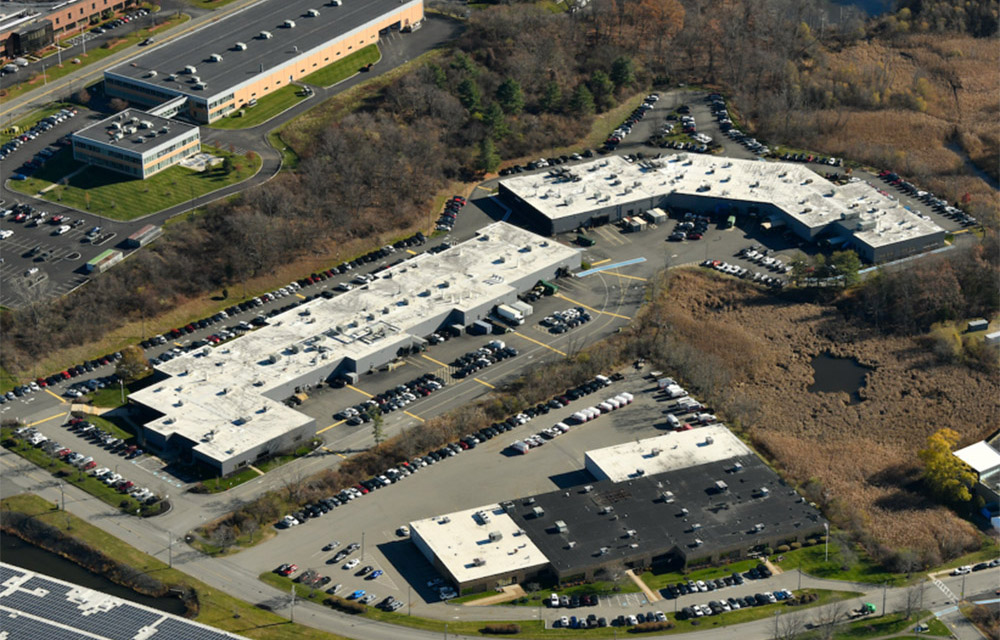
Danvers, MA Northwest Bank provided $34.5 million in financing to support Luzern Associates LLC’s $47.75 million acquisition of the Cherry Hill industrial portfolio, a three-building campus totaling 200,000 s/f.


 (1).gif)


Quick Hits
.png)
Columns and Thought Leadership

Massachusetts real estate transfers over $1 million face new tax rules as of November 1st - by Daniel Meyer
Attention to owners of real estate in the Commonwealth (and the title companies and other professionals who advise them), the Massachusetts Department of Revenue (the “DOR”) recently adopted a new “millionaire’s tax” via 830 CMR 62B.2.4

Are appraisers on the same page as the assessor? - by Richard Seman
The purpose of this article is to address problematic or confusing issues which may help assessors and appraisers to better understand how to value real estate for tax assessment purposes.

Reverse exchanges and the challenges of a competitive real estate market - by Michele Fitzpatrick
Our current, highly competitive real estate market poses specific challenges for investors who are considering taking advantage of a tax-deferred 1031 exchange. In this market, investors will have no problem selling their current property if priced properly, but they may find it difficult to find a suitable replacement property

The focus on price per s/f compared to the comparable sales used in the appraisal report - by Dennis Chanski
Over the past several weeks, I have completed appraisal assignments for private clients. Interestingly, after submitting these appraisals, I received several phone calls – not to question the value, content, or any incorrect information, but rather to discuss the price per s/f compared to the comparable sales used in the report.
