


 (1).gif)
News:
Finance
Posted: January 9, 2014
The taper caper - Now we'll know the impact
People have been predicting for a long time, and many real estate professionals have worried, that lending rates would be on the increase. In the late 1990s, rates were low, relatively stable, and real estate values increased in lock-step. People were certain then that rates would increase, because the low rates were somewhat artificially caused by government housing policy.
Nothing did change, however, until around 2008 when rates, instead, actually continued lower, much to the surprise of the worriers. Because of the financial crisis, as we all know, the Federal Reserve Bank started "quantitative easing," by purchasing mortgage backed securities and treasuries to ensure that the federal funds rate would come down towards zero. Thus,rates have actually been in a downward spiral since mid-1990.
Now, after five years, the Federal Reserve is finally decreasing (tapering) some bond buying because it believes the economy is strong enough to sustain modestly higher borrowing rates. The question looms, once again, whether and when rates will begin to trend up. Finally, the prophets of higher rates will be correct, or maybe not?
There has been a lot of uncertainty with regard to this "tapering." There has been an interesting dichotomy whereby if the economy improved, people feared that the Fed would taper and tighten rates, potentially choking economic growth. Thus, the good news of growth in employment was being translated into bad news in other parts of the marketplace. Now, finally, the modest tightening that the Fed has proposed is being considered good news, following the good news of employment. What are the reasons for the change in thinking? Why are potentially rising rates now not so bad?
Consider these few thoughts:
* As noted, tapering has been predicated on the enough growth in jobs to lower unemployment rate below 7%. Companies are mostly strong, with better balance sheets, less debt and liquidity of cash, and thus hiring. Congress is also beginning to behave itself by having reasonable negotiations on debt ceiling and deficits. All-in-all, there are some legs under this economy.
* The taper is small and manageable. The Fed is only proposing to reduce its $85 billion of purchases per month to $75 billion. At that level of reduction, even if repeated on a periodic basis, treasury and mortgage backed security purchase will continue for many years to come, and thus cause little shock to the marketplace.
* Even though there is a taper, the Fed has committed to ensuring that short-term rates will not change, trying to add predictability in borrowing. The Fed has said it will keep short-term rates to near zero, where it has been since December of 2008, until it was "well past the time" when unemployment was below 6.5%. That could be well into year 2015.
* It appears that the only things that could change this pattern are in an increase in unemployment, or the beginning of an inflationary trend. Inflation is nowhere in sight, and the apparent strength of the economy will most likely increase job growth, based on the recent record net new jobs over the last month.
On the flip side, others such as the National Association of Realtors maintain that rate increases will occur. That could be true despite the Feds' promise to not let it happen, but the question is would it make a difference.
Although I have been skeptical in the past, it appears that the inevitability of modest rate increases is finally baked into the markets. It seems to me that it would take a significant rate increase to stall the recent record purchasing of real estate assets, as people and institutions continue to look for yield. It may be that with an increase in rates, some investors will return to vehicles such as bonds and CDs, and pull back from the real estate market. That could be a good thing also, as it seems to me that those low cap, high price investors are turning a blind eye to the risks side of real estate. If some do pull back, it would be a market driven response, and a healthy step towards normality.
Daniel Calano, CRE, is the managing partner and principal of Prospectus, LLC, Cambridge, Mass.
MORE FROM Finance
Northwest Bank finances Luzern Associates’ $47.75m acquisition
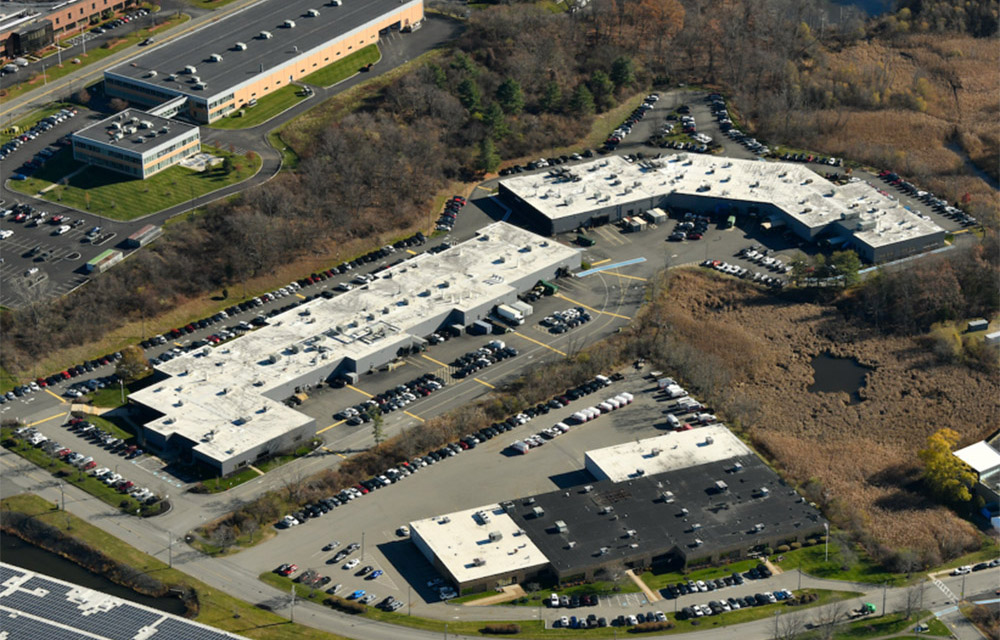
Danvers, MA Northwest Bank provided $34.5 million in financing to support Luzern Associates LLC’s $47.75 million acquisition of the Cherry Hill industrial portfolio, a three-building campus totaling 200,000 s/f.




 (1).gif)


Columns and Thought Leadership

Are appraisers on the same page as the assessor? - by Richard Seman
The purpose of this article is to address problematic or confusing issues which may help assessors and appraisers to better understand how to value real estate for tax assessment purposes.

The focus on price per s/f compared to the comparable sales used in the appraisal report - by Dennis Chanski
Over the past several weeks, I have completed appraisal assignments for private clients. Interestingly, after submitting these appraisals, I received several phone calls – not to question the value, content, or any incorrect information, but rather to discuss the price per s/f compared to the comparable sales used in the report.

Massachusetts real estate transfers over $1 million face new tax rules as of November 1st - by Daniel Meyer
Attention to owners of real estate in the Commonwealth (and the title companies and other professionals who advise them), the Massachusetts Department of Revenue (the “DOR”) recently adopted a new “millionaire’s tax” via 830 CMR 62B.2.4

Reverse exchanges and the challenges of a competitive real estate market - by Michele Fitzpatrick
Our current, highly competitive real estate market poses specific challenges for investors who are considering taking advantage of a tax-deferred 1031 exchange. In this market, investors will have no problem selling their current property if priced properly, but they may find it difficult to find a suitable replacement property
