


 (1).gif)
News:
Finance
Posted: October 13, 2017
There is no one definition of what “green” means - by Sean Sargeant

Sargeant Appraisal Service
What is “green.” Sometimes we act like it has a definition we’ve all agreed on. We often bid against requests for proposal that identify the subject as a green property only to find out, after the award, that the building has a little extra insulation and a heat recovery ventilator. Is that green? Is it the 1920s mill retrofit with 15kW of solar on the roof and a rain garden at the lobby entrance? Is it the new office building built on a brownfield site near public transportation and with an indoor bike garage? The simple fact is that there is no one definition of green. Perhaps better described as “sustainable buildings,” these projects may employ several different layers of technology from landscaping to materials sourcing to mechanical systems.
When a client asks for a bid on a green project my first response is to ask for a list of the technologies employed. On their side of the wall, the appraisal desk most commonly has only a request from a loan officer to solicit bids on a green property. The loan officer knows it is a green property because the borrower told them it was green. Typically, after a few days and emails detailing the information needed to generate a bid, the appraisal desk has the basic information required for an appraiser to address questions of competency, scope of work and generate a credible estimate of price and time. I don’t simply sell “green” appraisals. Every bid is based on the time required to analyze each of the sustainable technologies the borrower has employed in the project and come to a credible opinion of its contributory value in the whole.
This initial interaction and conservation with the client is critical to eventually delivering an appraisal product that is not misleading to the intended users in its intended use. The simple act of generating a list of the technologies employed in the sustainable building allows a dialogue with the client on valuation methods, the presence or absence of sale comparables and capitalization rates, the possible use of cost techniques, and obsolescence from all sources. Not only does the client have more confidence in our service, but they have the opportunity to think about options for review and prepare the loan committee for the type of analysis and data the report will contain.
Furthermore, sustainable projects often contain elements of income, such as tax credits and the annual sale of renewable energy credits (RECs) that may be considered either real or personal property. In my experience, the borrower always wants these included in the value opinion but the lender may not consider these sources of income as contributory elements of their collateral. Generating a list of technologies employed prior to the bid allows an up-front discussion with the client on what they want valued and prevents surprises at delivery of the report.
Thankfully, in November the Appraisal Institute will debut a new two-day class; Practical Applications in Appraising Green Commercial Properties. I had the opportunity to review the course developed by Tim Runde, MAI and Stacey Thoyre. This companion to their text, The Valuation of Green Commercial Real Estate, walks through several case studies in appraising sustainable buildings; from bid to review. It thoughtfully presents terminology, third-party ratings, technology and valuation methods; including an emphasis on the cost approach; that may be employed to support a value opinion. There will be several opportunities to attend this course in 2018 and I encourage you to take advantage of one.
Sean Sargeant, MAI, SRA is a certified general real estate appraiser at Sargeant Appraisal Service, Rutland, VT.
MORE FROM Finance
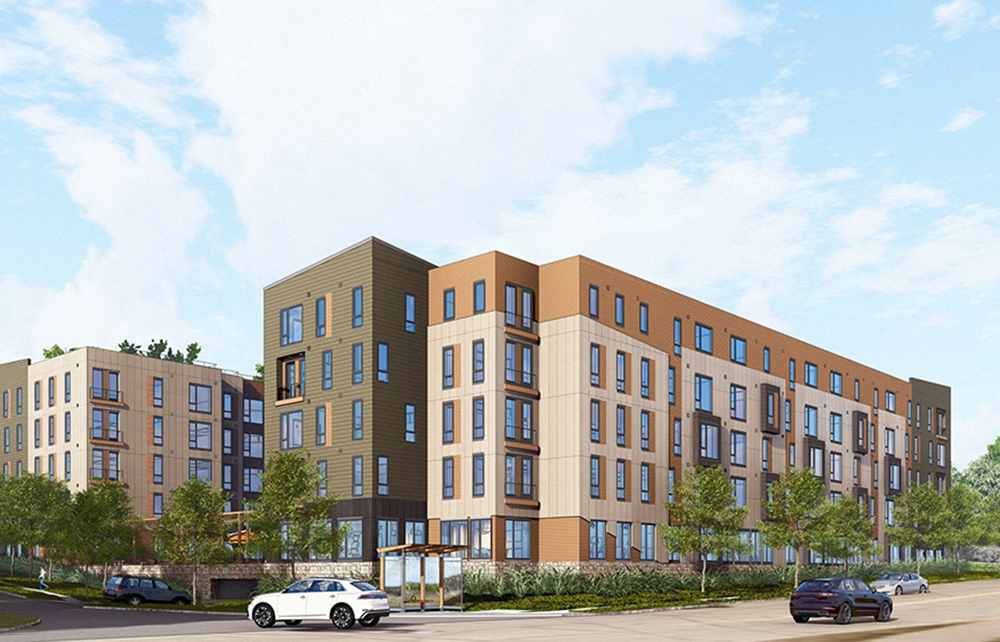
Affinius Capital and Axonic Capital provide $45.8 million construction loan for 130-unit multifamily
Lexington, MA Affinius Capital LLC (Affinius Capital), in partnership with Axonic Capital LLC (Axonic), originated a $45.8 million loan to finance the ground-up development of 7 Hartwell Ave., a to-be-built, 130-unit, Class A multifamily property with 400 s/f of retail.



 (1).gif)


Columns and Thought Leadership

Reverse exchanges and the challenges of a competitive real estate market - by Michele Fitzpatrick
Our current, highly competitive real estate market poses specific challenges for investors who are considering taking advantage of a tax-deferred 1031 exchange. In this market, investors will have no problem selling their current property if priced properly, but they may find it difficult to find a suitable replacement property

Massachusetts real estate transfers over $1 million face new tax rules as of November 1st - by Daniel Meyer
Attention to owners of real estate in the Commonwealth (and the title companies and other professionals who advise them), the Massachusetts Department of Revenue (the “DOR”) recently adopted a new “millionaire’s tax” via 830 CMR 62B.2.4

Are appraisers on the same page as the assessor? - by Richard Seman
The purpose of this article is to address problematic or confusing issues which may help assessors and appraisers to better understand how to value real estate for tax assessment purposes.

The focus on price per s/f compared to the comparable sales used in the appraisal report - by Dennis Chanski
Over the past several weeks, I have completed appraisal assignments for private clients. Interestingly, after submitting these appraisals, I received several phone calls – not to question the value, content, or any incorrect information, but rather to discuss the price per s/f compared to the comparable sales used in the report.
