


 (1).png)
News:
Owners Developers & Managers
Posted: October 20, 2014
Three common mistakes in cap rate calculations
Don't assume your clients fully understand capitalization rate (cap rate) analysis. Cap rate is an important concept in commercial real estate, but because of its common usage and simplification, there may be misunderstandings that lead to missteps in using it as a valuation tool.
1) Inaccurate NOI Projections. The formula for calculating cap rate is simple. Net operating income (NOI) divided by sales price = cap rate. NOI is the income less operating expenses. The expenses do not include financing costs or capital improvements. Adequate due diligence is necessary to realistically project the expenses for the coming year. Let's look at a property that sells for $1 million with $900,000 in projected expenses leaving an NOI of $100,000 resulting in a 10% cap. If the first year expenses are 5% higher than projected, it would result in an actual NOI of $55,000 and a 5.5% cap. ($1,000,000/55,000)
2) Cap Rate and Yield (IRR) are not synonymous. Cap rate is a one year snap shot showing the relationship between income and price. In most cases the cap rate and IRR (internal rate of return) will not be the same as yield must consider a return of the initial investment. Here is one of the few scenarios where they are the same. Purchase price $1 million, first year NOI $100,000. Sell the property at the end of the first year for $1 million. In this case the cap rate is 10% ($100,000/$1,000,000) and the IRR is 10%. Let's change the selling price at the end of the first year to $1.05 million. The cap rate is 10% but the IRR is 15%
3) Using a Single Cap Rate in Mixed Asset Class Properties. An example is a strip center with a AAA national tenant as the anchor and the remainder tenanted by local entities. This is a situation where multiple cap rates are probably apropos; you would use a lower cap rate for the national tenant's income stream and a higher rate for the remainder of the tenants in the center.
Jeanne Barreta is owner of the New England Real Estate Academy, Norton, Mass.
MORE FROM Owners Developers & Managers
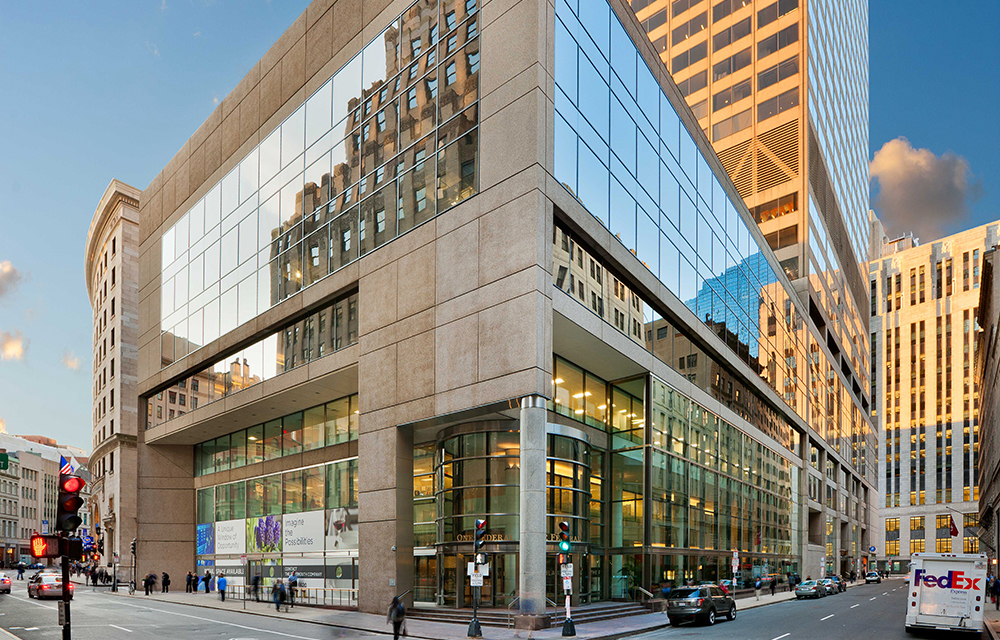
Rubin Rudman to establish headquarters at Tishman Speyer’s One Federal St.
Boston, MA Tishman Speyer has secured a new headquarters lease with Rubin Rudman at One Federal St., its 38-story, 1.1 million s/f tower in the Financial District. Under a 15-year lease, Rubin Rudman’s new headquarters will span 57,844 s/f across One Federal’s entire 23rd and 24th floors and a portion of the 25th floor.





 (1).png)

Columns and Thought Leadership

Retail infill strategy to activate Pawtucket’s Conant Thread District - by Gaetan Kashala
Until recently, the Conant Thread District consisted of approximately 150 acres of underutilized industrial land spanning Pawtucket and Central Falls. Today, the area is one of the most significant

Revitalized Town Centers: Retail??? - by Carol Todreas
It is now widely accepted that customers want to shop in person at physical stores. Brands know that they do better business in a physical store than just on line so they want to open stores. Demand for retail space by digital merchants, local entrepreneurs, and newly developed national chains

The legislature has spoken: New Hampshire doubles down on housing in commercial zones - by John Sokul
Last year, the New Hampshire Legislature enacted HB 631, a landmark housing measure requiring municipalities to permit multifamily housing in commercially zoned districts. The law generated

IREM president’s message: Our new reality - Staying ahead of supply chain delays - by Yoany Vargas
Supply chain delays are slowing construction, ratcheting up operating costs, and extending turnover timelines across Greater Boston, directly reducing revenue and increasing the workload for multifamily and