


 (1).png)
News:
Owners Developers & Managers
Posted: October 22, 2021
Three keys to designing an office employees want to return to - by John Kells

It’s been close to 20 months since we began working remotely. While some companies have returned to the office, at least partially, many have not. Although widespread vaccination rates brought much-needed optimism in the early summer of 2021, the continued spread of the Delta variant has caused many companies to reconsider the practicality of returning to the office. The question on everyone’s mind is “How do we create a vibrant workplace that supports myriad working models that people want to be a part of?”
Design for Flexibility: Employees have embraced the flexibility that working from home provides, but many executives are concerned about reduced engagement of a remote workforce. For those who work independently, the need to return to the office is more of a personal preference than a requirement. For others, the need to collaborate in-office is a necessity. There are also concerns that employees that work remotely will be marginalized and that in-office employees will have more opportunities for spontaneous collaboration and advancement. Whatever the primary working model, your office design must inspire employees to willingly forgo the comfort and convenience of working from home. If it does not, they will look elsewhere.
Decisions about company culture, working in-office, remote, or hybrid are key considerations for talent acquisition and retention. Flexibility in how spaces can be used and the increased need for technology to seamlessly support remote collaboration are essential. To address heightened health concerns, touchless technology, air filters, and outdoor spaces continue to increase in importance.
Thoroughly Understand Your Space Requirements: Each client has different needs and goals. In our initial client meetings to establish the program requirements, we listen to our clients, gather information about staff head count, and more importantly, the type of work associated with each role. This is a critical step in identifying what positions are suitable for working remote, in-person, or hybrid. Decisions about assigned seats, and the type of workstations required for employees that are in the office 1, 3, or 5 days a week can have a dramatic impact on the required size of the office. It is equally important to review the types and number of collaboration and amenity spaces. A thorough understanding of the types of meetings, the meeting size and the mix of in-person and remote participants, guide us to a solution that meets the specific needs of each client.
Optimize for Collaboration: One of our clients had decided to re-think their office needs, even considering if they needed a physical office at all. In the end, the client chose to renovate their existing office. The new design will shift from being optimized to support individual work tasks to being optimized to support collaboration. The changes include eliminating all private offices and assigned desks. Private offices are being converted to collaboration spaces with a variety of configurations and features, such as wall-mounted bullet tables with monitors and lounge seating with coffee tables. Existing workstations with tall panels are being replaced with new workstations arranged in pods with a shared conference table in the center. Low panels will be used to allow eye contact between employees. This transformation is very economical, requiring few changes to the partition configuration with most of the design impact coming from changes in furnishings.
Looking ahead: While the impact of COVID-19 on office protocols will diminish with time, the pandemic will have a lasting effect on how and where we work and the purpose of the office. As designers and architects, we can help identify your organization’s needs and design a workspace that functions well and fosters connection and collaboration—a place we all would like to return to.
John Kells is the director of interior design at Maugel Architects, Harvard, Mass.
MORE FROM Owners Developers & Managers
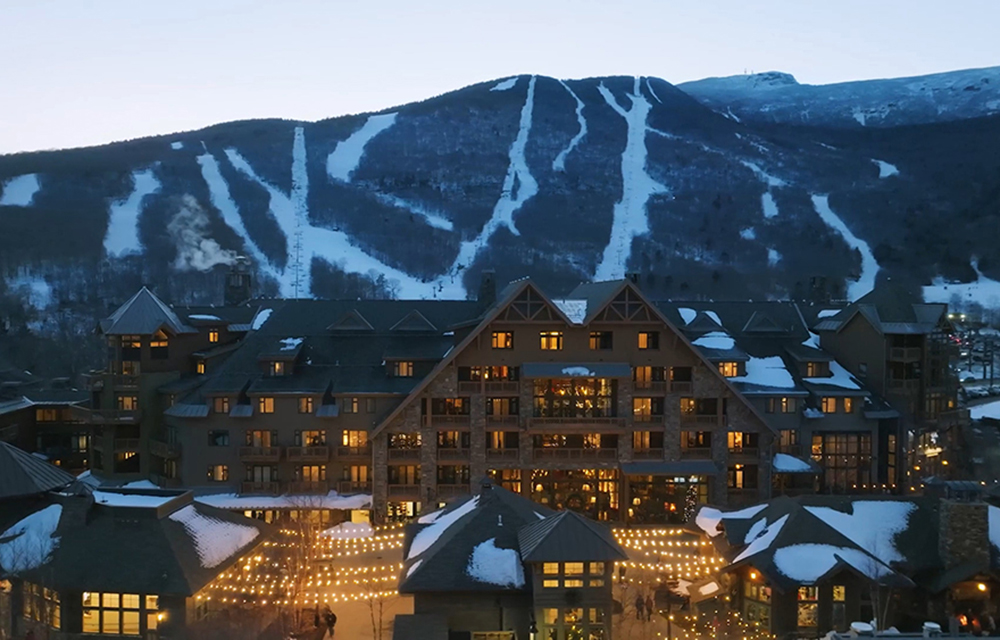
The Lodge at Spruce Peak recognized with Condé Nast Traveler’s 2026 Readers’ Choice Award - #3 in New England
Stowe, VT Condé Nast Traveler revealed the results of its annual Readers’ Choice Awards, with The Lodge at Spruce Peak recognized as the #3 U.S. Resort in New England.




Quick Hits


Columns and Thought Leadership

Revitalized Town Centers: Retail??? - by Carol Todreas
It is now widely accepted that customers want to shop in person at physical stores. Brands know that they do better business in a physical store than just on line so they want to open stores. Demand for retail space by digital merchants, local entrepreneurs, and newly developed national chains

The legislature has spoken: New Hampshire doubles down on housing in commercial zones - by John Sokul
Last year, the New Hampshire Legislature enacted HB 631, a landmark housing measure requiring municipalities to permit multifamily housing in commercially zoned districts. The law generated

IREM president’s message: Our new reality - Staying ahead of supply chain delays - by Yoany Vargas
Supply chain delays are slowing construction, ratcheting up operating costs, and extending turnover timelines across Greater Boston, directly reducing revenue and increasing the workload for multifamily and

Retail infill strategy to activate Pawtucket’s Conant Thread District - by Gaetan Kashala
Until recently, the Conant Thread District consisted of approximately 150 acres of underutilized industrial land spanning Pawtucket and Central Falls. Today, the area is one of the most significant