


 (1).gif)
News:
Finance
Posted: March 12, 2021
Underwriting the pandemic. Blustery markets prevail - by David Kirk

Kirk&Company
Blustery markets prevail in most property types, in most geography. Uncertainty and a combination of recessionary and expansionary economic forces impact activity and the property market conditions. Underwriting risks is the challenge of the Federal Reserve Bank as the FED monitors trends in micro and macro data, reports to the nation and exercises its powers. The FED DOES NOT SHIRK THE WORK. Transparency and clarity. Data and granularity. And the FED is a helpful example of methodology and reconciliation for commercial real estate investors and operators during this pandemic.
In the current blustery market, COVID-19 is a starting point and is best characterized by relevant local, regional, national, and global conditions. Placeholders and quantitative measures are helpful and necessary for credibility. COVID-19 is not war or natural disaster, it’s a pandemic. Similarly catastrophic and disruptive. Blustery might well be an understated characterization of some property markets such as enclosed entertainment and hospitality venues. However, distribution, technology, life science and residential are gusting upwards. And adaptive reuse, repurposing, upgrades and downgrades are nimble responses to structural demand changes.
Traditional measures of property markets are determinatives such as related occupancy and transaction trends. Much like the FED collects employment and financial market data, commercial property market makers collect data and activity markers. Aggregations and anecdotal data are helpful. Both data sets have strengths and weaknesses depending on property, market and economy. For instance, for markets with significant transaction activity, both anecdotal and aggregations are helpful. For markets without transaction activity, anecdotal primary data and inquiry must be collected and analyzed. Recounted. Reasoned. Reconciled.
Artificial Intelligence and algorithms are probably less reliable. Less reliable because in blustery conditions, because reflexive predictors are, if anything, less predictable. Accordingly, reason and judgement must be unpacked for reconciliation and conclusion. The FED depends on the Open Market Committee to do this. Commercial real estate professionals can organize their own cadre. A deal has many players.
In blustery conditions the data and analytical approaches are familiar, traditional and challenging. Must be done. The uncertainty ramps up the process. Credibility still prevails. Because the pandemic is a singular event in recent history, the patterns are not reminiscent or in the algorithm. However, the economy and employment are showing resilience and recovery. And COVID-19 is trending finally favorably. New times. New games. New toolbox. It’s the economy. It’s the pandemic.
David Kirk is founder, chief executive officer of Kirk & Company, Real Estate Counselors of Boston, Mass.
MORE FROM Finance
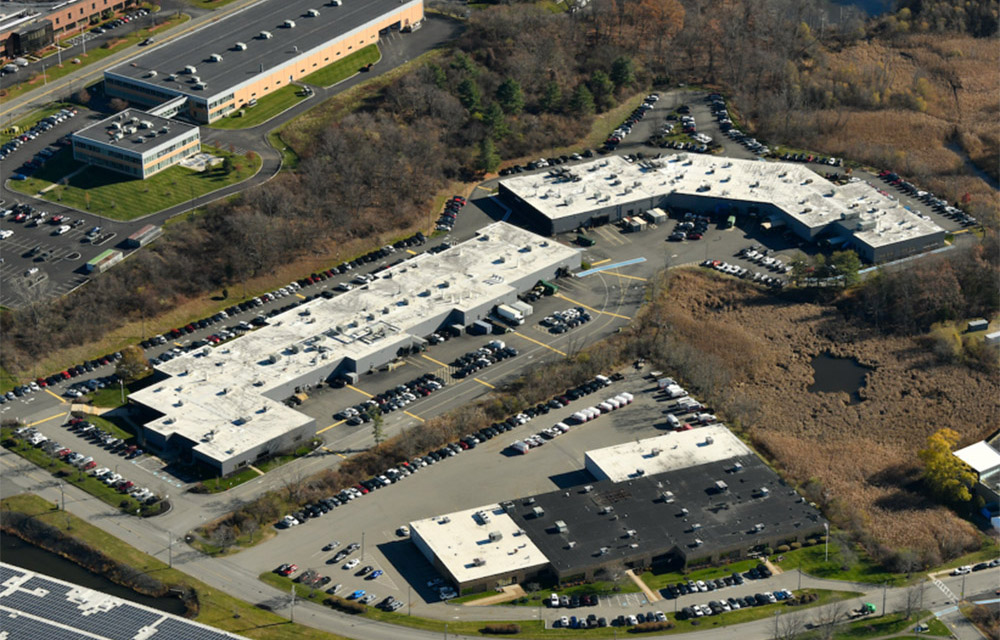
Northwest Bank finances Luzern Associates’ $47.75m acquisition
Danvers, MA Northwest Bank provided $34.5 million in financing to support Luzern Associates LLC’s $47.75 million acquisition of the Cherry Hill industrial portfolio, a three-building campus totaling 200,000 s/f.


 (1).gif)


Quick Hits

.png)
Columns and Thought Leadership

Massachusetts real estate transfers over $1 million face new tax rules as of November 1st - by Daniel Meyer
Attention to owners of real estate in the Commonwealth (and the title companies and other professionals who advise them), the Massachusetts Department of Revenue (the “DOR”) recently adopted a new “millionaire’s tax” via 830 CMR 62B.2.4

The focus on price per s/f compared to the comparable sales used in the appraisal report - by Dennis Chanski
Over the past several weeks, I have completed appraisal assignments for private clients. Interestingly, after submitting these appraisals, I received several phone calls – not to question the value, content, or any incorrect information, but rather to discuss the price per s/f compared to the comparable sales used in the report.

Reverse exchanges and the challenges of a competitive real estate market - by Michele Fitzpatrick
Our current, highly competitive real estate market poses specific challenges for investors who are considering taking advantage of a tax-deferred 1031 exchange. In this market, investors will have no problem selling their current property if priced properly, but they may find it difficult to find a suitable replacement property

Are appraisers on the same page as the assessor? - by Richard Seman
The purpose of this article is to address problematic or confusing issues which may help assessors and appraisers to better understand how to value real estate for tax assessment purposes.
