


 (1).gif)
News:
Finance
Posted: January 13, 2011
What might happen in 2011: Looks like a steady year, need a year like this to recover
The view is a lot different than it was a year ago. It depends a lot on your perspective as to how to spin it. I'm feeling mildly, pragmatically - not wildly - optimistic.
Some of the high points from last year bear mentioning:
*1-4 family markets saw some improved activity and, more importantly, some significant adjustments in overall psychology. There was strength in terms of pricing in some sectors. In many, some inventory - good and bad - got cleaned up. The tax credits provided a burst of energy. Without it, the markets may not have gained enough momentum of their own. The Realtors out there are fairly divided about what next year brings but that's in line with the general feeling about what is to come.
*It seems like the Great Commercial Crash was avoided. For now. The timing was a close run thing. The economy improved enough and the financing logjam dispersed enough so that the doomsday scenario didn't take place.
*The economy clawed back. Not a lot, but just enough to put many investors, employers, lenders, etc. into less black moods. Not quite a recovery but not a recession.
*The highest point was the return of some confidence in the economy, in real estate, and in a future with positive aspects to it.
What will happen this year? After conducting extensive interviews and engaging in some deep soul searching, here are some thoughts:
*1-4 family markets should continue to be the "new normal." Observers say forget about a return to the boom psychology, that's history. There will be areas of strength and good quality housing will remain. Many locales will continue in long term rehab. In general, expect moderation. In fact, moderation will be a win for many struggling markets. New England will outperform many markets nationally and the Boston area will outperform within New England.
*The economy is not going to sputter out unless some cataclysmic things occur. It may not exactly crank but growth will occur, jobs will continue to be created, perhaps more steadily than in 2010, and that growth will have ramifications.
*Commercial markets will continue to regain strength. It appears that they dodged a bullet or two. Investors and bankers are back in the markets. The good stuff is attracting great prices. The lousy stuff is still sitting. But wait; there are plenty of fools waiting to rush in....Investors are once again are casting their eye onto real estate for maximum yields...who would have ever thought that a 4.5% real estate return was tops?
*Office leasing markets are showing clear signs of life. There will be no hockey stick like surge in demand but companies are clearly looking for space. Of particular interest will be the smaller deals rather than large chunks. Downtown space, the good stuff, is seeing strong action. The suburbs will follow but more slowly.
*New downtown office buildings? Too soon to tell. Remains to be seen.
*Apartments will remain strong. In New England, these types of properties are "can't lose" propositions given that there is always demand for rental housing in this area: it's just hard and expensive to create new multi-family housing around here. Well-located apartment properties have seen some trophy prices paid over the past 12 months. Some in-town properties have traded at extremely low cap rates.
*Development deals are starting to get done again. The smart players have been nosing around and locking up some interesting deals for down the road. Expect this activity to become more evident.
*Bankers are loosening the purse strings. All that cash needs to do something. Many banks have set ambitious commercial lending goals for 2011 after sitting on the piles of gold in 2010. Remember the effect oceans of cash on pricing and investor activity back in the day not so long ago and the misery it is still causing us!
2011 looks like a steady year. Let's hope it turns out that way. We need a year like this to recover and create some measurable gains to build on.
William Pastuszek, MAI, SRA, MRA heads Shepherd Associates, Newton Mass.
MORE FROM Finance
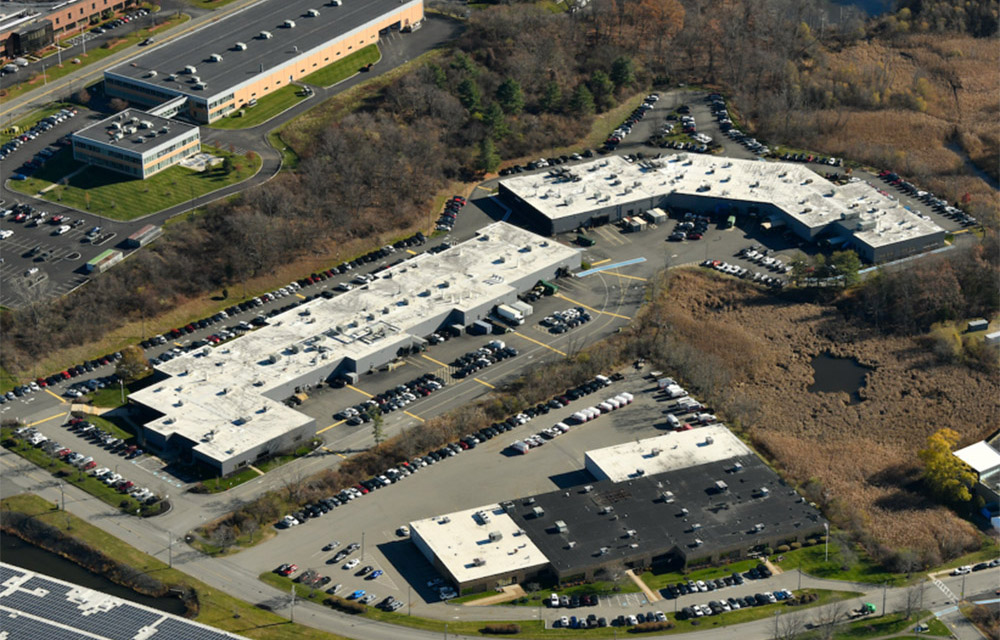
Northwest Bank finances Luzern Associates’ $47.75m acquisition
Danvers, MA Northwest Bank provided $34.5 million in financing to support Luzern Associates LLC’s $47.75 million acquisition of the Cherry Hill industrial portfolio, a three-building campus totaling 200,000 s/f.



 (1).gif)


Quick Hits

.png)
Columns and Thought Leadership

Massachusetts real estate transfers over $1 million face new tax rules as of November 1st - by Daniel Meyer
Attention to owners of real estate in the Commonwealth (and the title companies and other professionals who advise them), the Massachusetts Department of Revenue (the “DOR”) recently adopted a new “millionaire’s tax” via 830 CMR 62B.2.4

Are appraisers on the same page as the assessor? - by Richard Seman
The purpose of this article is to address problematic or confusing issues which may help assessors and appraisers to better understand how to value real estate for tax assessment purposes.

Reverse exchanges and the challenges of a competitive real estate market - by Michele Fitzpatrick
Our current, highly competitive real estate market poses specific challenges for investors who are considering taking advantage of a tax-deferred 1031 exchange. In this market, investors will have no problem selling their current property if priced properly, but they may find it difficult to find a suitable replacement property

The focus on price per s/f compared to the comparable sales used in the appraisal report - by Dennis Chanski
Over the past several weeks, I have completed appraisal assignments for private clients. Interestingly, after submitting these appraisals, I received several phone calls – not to question the value, content, or any incorrect information, but rather to discuss the price per s/f compared to the comparable sales used in the report.
