



News:
Spotlight Content
Posted: March 27, 2020
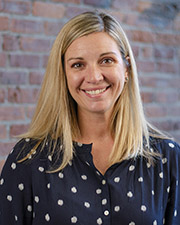
2020 Women in Construction: Natasha Kulchitsky Structural Engineer TFMoran

What was your greatest professional achievement or most notable project in the last 12 months? I started a civil engineering program at the University of Alaska when I was 37 years old. Pretty late… Being very ambitious in the beginning, I quickly had to understand that an engineering career would not be easy and graceful. Balancing between endless homework assignments, labs, being a TA, and family activities (I had three kids) was a big challenge. When I graduated and started working, I was placed in the technical world with lots of terms and approaches which seemed quite new to me again. English is my second language and so I had no idea how fasteners could be adhesive and why a kicker could hold a parapet in place. Some people told me that it would be better to switch to a more feminine profession. But I told myself that men would meet the same difficulties and just kept going. Last December I received my professional license which became a proof that my choice of engineering was a reasonable and right decision. It could not happen without support of my close family and TFMoran colleagues who always were extremely patient, encouraging and friendly to me.
Who or what inspired you to join the construction industry? I loved math since I was a little girl. Mathematics was my favorite subject during all school years and became my first major at the Moscow State University in Russia. I always wanted that my work would be related to numbers and logic. Joining the construction industry and engineering design, I was able to apply math to the real world.
When I’m not working I am… dancing. I take adult ballet classes which keep me motivated and I always want more. I also choreograph dances for various groups of children and adults.
Tags:
Spotlight Content
MORE FROM Spotlight Content

New England Real Estate Journal's 2026 Women in Commercial Real Estate Spotlight
NEREJ's Women in CRE Spotlight celebrates the women making an impact across commercial real estate and the companies that recognize, support and champion them.







.png)
Columns and Thought Leadership

Shallow-bay wins on 495/128: A renewal-driven market with a thin pipeline - by Nate Nickerson
The Boston industrial market entered mid-2025 in a bifurcated state. Large-block vacancy remains elevated, while shallow-bay along the 495/128 corridor continues to prove resilient. Fieldstone’s focus on this geography positions us squarely in the middle of a renewal-driven, supply-constrained

As legacy names recalibrate, new entrants are moving in with fresh capital, new technologies, and business models tailored to today’s supply-chain needs - by Michael Harrington
Southern New Hampshire’s industrial market has always punched above its weight. For decades, the region has attracted a mix of advanced manufacturing, beverage and food producers, logistics operators, and specialty

How do we manage our businesses in a climate of uncertainty? - by David O'Sullivan
These are uncertain times for the home building industry. We have the threat of tariffs mixed with high interest rates and lenders nervous about the market. Every professional, whether builder, broker, or architect, asks themselves, how do we manage our business in today’s climate? We all strive not just to succeed, but

Limited supply fuels landlord‑friendly conditions in Rhode Island’s industrial market - by Julie Freshman and George Paskalis
As we enter the spring of 2026, the Rhode Island industrial real estate market stands on stable footing, following several years of resilience fueled by constrained supply, steady demand, and dynamic economic conditions.
