



News:
Spotlight Content
Posted: March 25, 2022
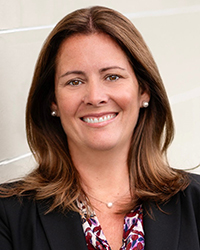
2022 Women in Construction: Caroline Rees, P.E., Design Engineer at Cavanaro Consulting

What was your greatest professional achievement or most notable project in the last 12 months? I am fortunate to be with a firm that constantly challenges me to further my experience and expertise. Every job has it challenges and unique problems to solve. Therefore, my current job at any point in time feels most notable.
When you’re not busy, what is your go to book or podcast to help you unwind? I prefer to read historical fiction. I recently read and loved Sister Queens by Julia Fox.
Starting out in the construction business, who or what empowered you? I began my career in Denver, Colorado, with a student internship that turned into permanent employment with the federal government, the U.S. Bureau of Reclamation. The bureau offered a rotation program for new engineers that provided me with field experience on large-scale construction jobs. Working on-site with construction crews gave me the confidence to apply what I learned in the classroom to the field.
Within your firm, who has helped you succeed within the industry? How have they helped you? I am fortunate to be surrounded by a team of mentors who continually support me and are available for guidance. My supervisors and the staff want me to succeed and give me their time and expertise to help work through a problem.
What tips or advice would you offer to other women who are considering entering the construction industry? Today, I feel like there are unlimited opportunities for women in the construction industry. Take advantage of any opportunity to work in the field and make decisions onsite. Field experience is extremely valuable.
Tags:
Spotlight Content
MORE FROM Spotlight Content

New England Real Estate Journal's 2026 Women in Commercial Real Estate Spotlight
NEREJ's Women in CRE Spotlight celebrates the women making an impact across commercial real estate and the companies that recognize, support and champion them.







Quick Hits

.png)
Columns and Thought Leadership

How do we manage our businesses in a climate of uncertainty? - by David O'Sullivan
These are uncertain times for the home building industry. We have the threat of tariffs mixed with high interest rates and lenders nervous about the market. Every professional, whether builder, broker, or architect, asks themselves, how do we manage our business in today’s climate? We all strive not just to succeed, but

Shallow-bay wins on 495/128: A renewal-driven market with a thin pipeline - by Nate Nickerson
The Boston industrial market entered mid-2025 in a bifurcated state. Large-block vacancy remains elevated, while shallow-bay along the 495/128 corridor continues to prove resilient. Fieldstone’s focus on this geography positions us squarely in the middle of a renewal-driven, supply-constrained

As legacy names recalibrate, new entrants are moving in with fresh capital, new technologies, and business models tailored to today’s supply-chain needs - by Michael Harrington
Southern New Hampshire’s industrial market has always punched above its weight. For decades, the region has attracted a mix of advanced manufacturing, beverage and food producers, logistics operators, and specialty
Limited supply fuels landlord‑friendly conditions in Rhode Island’s industrial market - by Julie Freshman and George Paskalis
As we enter the spring of 2026, the Rhode Island industrial real estate market stands on stable footing, following several years of resilience fueled by constrained supply, steady demand, and dynamic economic conditions.
