



News:
Spotlight Content
Posted: September 30, 2022
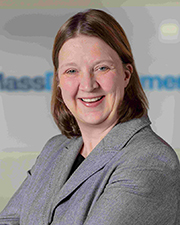
2022 Women in Commercial Real Estate: Julia Anne Slom, Washington Trust

Senior VP & Team Leader,
Commercial Real Estate Group
Washington Trust
What has been your biggest challenge and how have you faced it?
My career started in the petrochemical overseas trading business – an almost completely male-dominated industry- and later I joined the finance and banking industries, where men are often still the majority, especially in executive roles. I was challenged to find ways to develop collegial, productive relationships while not being involved in much of the socializing early in my career. I made, and continue to make, a conscious effort to view being a woman as an opportunity instead of a setback. I found ways to make connections by being myself, finding common ground, and forging my own relationships. I let my talents of finding creative solutions and attention to detail differentiate me, using my creativity and problem solving to answer with a ‘yes’ instead of a ‘no.’
Who is a woman leader you find to be inspiring and why?
Brene Brown, Mother Theresa, and Oprah Winfrey are all on my list of favorites. They bring value by being experts in their chosen work and prioritize giving back to the less fortunate.
What trends will dominate your industry in the coming months?
The uncertainty about the office market going forward will be a dominant part of the conversation. While I have no doubt that there will always be a need for office space, there are still questions to consider- how will it look? How will it accommodate hybrid workers efficiently while remaining safe? What should companies do to encourage in-person work when it comes to workplace amenities and accommodations? I’m also curious to see how analysts, appraisers and other professionals trying to quantify valuations, cash flows and these other unknowns handle these questions.
Tags:
Spotlight Content
MORE FROM Spotlight Content

New England Real Estate Journal's 2026 Women in Commercial Real Estate Spotlight
NEREJ's Women in CRE Spotlight celebrates the women making an impact across commercial real estate and the companies that recognize, support and champion them.






Quick Hits
 (1).gif)
.png)
Columns and Thought Leadership

Shallow-bay wins on 495/128: A renewal-driven market with a thin pipeline - by Nate Nickerson
The Boston industrial market entered mid-2025 in a bifurcated state. Large-block vacancy remains elevated, while shallow-bay along the 495/128 corridor continues to prove resilient. Fieldstone’s focus on this geography positions us squarely in the middle of a renewal-driven, supply-constrained

Limited supply fuels landlord‑friendly conditions in Rhode Island’s industrial market - by Julie Freshman and George Paskalis
As we enter the spring of 2026, the Rhode Island industrial real estate market stands on stable footing, following several years of resilience fueled by constrained supply, steady demand, and dynamic economic conditions.

As legacy names recalibrate, new entrants are moving in with fresh capital, new technologies, and business models tailored to today’s supply-chain needs - by Michael Harrington
Southern New Hampshire’s industrial market has always punched above its weight. For decades, the region has attracted a mix of advanced manufacturing, beverage and food producers, logistics operators, and specialty

How do we manage our businesses in a climate of uncertainty? - by David O'Sullivan
These are uncertain times for the home building industry. We have the threat of tariffs mixed with high interest rates and lenders nervous about the market. Every professional, whether builder, broker, or architect, asks themselves, how do we manage our business in today’s climate? We all strive not just to succeed, but
