


 (1).png)
News:
Owners Developers & Managers
Posted: February 21, 2013
Ordinance of law coverage: Are you properly covered by your insurance policy?
Property insurance policies invariably exclude insurance coverage necessary to rebuild or repair the damaged property in compliance with the current building code. This can leave property owners without coverage to make the necessary repairs to their property. Without the proper insurance coverage, policyholders would have to pay for the repairs out of pocket.
As an example, take a homeowner who has a fire at his or her residence which has old wiring. In order to repair the dwelling in accordance with the applicable building codes, the homeowner may be required to rewire the entire house. This could cost the homeowner tens of thousands of dollars, which has not been provided for by their homeowners insurance policy. In order to close this gap in insurance coverage, a homeowner may add "ordinance or law" coverage to their insurance policy, which would provide an increased amount of coverage to their policy.
In some jurisdictions, it might not be necessary for homeowners to add ordinance or law coverage because their homeowners insurance policy may already contain such coverage. In Massachusetts, most homeowners insurance policies contain a minimum of 10% of the building coverage (Coverage A - Dwelling) as additional ordinance or law coverage. If a covered loss results in the home having to be repaired, rebuilt, or demolished in accordance with the enforcement of any building code, ordinance, or law, this coverage is activated. Therefore, Massachusetts homeowners would not need to add the additional endorsements to their homeowners insurance policy. However, Massachusetts homeowners may want to review their insurance policies and increase the dollar limit of ordinance of law coverage that is provided in their policy.
Similar to homeowners, commercial insurance policy holders may also add ordinance or law coverage to their insurance policies. A commercial policy holder can add this coverage by including two endorsements to their commercial property policy. These endorsements are: 1) Coverage to upgrade the building as required by ordinances or laws and 2) Coverage for the loss of income during the increased time that it takes to bring the property into compliance with the applicable building codes. For commercial insurance policy holders, it is highly recommended to add both of these endorsements to their insurance policies.
For both homeowners and commercial property owners, a variety of laws could come into play when a damaged building is repaired or rebuilt. These laws may include local, state, and federal regulations. Also, it is important to be aware of building restrictions imposed by historical societies on buildings designated as significant and/or historical.
In many jurisdictions, there are requirements that a building with "major damage" must be demolished, even if part of the building may be salvaged. It is important for insurance policyholders to know what code requirements could apply as these may differ according to jurisdiction. Also, an appropriate amount of "ordinance or law" coverage should be added to the insurance policy to cover potential costs.
Fortunately, the insurance industry has created insurance policy endorsements that both homeowners and commercial property owners can purchase. For an additional premium, insurance policyholders may add the aforementioned endorsements to their insurance policies, which will provide coverage for this exposure and protect their interests.
Jonathan Berman, Esq. is a vice president with Berman Adjusters, Inc., Newton, Mass.
MORE FROM Owners Developers & Managers
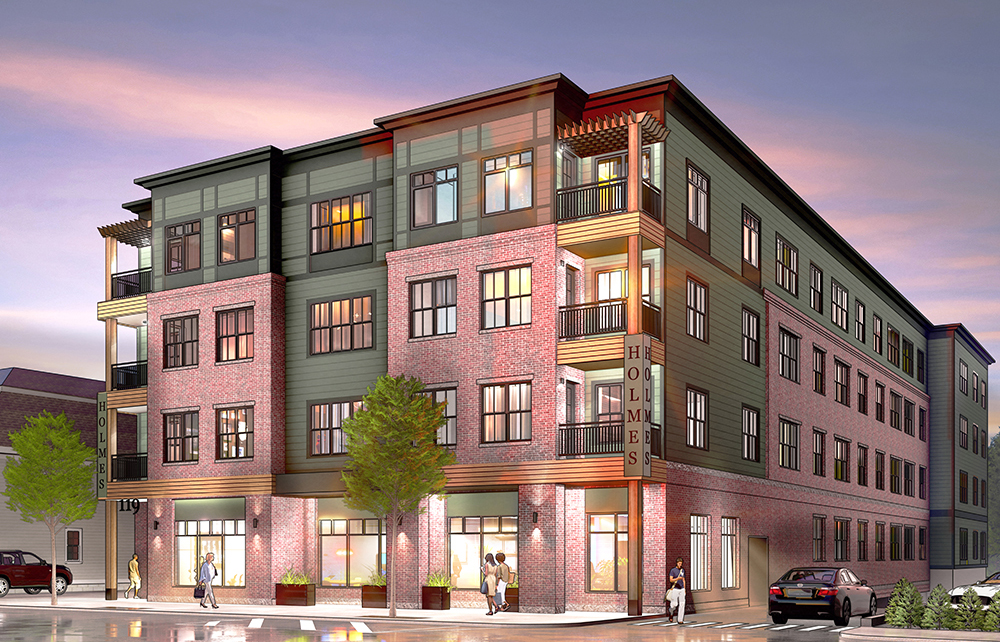
Barnat Development begins work on Phase II of Holmes Beverly - construction led by NEI General Contracting
Beverly, MA Barnat Development has begun construction on Holmes Beverly Phase II, adding 52 apartment homes adjacent to the existing development near the Beverly Depot MBTA commuter rail station. The project is financed through the newly launched Holmes Opportunity Zone Fund, focused on investing in new multifamily construction projects across New England. $10 million of Holmes OZ Fund equity is paired with $21 million in long-term

.png)




Columns and Thought Leadership

Florida ruling raises bar for condo terminations and buyouts - by Michael Karsch
On October 14, 2025, in a landmark decision with significant implications for the Florida real estate market, the Supreme Court of Florida formally denied Two Roads Development’s (TRD Biscayne LLC) petition for review in its long-running case against unit owners of Biscayne 21,

Retail infill strategy to activate Pawtucket’s Conant Thread District - by Gaetan Kashala
Until recently, the Conant Thread District consisted of approximately 150 acres of underutilized industrial land spanning Pawtucket and Central Falls. Today, the area is one of the most significant

Revitalized Town Centers: Retail??? - by Carol Todreas
It is now widely accepted that customers want to shop in person at physical stores. Brands know that they do better business in a physical store than just on line so they want to open stores. Demand for retail space by digital merchants, local entrepreneurs, and newly developed national chains

IREM president’s message: Our new reality - Staying ahead of supply chain delays - by Yoany Vargas
Supply chain delays are slowing construction, ratcheting up operating costs, and extending turnover timelines across Greater Boston, directly reducing revenue and increasing the workload for multifamily and