



News:
Construction Design & Engineering
Posted: December 20, 2024
A comprehensive workplace strategy can increase employee engagement and attract staff back to the workplace - by Miika Ebbrell
 Ebbrell_Miika_
As organizations respond to rapidly evolving workplace expectations – whether remote, hybrid, or fully in-person – determining the right amount and type of office space is critical. A data-driven workplace strategy approach can lead to right-sizing solutions that go beyond simply expanding or contracting office space – they can involve transforming layouts, integrating adaptable furniture and technology, and designing versatile spaces that foster a dynamic and motivating workplace.
Right-sizing, however, isn’t just about fitting desks into a floor plan; it’s about crafting spaces that reflect the evolving needs of today’s businesses and their employees. With hybrid and in-person work models on the rise, companies are rethinking how well their existing environments support these new patterns. Many office layouts, for example, have large conference rooms that go unused, while flexible work areas, quiet zones, and seamlessly integrated technology that are essential for productivity and collaboration are in short supply.
A workplace strategy study can help guide transitions by providing tailored solutions that adapt office spaces to both present and future demands. Our findings frequently inform targeted updates, such as creating multifunctional spaces, introducing flexible furniture, and incorporating technology that ensures both hybrid and in-person teams can work and collaborate effectively.
Tailored Solutions Through Comprehensive Workplace Strategy
A successful workplace strategy is more than space optimization – it’s about ensuring that the space supports the organization’s goals, culture, and workforce. By using a mix of space usage studies, programming, and visioning, a tailored plan can be developed that will optimize spaces for today’s needs and future requirements.
• Space Usage Studies: The first step is to assess how office space is utilized, focusing on employee density, adjacencies, meeting room usage, and the balance between private and collaborative areas. For example, many offices have large conference rooms or private offices that see little use throughout the day. By identifying inefficiencies, your design team can find ways to optimize square footage, such as converting underused areas into breakout rooms, collaboration zones, or flexible spaces (e.g., a café) that support informal meetings and foster the social interaction needed to encourage employees back to the office.
• Space Programming: Insights from the space usage analysis, along with leadership and employee questionnaires and interviews can help tailor the office design to the organization’s unique worker profiles versus relying on blanket solutions. For example, a marketing team might benefit from open collaborative areas, while accounting might need more privacy and focus. By mapping out how much space is required for each function the design can be tailored to support everything from high-focus individual tasks to high-energy teamwork.
• Visioning: Understanding a company’s culture also plays a critical role in shaping the office environment. Visioning sessions with stakeholders ensure that the design reflects and supports the organization’s culture. A company seeking to encourage collaboration among teams might adopt a configuration with fewer walls, integrated flexible seating options, and more informal meeting areas that promote spontaneous interaction, while a client-centered organization could focus on creating impressive client-facing areas.
As work models continue to evolve, a thoughtfully designed office that combines functional workspaces, supportive amenities, and the right technological infrastructure can greatly boost productivity, improve employee satisfaction, and strengthen recruitment and retention, both today and in the years to come.
Miika Ebbrell, AIA, LEED AP, is principal at Ebbrell Architecture + Design, Boxford, Mass.
MORE FROM Construction Design & Engineering
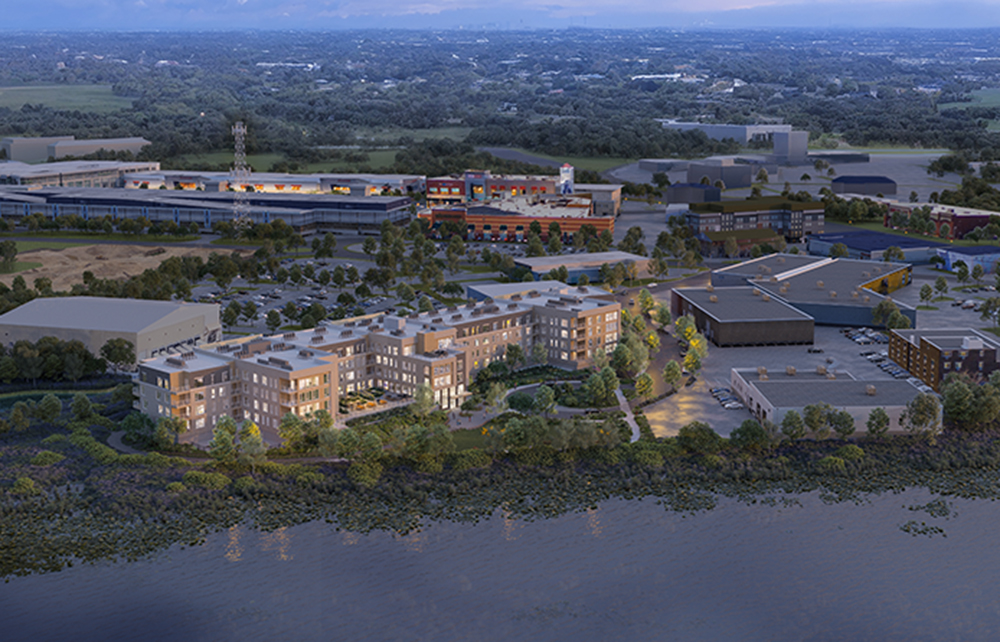
Nordblom partners with Erland Construction for new residential development in Dedham
Dedham, MA Erland Construction has once again partnered with long-time client Nordblom Company to bring a new multifamily residential community, Vantage, to life. Working in collaboration with Stantec, Erland will construct a 218,000 s/f, four-story wood- and steel-frame building that will introduce 155 apartment homes to this rapidly growing neighborhood.




Columns and Thought Leadership

Greenwood Credit Union City Hall Plaza nears completion - by Frank Picozzi
After several years of planning, construction, and anticipation, the community is eagerly awaiting the opening of the Greenwood Credit Union City Hall Plaza and outdoor skating rink later this month.

Navigating tariffs and material uncertainty in today’s construction market - by Karl Ginand and Tiffany Gallo
As headlines around tariffs seem to dominate the news daily, many considering construction projects have anticipated major cost escalations and widespread supply issues. While tariffs haven’t driven pricing spikes to the extent once feared, the lasting impact has been a new layer of uncertainty, affecting more than just budgets.

It’s time to lead: Confronting mental health in construction - by David Watts
As we close Mental Health Awareness Month, we must be clear: May isn’t just about ribbons, hashtags, or lunchtime mindfulness apps. It’s about responsibility to confront hard truths that linger in silence, and to challenge ourselves, as leaders in our industry, to do more.

ABC-Mass. chairman’s message: Rent control isn’t the answer to our housing crisis - by Luiza Mills
As you may know, Massachusetts voters will be weighing in on a number of ballot initiatives in November. Among them is a proposal to impose the nation’s strictest statewide rent control policy. I’d like to tell you why the ABC MA Board
