


 (1).png)
News:
Owners Developers & Managers
Posted: October 28, 2016
An inside look at how to design for a design firm - by Philip Barash
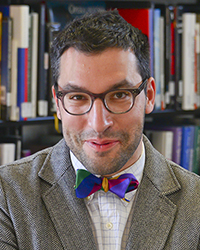 Philip Barash, Sasaki
Our very first conversations about Sasaki’s brand used a visual aid. It was a cartoon of an elephant surrounded by blindfolded people, each touching a different part of the animal. “Tree,” said the caption beneath the person touching the elephant’s leg. “Hose,” said the one near the trunk. “Rope,” said the one by the tail.
Such was the challenge of our brand, which had grown organically over the last six decades. Sasaki’s name is well-known, but it means different things to different people. It embodies the elegance of contemporary architecture, the rigor of planning new regions, the urgent recognition of the role that natural systems play in our lives. Still, it lacked a unified identity. This challenge was felt more acutely as the practice entered a new phase—a phase marked by a young and diverse staff, transformative projects all over the world, and, as always, big ideas. That’s the Sasaki we wanted to share with the world.
After a thorough search, we partnered with Bruce Mau Design (BMD), charging their team with capturing the essence of new Sasaki. In BMD, we recognized kindred spirits: perfectionists, design nerds, conceptual thinkers. We warned BMD that we would be a demanding client, bringing 270 pairs of critical design eyes to the project.
The yearlong process began with a series of strategic exercises to uncover Sasaki’s ambitions and desires—what we stand for. At the same time, discussions with industry peers, clients, and influencers revealed the spectrum of marketplace perception. What emerged in that process was a single thread that connected all markets and disciplines. In all-caps, double-underlined, we wrote the phrase “We are defining the future of place.” Beyond specific disciplines, building types, or markets, we believe that what we create today will shape our collective future.
These insights grew into a messaging framework, containing an expanded vocabulary and a sharp point of view in speaking about our work. A powerful visual metaphor flowed too: a bright and variegated kit, in which every part complements the other. Ultimately, the new brand is unmistakably Sasaki: full of energy and passion, diversity and design, a complex and multidimensional animal. But now, the blindfolds are off.
Philip Barash is creative director at Sasaki, Boston, Mass.
MORE FROM Owners Developers & Managers
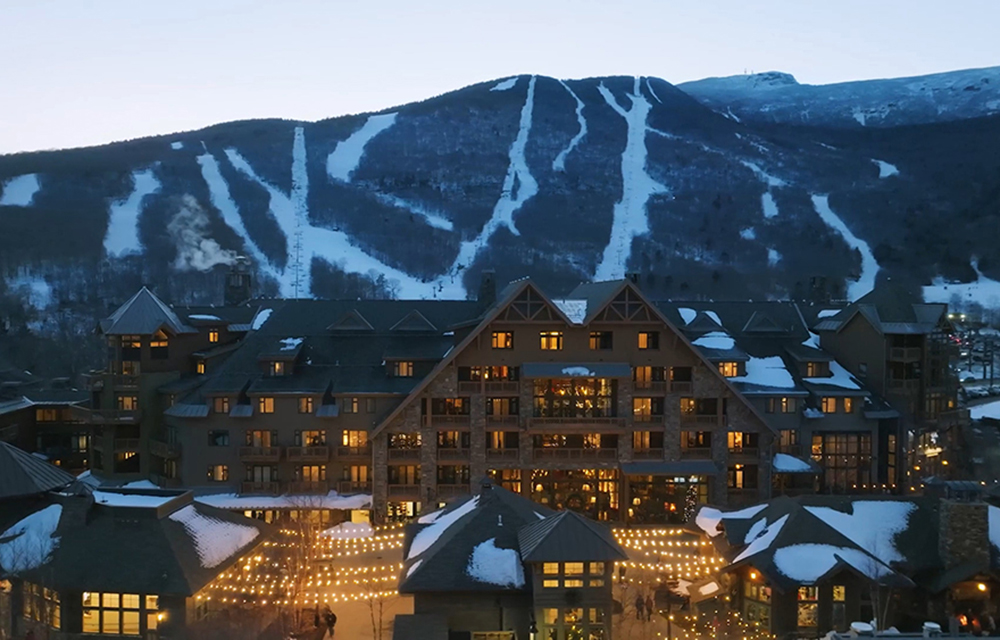
The Lodge at Spruce Peak recognized with Condé Nast Traveler’s 2026 Readers’ Choice Award - #3 in New England
Stowe, VT Condé Nast Traveler revealed the results of its annual Readers’ Choice Awards, with The Lodge at Spruce Peak recognized as the #3 U.S. Resort in New England.






Columns and Thought Leadership
Revitalized Town Centers: Retail??? - by Carol Todreas
It is now widely accepted that customers want to shop in person at physical stores. Brands know that they do better business in a physical store than just on line so they want to open stores. Demand for retail space by digital merchants, local entrepreneurs, and newly developed national chains
IREM president’s message: Our new reality - Staying ahead of supply chain delays - by Yoany Vargas
Supply chain delays are slowing construction, ratcheting up operating costs, and extending turnover timelines across Greater Boston, directly reducing revenue and increasing the workload for multifamily and

Retail infill strategy to activate Pawtucket’s Conant Thread District - by Gaetan Kashala
Until recently, the Conant Thread District consisted of approximately 150 acres of underutilized industrial land spanning Pawtucket and Central Falls. Today, the area is one of the most significant

The legislature has spoken: New Hampshire doubles down on housing in commercial zones - by John Sokul
Last year, the New Hampshire Legislature enacted HB 631, a landmark housing measure requiring municipalities to permit multifamily housing in commercially zoned districts. The law generated