


 (1).gif)
News:
Finance
Posted: October 21, 2016
Appraisers are lemmings, self destructing and irrational - by Roger Durkin
 Roger Durkin, Durkin Law, P.C
Too many appraisers applaud when they hear a fellow appraiser was sanctioned by the state appraiser regulatory system. One can almost hear the cheer, “more business for me” and “good we got rid of another bad appraiser,” or some other equally condescending remark. Who speaks for the appraisal profession? It is not the various appraisal associations, they should but they do not. No, the Appraisal Institute, MBREA, ASA, IFA, and the half dozen other appraisal groups are not working to protect the appraisal profession from overburdening regulation. They are working to protect their own self-interest. Unlike labor unions, appraisal associations do not act to protect their constituency. The associations have political action committees, political lobbyist, and lots of activity directed toward having government agencies recognizes their particular appraisal designation as superior proof of competency. We all know, but seldom admit, that an appraisal designation does not assure proof of competency. Full disclosure requires me to tell you that I hold seven-appraisal designations, a Fellow status designation from the American Society of Appraisers, have 42 years in the appraisal profession, taught USPAP for 20 years, and now teach ASA’s Appraisal Review Courses.
Appraisal associations create associocrats who go about their business, like their cousin government bureaucrats in protecting their turf and the overall continuation of the organization. Real estate appraisal associations spend tens of thousands of dollars promoting their beloved but antiquated appraisal designations and in protecting their federal and state mandated continuing education courses. Where is the political action to restrain the growing and devastating appraiser regulatory system? The appraisal license board is the only professional license board wherein the majority of board members are not from the regulated profession. The board consists of three appraisers, one a licensed residential appraiser, one a certified residential appraiser, and one certified general appraiser. The other Board members are a banker, a real estate broker, assessor, and a layperson. Great! You will certainly not be judged by your peers. You may even be judged by a majority who cannot pronounce USPAP. The Board of Accountancy, Medicine, Dentistry, etc. are governed by professionally licensed peers. The appraisal license Board is not made up of appraisers’ peers. Who among the Board members is an expert in USPAP?
USPAP is a double-edged sword. On the one hand, it is good that USPAP is a rule based set of standards. Somewhat comparable to a stop sign. You are supposed to stop not slow down. On the other hand, USPAP is filled with vague, ambiguous, confusing, equivocal, misinterpreted, misunderstood, misconstrued, and USPAP is enforceable state law. Who is to say you did or did not violate USPAP? The prosecutor is not USPAP proficient. The hearing officer, investigator, or license board members could not be qualified as experts in USPAP. What is happening is the prosecutor is hiring a sub-contract “review” appraiser who will willingly testifies against you.
If you are found by the license Board to have violated USPAP, you in fact have been found in violation of a state statute. What does that mean? It means such a violation in some states is per se liability for negligence. In Massachusetts, such a statute violation is admissible and relevant evidence of negligence. The appraiser can be sued in civil court for negligence. If the appraiser is found to have violated USPAP, he or she might just as well leave the appraisal profession. Why because the stigma will stick to you, because your errors and omissions insurance will be cancelled or at a minimum the premium with rise considerably. The AMCs will not hire you. The mortgage lenders will not hire you. Your fellow real estate appraisers, instead of empathy, will more than likely cheer. Since 2008, the number of state licensed and certified real estate appraisers has dropped by 60,000. Who will stand up for the appraisers against overburdening regulation? It should be the appraisal associations.
Most well informed real estate appraisers know that the Fannie Mae form appraisal report is systemically flawed. The so-called form real estate appraisal has always been flawed. They mystical and magic used to justify adjustments is just one small example of a flawed appraisal methodology. Where did you get the adjustments? Ask any appraiser. The answer will likely be “by using matched pairs.” What matched pairs studies, when, show me one that makes logical sense?
An appraiser was charged by the license board of having used inappropriate comps. Really? then what were the appropriate comps? In one such instance, there were two review appraisals performed (both did not comply with USPAP Standard 3). The appraiser performed a residential appraisal with three comps. He was charged, in an Order to Show Cause, with having used inappropriate comps. The first reviewer used three different comps and came up with a different market value. The second reviewer used three different comps, i.e. different from the appraiser and different from the first reviewer. The second reviewer came up with a different opinion of market value from the appraiser charged and a different market value opinion than the first reviewer. We had a situation with nine different comps and three different market value opinions. And of course, as you might have expected, the review appraisers’ various adjustments were all different. Is there any appraiser out there who believes there is any Fannie Mae form appraisal report immune from charges of gross negligence by the state license board?
Much of the time there is no perfect answer, but rather a number of tentative steps with varying degrees of acceptability. These possibilities are rarely a cut and dried paradigm. The appropriate solution may not be obtainable. One thing is sure appraisers should stop acting like lemmings following some inane dummy over the cliff. We best stop, rethink, and at last work together to make the appraisal profession better than we found it. One place to start is to lobby for an appraisal license board of peer professionals all of whom are USPAP proficient.
Roger Durkin, JD, MS, FASFA is an attorney and appraiser with Durkin Law PC, Boston, Mass.
MORE FROM Finance
Northwest Bank finances Luzern Associates’ $47.75m acquisition
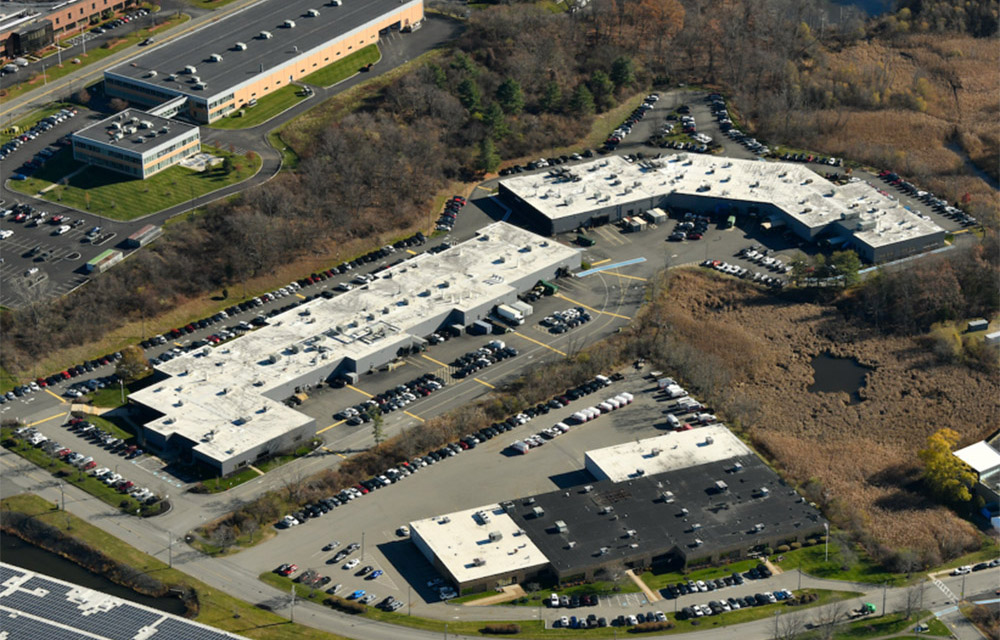
Danvers, MA Northwest Bank provided $34.5 million in financing to support Luzern Associates LLC’s $47.75 million acquisition of the Cherry Hill industrial portfolio, a three-building campus totaling 200,000 s/f.



 (1).gif)



.png)
Columns and Thought Leadership

The focus on price per s/f compared to the comparable sales used in the appraisal report - by Dennis Chanski
Over the past several weeks, I have completed appraisal assignments for private clients. Interestingly, after submitting these appraisals, I received several phone calls – not to question the value, content, or any incorrect information, but rather to discuss the price per s/f compared to the comparable sales used in the report.

Are appraisers on the same page as the assessor? - by Richard Seman
The purpose of this article is to address problematic or confusing issues which may help assessors and appraisers to better understand how to value real estate for tax assessment purposes.

Massachusetts real estate transfers over $1 million face new tax rules as of November 1st - by Daniel Meyer
Attention to owners of real estate in the Commonwealth (and the title companies and other professionals who advise them), the Massachusetts Department of Revenue (the “DOR”) recently adopted a new “millionaire’s tax” via 830 CMR 62B.2.4

Reverse exchanges and the challenges of a competitive real estate market - by Michele Fitzpatrick
Our current, highly competitive real estate market poses specific challenges for investors who are considering taking advantage of a tax-deferred 1031 exchange. In this market, investors will have no problem selling their current property if priced properly, but they may find it difficult to find a suitable replacement property
