



News:
Construction Design & Engineering
Posted: February 19, 2021
Apprenticeship ratios hinder construction job growth
Unemployment is rising amid a pandemic and it’s clear the country needs jobs. The construction industry has jobs available – all we need is to be freed of the restrictions that keep us from filling them. That includes strict apprenticeship ratio requirements.
Mass. has an apprenticeship requirement for all public work. The problem is the ratios of journeypersons to apprentices in many trades. Instead of the traditional one apprentice for each journeyperson, some trades require four or even five journeypersons for each employee. These ratios cripple contractors’ ability to fill the jobs that so many people desperately need.
Even amid a deep recession, 80% of contractors are having trouble finding qualified workers to fill hourly jobs. Nationally, the construction industry will need an additional 500,000 workers in 2021 alone.
These are good jobs with tremendous career potential. In an industry that has become exponentially more sophisticated thanks to technology, construction offers lucrative careers that can be accessed without massive college debt.
The key to making construction jobs available to the many Massachusetts residents who so desperately need and want them is to relax unreasonable apprenticeship ratios that act as a barrier to employment. Employers, labor organizations, and political leaders should work together to eliminate these unnecessary barriers while continuing to cultivate safety on the job site. Doing so would benefit contractors, provide an opportunity for job seekers, and facilitate the many construction projects that can help the state economy recover from COVID-19 and the recession it has caused.
Charlie Chieppo is the principal of Chieppo Strategies, LLC, Boston, Mass.
MORE FROM Construction Design & Engineering
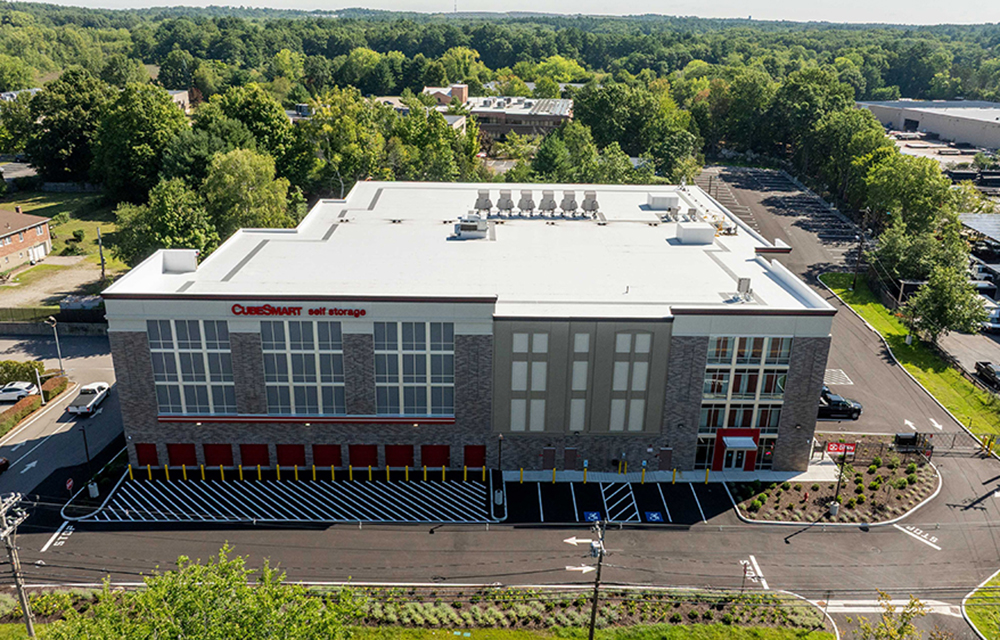
Connolly Brothers Inc. completes a new, ground-up 127,120 s/f CubeSmart self-storage facility in Canton, MA
Canton, MA Connolly Brothers Inc., a construction management firm serving private commercial, industrial and institutional clients, completed a new, ground-up 127,120 s/f self-storage facility for a development team at 362 Turnpike St.





Quick Hits


Columns and Thought Leadership

Navigating tariffs and material uncertainty in today’s construction market - by Karl Ginand and Tiffany Gallo
As headlines around tariffs seem to dominate the news daily, many considering construction projects have anticipated major cost escalations and widespread supply issues. While tariffs haven’t driven pricing spikes to the extent once feared, the lasting impact has been a new layer of uncertainty, affecting more than just budgets.

Greenwood Credit Union City Hall Plaza nears completion - by Frank Picozzi
After several years of planning, construction, and anticipation, the community is eagerly awaiting the opening of the Greenwood Credit Union City Hall Plaza and outdoor skating rink later this month.

ABC-Mass. chairman’s message: Rent control isn’t the answer to our housing crisis - by Luiza Mills
As you may know, Massachusetts voters will be weighing in on a number of ballot initiatives in November. Among them is a proposal to impose the nation’s strictest statewide rent control policy. I’d like to tell you why the ABC MA Board

It’s time to lead: Confronting mental health in construction - by David Watts
As we close Mental Health Awareness Month, we must be clear: May isn’t just about ribbons, hashtags, or lunchtime mindfulness apps. It’s about responsibility to confront hard truths that linger in silence, and to challenge ourselves, as leaders in our industry, to do more.
