



News:
Construction Design & Engineering
Posted: August 20, 2015
Boston's booming commercial real estate market attracts diverse capital
Ask any real estate investor and most likely they will tell you that Boston is the place to be, along with other major metropolitan areas like New York and San Francisco. The Greater Boston real estate market is booming right now, drawing attention and money from around the world. Boston's emerging identity as a technology center along with its rich history of educational and medical institutions has solidified the market as a global powerhouse.
It's an exciting time with developments popping up all over the city and a skyline peppered with cranes. Over the past year, almost 25% of the existing real estate inventory in Boston has changed hands and there's a substantial amount of new development underway or in the pipeline. The Seaport District continues to have significant development activity with office, retail, hospitality and residential projects underway. The Back Bay, Fenway, South End and Downtown Crossing are also seeing noteworthy development activity.
What's driving this activity?
Investment capital, both domestic and foreign, is flooding the market
Competition is fierce. Institutional investors, such as pension funds, life companies and REITs, are very active in the Greater Boston real estate market looking for their next investment. In addition many foreign investors from countries like China, Canada, Norway, Ireland and Switzerland (to name a few) have also been actively pursuing investments in all property types within the market. Deals are attracting multiple competitive offers and many local real estate players are finding it difficult to win deals in this competitive marketplace.
Foreign investment has been spurred further by the federal EB-5 Visa program that grants residency to foreign nationals who invest in projects that lead to job creation; including investment in real estate development, if all requirements of the program are met. Typically, foreign nationals investing with this program are not looking for the same returns as other types of investors and therefore can close a deal with higher pricing (on the buy side) than many institutional investors are able to do.
Interest rates remain relatively low and LTV is rising
Competition for debt financing is also fierce; it's a "Borrower's Market". There are many sources of debt competing over the same projects: banks (community, regional and large commercial money centers), life companies, agencies and, to a lesser extent, conduits.
Although there's a lot of speculation that interest rates will rise, it's just a matter of when, real estate investors are still enjoying the historically low rates currently. In this market place, practically any type of project can be financed with generally favorable terms. The loan to value ratios for non-recourse financing seems to be stabilizing at 70%, up from 65%, and lenders are providing for 1-3 years of interest only terms, even on stabilized properties.
Upcoming DGC Speaker Panel explores Boston's Red-Hot Real Estate Market
What does this mean for real estate investors in the Greater Boston area? Come hear from a panel of seasoned professionals discuss capital markets, including sources of financing, interest rates, investment options and projects they are currently financing. If you are looking for information on sources of capital for a variety of property types, don't miss this event.
On September 22, DGC is hosting the 4th Annual Real Estate Panel with panelists from J.P. Morgan, AEW Capital Management, Celona Capital, Webster Bank, and Bank of America Merrill Lynch. Follow this link to register for DGC's event: http://www.dgccpa.com/panel/
Laura Gregoriadis, CPA specializes in real estate at DiCicco, Gulman and Company LLP, Woburn, Mass.
MORE FROM Construction Design & Engineering
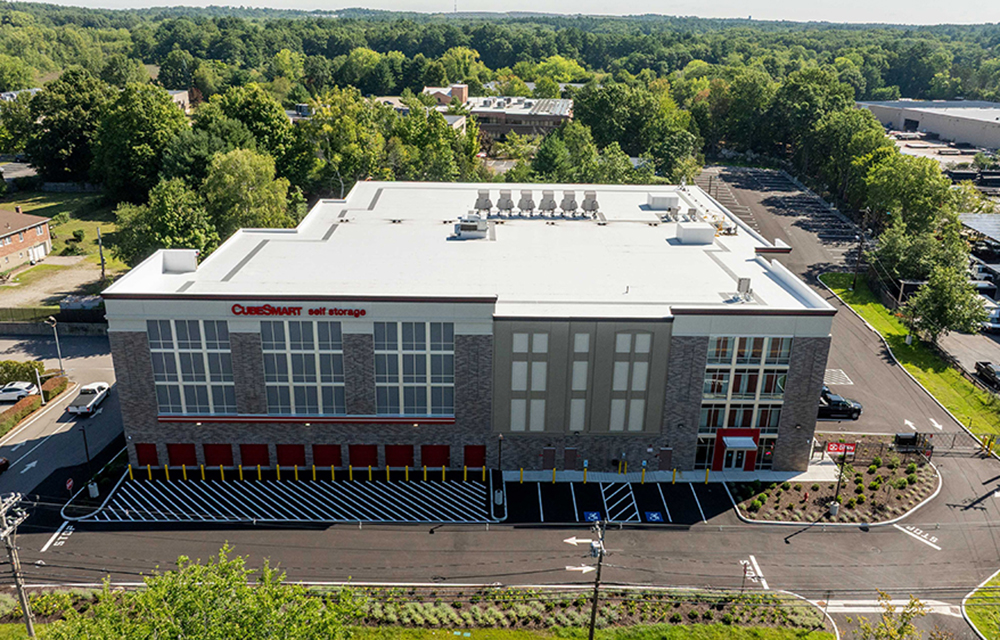
Connolly Brothers Inc. completes a new, ground-up 127,120 s/f CubeSmart self-storage facility in Canton, MA
Canton, MA Connolly Brothers Inc., a construction management firm serving private commercial, industrial and institutional clients, completed a new, ground-up 127,120 s/f self-storage facility for a development team at 362 Turnpike St.






Columns and Thought Leadership

Navigating tariffs and material uncertainty in today’s construction market - by Karl Ginand and Tiffany Gallo
As headlines around tariffs seem to dominate the news daily, many considering construction projects have anticipated major cost escalations and widespread supply issues. While tariffs haven’t driven pricing spikes to the extent once feared, the lasting impact has been a new layer of uncertainty, affecting more than just budgets.

ABC-Mass. chairman’s message: Rent control isn’t the answer to our housing crisis - by Luiza Mills
As you may know, Massachusetts voters will be weighing in on a number of ballot initiatives in November. Among them is a proposal to impose the nation’s strictest statewide rent control policy. I’d like to tell you why the ABC MA Board

Greenwood Credit Union City Hall Plaza nears completion - by Frank Picozzi
After several years of planning, construction, and anticipation, the community is eagerly awaiting the opening of the Greenwood Credit Union City Hall Plaza and outdoor skating rink later this month.

It’s time to lead: Confronting mental health in construction - by David Watts
As we close Mental Health Awareness Month, we must be clear: May isn’t just about ribbons, hashtags, or lunchtime mindfulness apps. It’s about responsibility to confront hard truths that linger in silence, and to challenge ourselves, as leaders in our industry, to do more.
