



News:
Spotlight Content
Posted: May 7, 2008
Citizen Ambassador Program, People to People, goes to The Great Wall of China
The Citizen Ambassador Program, People-to-People, was founded by President Eisenhower in 1956 to foster (free from government restrictions) friendship and advance international understanding outside the limits of official diplomacy. People to People was administered by the State Department until 1961 when it was established as a not-for-profit private (501c3) corporation and subsequently headquartered in Seattle, Wash. International exchanges administered by the Citizen Ambassador Program focus on specialized disciplines within the fields of medicine, energy and resource development, agriculture, engineering, building science, law, administrative and financial management.
Each project is developed around an outline of specific professional objectives and major discussion topics and delegation members are invited on the basis of their professional backgrounds. (Travel Manual for Delegates to China, 1993). Some time in early March, a selected list of potential delegates was contacted by James Cantrell, CPM about a Real Estate delegation of approximately 25 persons to be selected for a visit to China.
Fellow members of the Boston Chapter, your author Moya Baldwin, CPM, manager of the Executive House of Quincy and other commercial entities of the Fitzgerald family in Boston, i.e. Fitzgerald Investment Trust and FitzInn Auto Parks, Inc., and Paul Chan, CPM, vice president, Urban Realty Advisors, Inc., of Boston - whose business activities include management, development and financing of subsidized housing and large scale urban mixed use commercial developments - have just survived a two week "trek" to mainland China and Hong Kong, having encountered a mini monsoon on a boating excursion to reach our hotel, a bit of a "misunderstanding" with an official and police problems at borders for Paul - who we lost temporarily upon entrance to China due to an "identity" problem with a known criminal. However, we had self-appointed bodyguards for Paul at all entrance and exit points to make sure we did not lose him again.
On a serious note, our contingent of 25 delegates was led by James Cantrell, CPM a very active IREM member both in San Francisco and nationally, presently holding the position of chairman of the National Committee on International Affairs and member, Governing Council. The delegates represented a broad brush of real estate interest and most geographic areas of the United States, with three from New England, the third being Gerald Kusinski, senior vice president, Liberty Bank, Middletown, Conn. - managing the commercial real estate lending department - and a member of IREM.
Ours was the second real estate delegation selected and invited by People's Republic of China, the first having visited in June of last year. We were invited to attend a series of meetings with Chinese representatives of CCPIT (China Council for the Promotion of International Trade), our hosts while in China, and state and municipal housing, development "corporations" who presented various combined commercial/residential projects for and under development in Beijing, Shanghai and Shentzen, where there has been a special economic zone for development designation, i.e. special incentives for the investor.
In addition, in Shentzen we met with representatives of the Bank of China and with partners of a law firm to review banking practices as regards to the loan process for developments and other aspects of real estate. We also had the opportunity to visit the new Stock Exchange where we had a brief tour with the representative relative to the investment procedures and opportunities in China.
Moya Baldwin is with the Boston Chapter of IREM
Tags:
Spotlight Content
MORE FROM Spotlight Content

New England Real Estate Journal's 2026 Women in Commercial Real Estate Spotlight
NEREJ's Women in CRE Spotlight celebrates the women making an impact across commercial real estate and the companies that recognize, support and champion them.




Quick Hits

.png)
Columns and Thought Leadership
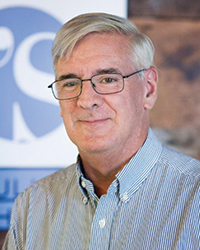
How do we manage our businesses in a climate of uncertainty? - by David O'Sullivan
These are uncertain times for the home building industry. We have the threat of tariffs mixed with high interest rates and lenders nervous about the market. Every professional, whether builder, broker, or architect, asks themselves, how do we manage our business in today’s climate? We all strive not just to succeed, but
Limited supply fuels landlord‑friendly conditions in Rhode Island’s industrial market - by Julie Freshman and George Paskalis
As we enter the spring of 2026, the Rhode Island industrial real estate market stands on stable footing, following several years of resilience fueled by constrained supply, steady demand, and dynamic economic conditions.
Shallow-bay wins on 495/128: A renewal-driven market with a thin pipeline - by Nate Nickerson
The Boston industrial market entered mid-2025 in a bifurcated state. Large-block vacancy remains elevated, while shallow-bay along the 495/128 corridor continues to prove resilient. Fieldstone’s focus on this geography positions us squarely in the middle of a renewal-driven, supply-constrained
As legacy names recalibrate, new entrants are moving in with fresh capital, new technologies, and business models tailored to today’s supply-chain needs - by Michael Harrington
Southern New Hampshire’s industrial market has always punched above its weight. For decades, the region has attracted a mix of advanced manufacturing, beverage and food producers, logistics operators, and specialty
