



News:
Spotlight Content
Posted: November 6, 2008
City of Cambridge Economic Development
We want companies domestically and internationally to know that it makes good business sense to a part of the Cambridge business community. As competition for high-tech, biotech and life sciences companies continues to be aggressive among US cities, states as well as on the international front, we do not take our position as a leader in the high-tech, biotech and the life sciences for granted.
Technical companies have clustered here because of a combination of resources which include outstanding educational and research institutions such as Harvard, MIT, the Whitehead Institute and the Broad Institute. These institutions groom some of the most creative thinkers in the world.
Another important ingredient in our community is the proximity to outstanding health care facilities such as MGH, Brigham & Women's Hospital and the Boston Medical Center which are just on the other side of the Charles River. We are also happy to have high-tech companies such as Akamai, Google and Microsoft as part of our business landscape.
In Cambridge, there are large numbers of science professionals working in close proximity, sharing innovative ways of looking at the world of health care and science in general. CEOs who have decided to locate here tell us that they made their decision based, in large part, on the talent pool that exists in Cambridge. Many companies realize that if they want to attract top-notch talent, they must be in a location where people want to reside and Cambridge is an exciting place to live.
We have also provided clear, straight-forward regulatory requirements for companies wishing to do business here. This comes with direct access to city manager and department heads should problems arise. As companies begin to establish themselves, they look for unambiguous rules and regulations and city professionals with a thorough knowledge of what can and cannot be done within reasonable time frames.
We also provide workforce development training for Cambridge residents who are interested in working in biotech firms and health care institutions. This training is contracted through local non-profits, creating an easy synergy that makes locating all types of firms here cost-effective.
This community is known, and rightly so, for innovation and creativity. We have encouraged small, flexible, affordable spaces that help new firms get started. The Cambridge Innovation Center is a prime example of a location where businesses can start with as little as one person, a desk, a telephone and a new idea. As the company grows, it may choose to remain at the center or locate elsewhere. Many companies tend to stay in the Kendall Sq. area, which has 130 to 140 life sciences companies as well as many high-tech firms.
In addition to providing a friendly climate for sciences-based companies, Cambridge puts great emphasis on programs that support small, independent retail establishments which serve the residents and workers in the various commercial districts. Cambridge has some of the most unique retail stores and some of best restaurants in the metro area.
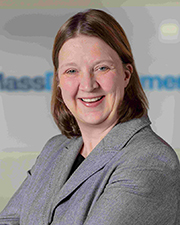
Estella Johnson is the director of the Cambridge Economic Development Division. www.cambridgema.gov/cdd/ed/cr/index.html
Tags:
Spotlight Content
MORE FROM Spotlight Content

New England Real Estate Journal's 2026 Women in Commercial Real Estate Spotlight
NEREJ's Women in CRE Spotlight celebrates the women making an impact across commercial real estate and the companies that recognize, support and champion them.







.png)
Columns and Thought Leadership

How do we manage our businesses in a climate of uncertainty? - by David O'Sullivan
These are uncertain times for the home building industry. We have the threat of tariffs mixed with high interest rates and lenders nervous about the market. Every professional, whether builder, broker, or architect, asks themselves, how do we manage our business in today’s climate? We all strive not just to succeed, but

As legacy names recalibrate, new entrants are moving in with fresh capital, new technologies, and business models tailored to today’s supply-chain needs - by Michael Harrington
Southern New Hampshire’s industrial market has always punched above its weight. For decades, the region has attracted a mix of advanced manufacturing, beverage and food producers, logistics operators, and specialty

Shallow-bay wins on 495/128: A renewal-driven market with a thin pipeline - by Nate Nickerson
The Boston industrial market entered mid-2025 in a bifurcated state. Large-block vacancy remains elevated, while shallow-bay along the 495/128 corridor continues to prove resilient. Fieldstone’s focus on this geography positions us squarely in the middle of a renewal-driven, supply-constrained

Limited supply fuels landlord‑friendly conditions in Rhode Island’s industrial market - by Julie Freshman and George Paskalis
As we enter the spring of 2026, the Rhode Island industrial real estate market stands on stable footing, following several years of resilience fueled by constrained supply, steady demand, and dynamic economic conditions.
