



News:
Construction Design & Engineering
Posted: May 17, 2019
Construction continues on Qualified Opportunity Zone regulations - by Michael Duffy

Fletcher Tilton PC
On April 17, 2019, the U.S. Department of Treasury released its second set of proposed regulations (REG-120186-18) concerning the rules for forming and operating so-called Qualified Opportunity Zone (QOZ) investments. The proposed regulations update guidance issued late last year and provide much-needed clarity on many issues related to using Qualified Opportunity Funds (QOFs) to accommodate real estate investors.
Overview
Broadly speaking, investing in a Qualified Opportunity Zone permits taxpayers to reinvest proceeds received upon exiting one deal into a second QOF investment in order to defer and potentially reduce capital gains realized on the first investment for a period of up to ten years. Furthermore, taxpayer gains realized on exiting the second QOF investment are not taxable if held for a long enough period. The proposed rules have been of particular interest to real estate investors because QOF investments must be located in predetermined economic recovery areas and because, in order to qualify for any benefits, the investors need to be facing large capital gains tax bills no earlier than six months before making the QOF investment.
“Qualified Opportunity Fund” clarified
To obtain benefits, taxpayers must invest in a QOF, which ultimately must conduct a business in a designated “opportunity zone” tract of land. Most of the QOF’s underlying property must be used in conducting an active trade or business within the opportunity zone, either directly or indirectly through a partnership or corporate subsidiary. The property so used must either have a “first use” within the zone or, in the case of buildings already in service, must be substantially improved by investors within 30 months of acquisition.
The new regulations provide clarity on what a “trade or business” is and confirm that businesses rehabbing and actively renting out property to tenants can indeed qualify as QOFs. The new regulations further provide that a QOF need not have an ownership interest in real property; its activity in the opportunity zone may be conducted through a leasehold interest.
Guidance on business conducted within a Qualified Opportunity Zone
At least 50% of the income from a QOF-qualifying trade or business must be earned “in” the Qualified Opportunity Zone tract of land each year. The new regulations explain the rules for determining whether income is considered earned inside the opportunity zone in nonretail situations. The 50% income test is met if at least 50% of the time spent by employees and independent contractors of the QOF business is performed within the opportunity zone, if at least 50% of the amounts paid to employees and independent contractors is for services performed within the opportunity zone, or if the tangible personal property and management necessary for the QOF business to generate at least 50% of its gross income are located within the opportunity zone.
Guidance on inclusion events
The new regulations create standards that can be used to determine if a transaction will cause QOF investors to suffer from inclusion, i.e. the premature loss of their tax-deferral benefits. Such inclusion events will generally result when an investor reduces his or her equity interest in the QOF or receives a “cash out” of property with a fair market value in excess of its tax basis.
Closing
Real estate investors have been eager to receive comprehensive guidance from the Treasury Department since the legislation creating the Qualified Opportunity Zone rules was signed into law on December 22, 2017. Now, approximately a year and a half later, this guidance is starting to take shape. Although final regulations will not be out until at least the end of the summer, in the notice of proposed rulemaking, the Treasury Department confirmed investors and advisors may rely on the new proposed regulations now in structuring their QOF investments.
Michael Duffy, Esq. is a tax attorney at Fletcher Tilton PC, Worcester, Mass.
MORE FROM Construction Design & Engineering
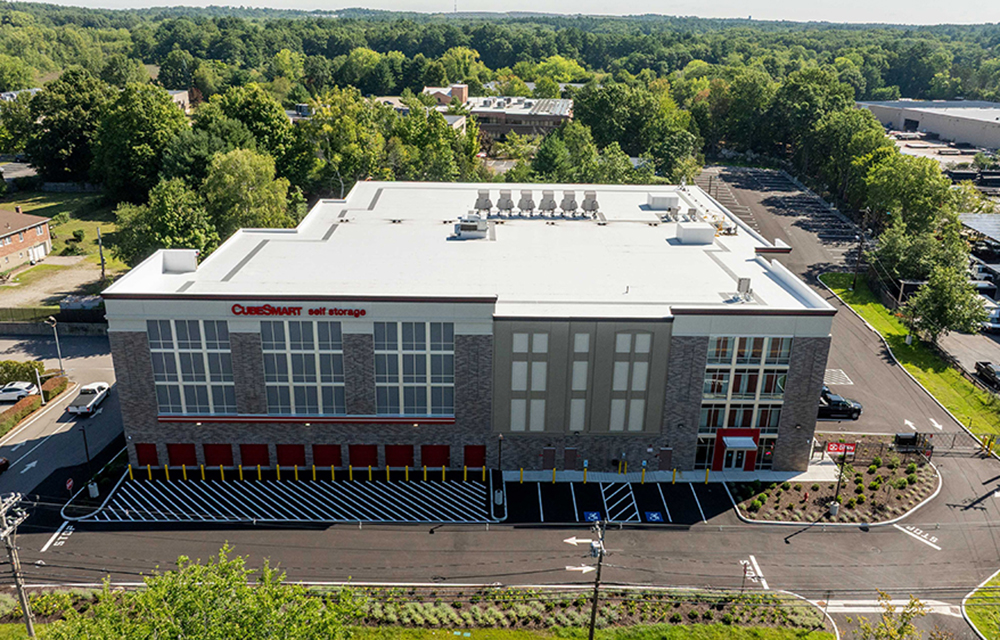
Connolly Brothers Inc. completes a new, ground-up 127,120 s/f CubeSmart self-storage facility in Canton, MA
Canton, MA Connolly Brothers Inc., a construction management firm serving private commercial, industrial and institutional clients, completed a new, ground-up 127,120 s/f self-storage facility for a development team at 362 Turnpike St.







Columns and Thought Leadership

Greenwood Credit Union City Hall Plaza nears completion - by Frank Picozzi
After several years of planning, construction, and anticipation, the community is eagerly awaiting the opening of the Greenwood Credit Union City Hall Plaza and outdoor skating rink later this month.

It’s time to lead: Confronting mental health in construction - by David Watts
As we close Mental Health Awareness Month, we must be clear: May isn’t just about ribbons, hashtags, or lunchtime mindfulness apps. It’s about responsibility to confront hard truths that linger in silence, and to challenge ourselves, as leaders in our industry, to do more.

Navigating tariffs and material uncertainty in today’s construction market - by Karl Ginand and Tiffany Gallo
As headlines around tariffs seem to dominate the news daily, many considering construction projects have anticipated major cost escalations and widespread supply issues. While tariffs haven’t driven pricing spikes to the extent once feared, the lasting impact has been a new layer of uncertainty, affecting more than just budgets.

ABC-Mass. chairman’s message: Rent control isn’t the answer to our housing crisis - by Luiza Mills
As you may know, Massachusetts voters will be weighing in on a number of ballot initiatives in November. Among them is a proposal to impose the nation’s strictest statewide rent control policy. I’d like to tell you why the ABC MA Board
