



News:
Construction Design & Engineering
Posted: June 23, 2023
Construction workers and mental health: Green sticker system aids those in distress - by Bryan Northrop

Over the course of the last two decades, we have made remarkable strides in recognizing, accepting, understanding, diagnosing, treating, and supporting the millions of Americans who suffer from various shades of mental health issues. The construction industry, however, is still lagging far behind. As a result, suicide is still a significant issue among the workers who suffer in silence. According to the CDC, more than 45,000 Americans die by suicide annually, with more than 1.2 million suicide attempts. More distressing for our industry is that for every 100,000 construction workers, 45.3 will end up dying by suicide, 3.5 times higher than the national average.
One reason construction workers feel this level of distress is that we still do not do a good enough job prioritizing the seriousness of mental health. Despite the progress we have made in this regard, every construction firm and the industry overall should be doing everything possible to talk about mental health, remove any stigmas surrounding mental health, and offer support to those who need it.
Suicide rates are nearly four times as high with men compared with women, and more so in blue-collar industries. Even today, in the construction industry we far too often cling to outdated beliefs about denying our feelings and acknowledging any thoughts that might indicate “weakness.” As such, men drastically under-report feelings of mental or emotional distress.
Which isn’t to say female construction workers don’t suffer from mental health issues. They do. It’s just that men, who make up nearly 90% of the construction workforce, are far less likely to seek help.
Another CDC study found the construction industry exhibits many common risk factors associated with feelings of helplessness and loss of control including: competitive, high-pressure work environment; high prevalence of alcohol and substance abuse; end-of-season layoffs; and separation from family.
We need to change the narrative. There should be no shame in admitting that you or someone you work with is suffering from a mental health issue, whether it be anxiety, depression, or any other related condition.
Mental health issues are no different than suffering from back problems, arthritis, or other physical ailments construction workers deal with. As with physical ailments, mental health conditions require a diagnosis, medical treatment, and support.
At Skanska, we are being proactive to help tackle this problem. We developed our Green Sticker Program to help break those mental health stigmas and encourage workers across all facets of the industry to seek help from trained colleagues and mental health professionals.
We brought the program to the U.S after its initial launch in the UK in 2016, and partnered with Amphibious Medics to provide Mental Health First Aid training to employees at all levels, teaching them how to recognize the signs of a potential mental health challenge and properly reassure and refer the person in need to appropriate professional support and services. Since July 2022, we have conducted training programs in multiple Skanska offices, with 179 trained employees to date, with many more to come.
Understanding that mental health issues are quite sensitive and personal, we designed a custom green sticker that course graduates wear on their hard hats, clearly designating them as a mental health first aider. The sticker system enables on-site construction workers to approach a mental health first aider unobtrusively, even with just a light tap on the shoulder, to initiate a conversation that can be held privately.
The program also involves the display of posters around all job sites for subcontractors, vendors, and others to understand the meaning behind the signifying sticker and be on alert for someone who may need assistance.
For those in the office, we created Green Sticker table tents that employees can display on their desks to signify themselves as a mental health first aider.
Mental health issues are prevalent throughout the construction industry. At Skanska, we are dedicated to providing support to all of our workers. We encourage every firm in the industry, regardless of size or stature, to do the same, and hope the workers requiring mental health assistance no longer feel the need to hide from these common problems. Help is available if you need it.
Bryan Northrop is EVP/general manager at Skanska USA Building, New England Region, Boston.
MORE FROM Construction Design & Engineering
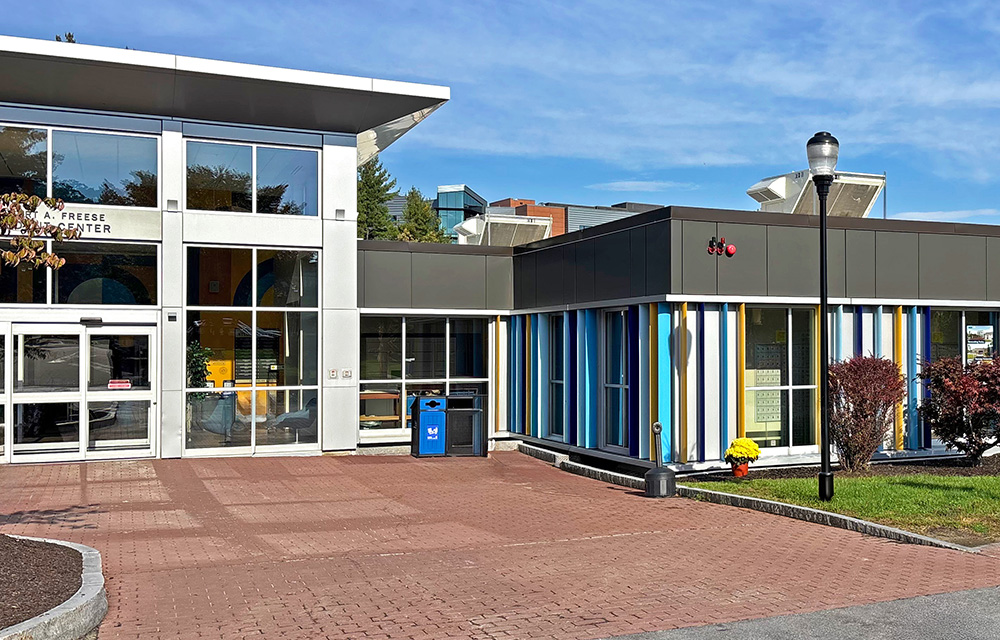
Chapman Construction/Design completes renovations to Freese Student Center at Southern N.H. University
Manchester, NH Chapman Construction/Design (Chapman) completed the second phase of renovations to Southern New Hampshire University’s (SNHU) Robert A. Freese Student Center. Chapman completed the project over two summer sessions,





Columns and Thought Leadership

ABC-Mass. chairman’s message: Rent control isn’t the answer to our housing crisis - by Luiza Mills
As you may know, Massachusetts voters will be weighing in on a number of ballot initiatives in November. Among them is a proposal to impose the nation’s strictest statewide rent control policy. I’d like to tell you why the ABC MA Board

It’s time to lead: Confronting mental health in construction - by David Watts
As we close Mental Health Awareness Month, we must be clear: May isn’t just about ribbons, hashtags, or lunchtime mindfulness apps. It’s about responsibility to confront hard truths that linger in silence, and to challenge ourselves, as leaders in our industry, to do more.

Navigating tariffs and material uncertainty in today’s construction market - by Karl Ginand and Tiffany Gallo
As headlines around tariffs seem to dominate the news daily, many considering construction projects have anticipated major cost escalations and widespread supply issues. While tariffs haven’t driven pricing spikes to the extent once feared, the lasting impact has been a new layer of uncertainty, affecting more than just budgets.

Greenwood Credit Union City Hall Plaza nears completion - by Frank Picozzi
After several years of planning, construction, and anticipation, the community is eagerly awaiting the opening of the Greenwood Credit Union City Hall Plaza and outdoor skating rink later this month.
