


 (1).png)
News:
Owners Developers & Managers
Posted: April 14, 2011
Cushman & Wakefield New England Research Q1 2011 Statistics
Cushman & Wakefield released its statistical review of the first quarter of 2011. The results indicated that while Boston is still impacted from the economic downturn of 2008-2010, the region is seeing a slow but steady improvement in its real estate markets.
The Back Bay, Cambridge and select suburban office markets saw positive absorption, falling vacancy rates and rising rents. Overall class A office vacancy in the Back Bay continued to tighten at 4% on a direct basis and 5.5% overall. The Cambridge office market recorded 101,660 s/f of positive absorption in the first quarter of 2011, and as a result, overall vacancy fell 1.6 percentage points to 13%. Growth in the suburban markets remains fragmented. Noticeable improvements in fundamentals are visible in pockets of the 495 North, 128 North, and 128 West submarkets.
The laboratory market in Cambridge is tight, with existing space scarce as Big Pharma continues to invest in this life science cluster.
This trend is likely to continue for the foreseeable future, as early indications suggest that Sanofi-Aventis' acquisition of Genzyme will have little impact on occupancy in Kendall Sq., and there are some large tenant requirements active in the market today. Across all of Cambridge, class A laboratory vacancy stood at 14.0% overall, with rents averaging $62.58 per s/f.
While the Back Bay has tightened significantly, the Financial District has remained challenged. It posted a 2.3% increase in its vacancy rate from year-end 2010, ending the quarter at 17.3% overall. This was in part due to the delivery of Atlantic Wharf, which added 178,457 s/f of new vacancy to the market.
However, because of its superior access to public transportation and prestigious reputation, the Financial District may benefit from tightening supply in other submarkets. For example, Cambridge companies like Brightcove and Navinet and Watertown-based Communispace have chosen to relocate to downtown Boston recently. In total, more than 400,000 s/f of new space was leased in the Financial District in the last six months.
MORE FROM Owners Developers & Managers
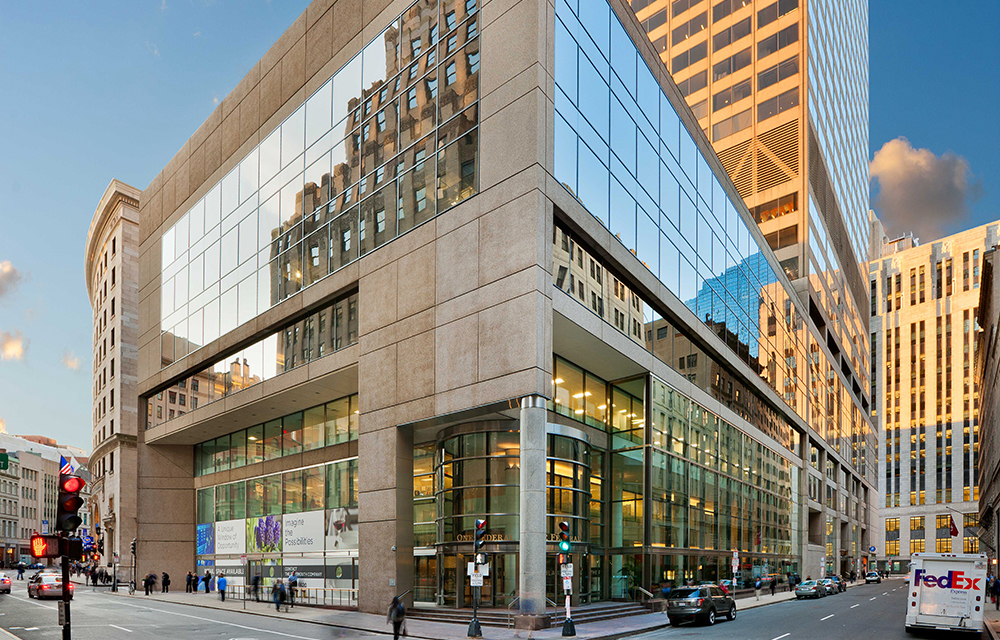
Rubin Rudman to establish headquarters at Tishman Speyer’s One Federal St.
Boston, MA Tishman Speyer has secured a new headquarters lease with Rubin Rudman at One Federal St., its 38-story, 1.1 million s/f tower in the Financial District. Under a 15-year lease, Rubin Rudman’s new headquarters will span 57,844 s/f across One Federal’s entire 23rd and 24th floors and a portion of the 25th floor.





Quick Hits


Columns and Thought Leadership

Revitalized Town Centers: Retail??? - by Carol Todreas
It is now widely accepted that customers want to shop in person at physical stores. Brands know that they do better business in a physical store than just on line so they want to open stores. Demand for retail space by digital merchants, local entrepreneurs, and newly developed national chains

IREM president’s message: Our new reality - Staying ahead of supply chain delays - by Yoany Vargas
Supply chain delays are slowing construction, ratcheting up operating costs, and extending turnover timelines across Greater Boston, directly reducing revenue and increasing the workload for multifamily and

The legislature has spoken: New Hampshire doubles down on housing in commercial zones - by John Sokul
Last year, the New Hampshire Legislature enacted HB 631, a landmark housing measure requiring municipalities to permit multifamily housing in commercially zoned districts. The law generated

Retail infill strategy to activate Pawtucket’s Conant Thread District - by Gaetan Kashala
Until recently, the Conant Thread District consisted of approximately 150 acres of underutilized industrial land spanning Pawtucket and Central Falls. Today, the area is one of the most significant